

 中文简体
中文简体 Español
 عربى
عربى
What Is the Travel Size for Perfume? Glass Bottle Guide
Industry News-Content
- 1 TSA Rules and the 3.4 oz Standard Explained
- 2 Common Travel Perfume Bottle Sizes and What They Actually Mean
- 3 Why Glass Perfume Bottles Are the Preferred Choice for Travel Sizes
- 4 Types of Travel-Size Glass Perfume Bottles on the Market
- 5 How to Decant Your Favorite Fragrance Into a Travel Glass Perfume Bottle
- 6 Packing Glass Perfume Bottles for Air Travel: Practical Tips
- 7 How to Choose the Right Travel Glass Perfume Bottle for Your Needs
- 8 International Travel Regulations Beyond the US
- 9 Best Practices From Fragrance Brands for Travel-Size Glass Perfume Bottles
- 10 Frequently Asked Questions About Travel Perfume Sizes
- 10.1 Can I bring a 3.4 oz (100 ml) glass perfume bottle on a plane?
- 10.2 What happens if a glass perfume bottle breaks in my checked luggage?
- 10.3 Is it better to buy travel-size glass perfume bottles or decant from a full-size bottle?
- 10.4 Do glass perfume bottles lose scent faster than plastic travel bottles?
- 10.5 What is the smallest glass perfume bottle available?
The quick answer: travel size for perfume is any bottle at or under 3.4 oz (100 ml), which is the TSA-approved liquid limit for carry-on luggage. Most travel perfumes range from 5 ml to 30 ml, and many come in dedicated travel-friendly glass perfume bottles designed for portability and leak resistance. If you want something practical for everyday travel, a 10 ml roll-on or spray glass perfume bottle is the sweet spot — small enough to pocket, large enough to last a week-long trip.
TSA Rules and the 3.4 oz Standard Explained
The 3-1-1 rule from the Transportation Security Administration sets the global benchmark that most airports worldwide follow. Each liquid must be in a container of 100 ml (3.4 fl oz) or less, all containers must fit in a single quart-sized clear bag, and each passenger is allowed one such bag. Perfume — whether in a glass perfume bottle or plastic atomizer — counts as a liquid.
This means a standard department-store fragrance bottle (typically 50 ml, 75 ml, or 100 ml) can technically pass carry-on inspection at exactly 100 ml, but anything above that — say a 125 ml or 200 ml bottle — must be packed in checked baggage. The 100 ml glass perfume bottle sits right at the edge of the limit, which is why most serious travelers prefer bottles in the 10–30 ml range to avoid any scrutiny at security.
Important distinctions to keep in mind:
- The rule applies to the container size, not the amount of liquid inside. A 150 ml glass perfume bottle that is only 20% full still violates the rule.
- International flights departing from or arriving at non-US airports may have slightly different ml thresholds — the EU follows a 100 ml cap as well, while some Asian airports enforce stricter 80 ml limits for certain routes.
- Duty-free purchases made after security screening are typically exempt from the carry-on liquid rules, which is why airport shops sell full-size bottles.
For checked luggage, there is no standard size restriction on personal fragrance, but airlines often apply a quantity cap — typically no more than 2 liters total of alcohol-based products per passenger for safety reasons related to flammability.
Common Travel Perfume Bottle Sizes and What They Actually Mean
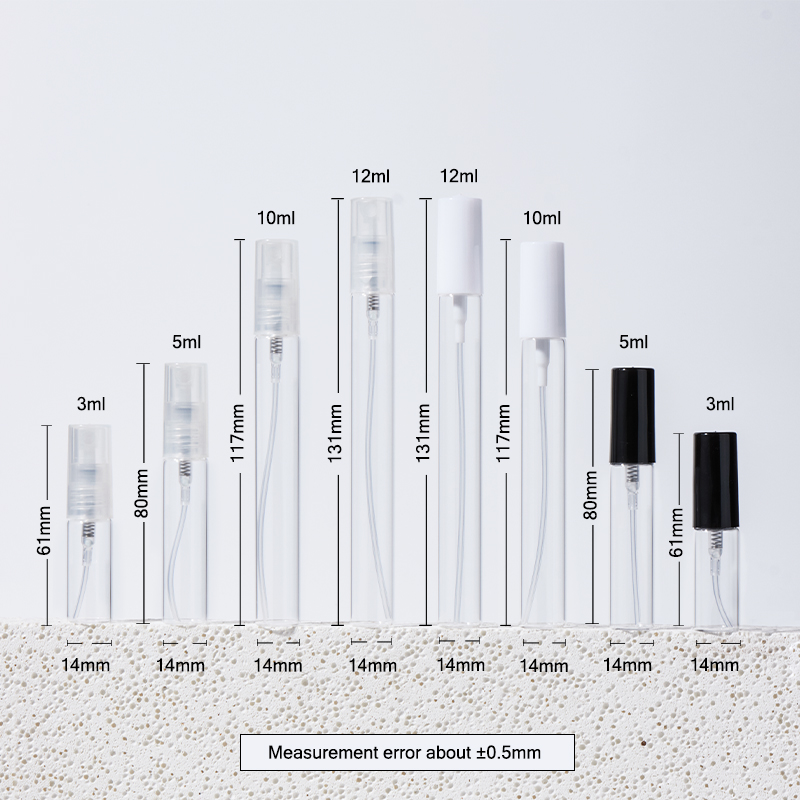
Not all travel perfume sizes are equal in terms of practical use. Here is a breakdown of the most common sizes you will find on the market, primarily in glass perfume bottle formats:
| Bottle Size | Sprays (approx.) | Days of Use (2 sprays/day) | TSA Carry-On Allowed | Typical Use Case |
|---|---|---|---|---|
| 5 ml | ~50 sprays | ~25 days | Yes | Weekend trips, samples |
| 10 ml | ~100 sprays | ~50 days | Yes | 1–2 week vacations |
| 15 ml | ~150 sprays | ~75 days | Yes | Extended travel, daily carry |
| 30 ml | ~300 sprays | ~150 days | Yes | Long-haul trips, minimalist daily use |
| 50 ml | ~500 sprays | ~250 days | Yes | Home use, occasional travel |
| 100 ml | ~1000 sprays | ~500 days | Yes (maximum) | Home use primary, travel possible |
One pump from a standard atomizer delivers approximately 0.1 ml of fragrance. That means a 10 ml glass perfume bottle gives you roughly 100 individual sprays — far more than most travelers use on a standard vacation. Two sprays a day over a 10-day trip consumes only 2 ml total, meaning a 10 ml bottle is theoretically a three-month supply at that rate. Most travelers over-pack fragrance without realizing it.
Why Glass Perfume Bottles Are the Preferred Choice for Travel Sizes
When brands and consumers choose containers for small travel fragrances, glass perfume bottles dominate the market — and the reasons go well beyond aesthetics. Glass is chemically inert, which means it does not react with fragrance compounds over time. Plastic, by contrast, can leach trace chemicals into the formula and degrade certain aromatic molecules, especially citrus top notes and delicate musks.
Material Integrity and Scent Preservation
A fragrance is a complex mixture of alcohols, essential oils, synthetic aroma chemicals, and fixatives. Glass perfume bottles create a fully sealed, non-reactive environment. Over a six-month period, a perfume stored in a glass bottle will retain its original scent profile far more faithfully than one stored in a soft plastic container. High-quality perfume houses have exclusively used glass for decades for exactly this reason — the integrity of the fragrance depends on it.
Travel glass perfume bottles are typically manufactured with borosilicate or soda-lime glass in wall thicknesses between 2 mm and 4 mm. The denser the glass, the heavier the bottle but also the more protected the contents. For travel sizes under 15 ml, manufacturers often use thicker glass proportionally to keep the bottle robust despite its small footprint.
Leak Prevention in Travel Glass Perfume Bottles
Pressure changes during air travel are a real problem for poorly sealed liquid containers. A glass perfume bottle with a high-quality crimp-sealed or screw-on fine mist atomizer is significantly less likely to leak than a soft plastic travel bottle with a press-fit cap. The rigidity of glass means the bottle itself cannot deform under pressure — the weak point is always the closure, not the body. Quality travel glass perfume bottles use aluminum or stainless steel collar crimping that creates an airtight seal rated to withstand standard cabin pressure differentials of roughly 8 psi.
Practical tip: Always carry your travel glass perfume bottle in a small ziplock bag anyway. Even the best-sealed glass atomizer can leak if the pump mechanism is depressed repeatedly in a packed toiletry bag.
Refillable Glass Perfume Bottles: A Sustainable Travel Option
The refillable glass perfume bottle market has expanded rapidly. Products like the Travalo Classic, which comes in 5 ml glass bottles, and the Chanel travel spray refill system allow users to decant fragrance from a full-size bottle without wasting any product. A standard refillable 8 ml glass perfume bottle can be refilled 50 or more times before the glass or atomizer mechanism shows wear — making it both economical and environmentally responsible over its lifetime.
When selecting a refillable glass perfume bottle for travel, look for:
- A bottom-fill valve rather than a removable spray head (less chance of spillage during refill)
- A secure overcap that locks the pump down during transit
- A capacity between 8 ml and 15 ml for the best balance of portability and supply
- UV-protective or frosted glass if you carry the bottle in direct sunlight (UV exposure degrades fragrance over time)
Types of Travel-Size Glass Perfume Bottles on the Market
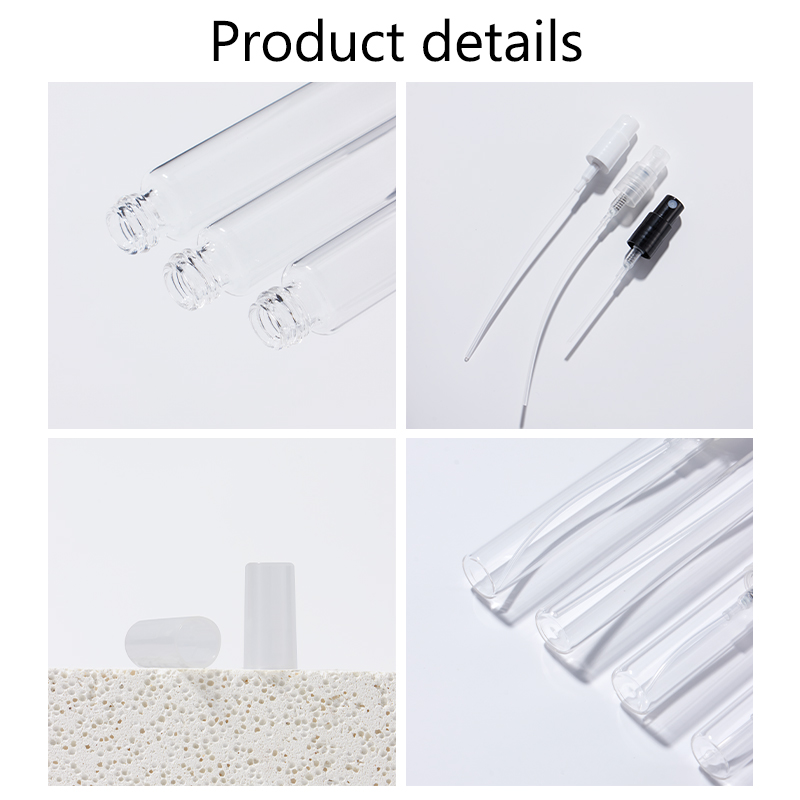
The category of travel glass perfume bottles has become remarkably diverse. Understanding the main formats helps you choose the right one for your specific travel and fragrance habits.
Miniature Spray Glass Perfume Bottles (5 ml – 15 ml)
These are the most common format. A cylindrical or rectangular glass perfume bottle houses a fine mist atomizer, typically crimped with a metal collar. Brands like Jo Malone, Maison Margiela, and Le Labo all offer signature scents in 10 ml glass perfume bottle formats specifically for travel. Prices for branded versions range from $20 to $75 for 10 ml, while unbranded refillable versions cost as little as $3–8 per bottle. The spray mechanism delivers a consistent 0.08–0.12 ml per actuation, fine enough to distribute fragrance evenly across skin without wasting product.
Roll-On Glass Perfume Bottles (5 ml – 10 ml)
Roll-on glass perfume bottles use a stainless steel or plastic ball fitted into the bottle neck, allowing direct skin application. These are completely leak-proof since there is no pump mechanism. They are ideal for oil-based or eau de parfum concentrates. Roll-ons deposit more concentrated product directly onto pulse points without any spray misting, which some users prefer for strong, long-lasting fragrances. The 10 ml roll-on glass perfume bottle is particularly popular for travel because it fits in a watch pocket and requires no cap removal to apply.
Solid Perfume Compact Formats
While not technically a glass perfume bottle, solid perfume compacts deserve mention in any travel fragrance guide. These products — fragrance suspended in a wax or balm base — carry zero liquid risk and have no TSA restrictions whatsoever. However, the scent throw is considerably lower than spray alcohol-based fragrances, and the formula can feel waxy on skin in hot climates.
Discovery Sets and Sample Vials
Many high-end fragrance houses sell curated travel discovery sets featuring multiple 1.5 ml to 2 ml glass perfume bottle vials. These are less useful for extended travel but excellent for testing new fragrances or bringing variety without committing to a single scent. Brands like Maison Francis Kurkdjian and Amouage offer sets of eight 2 ml vials — enough for a 16-day trip using one vial per day.
How to Decant Your Favorite Fragrance Into a Travel Glass Perfume Bottle
Buying a full-size fragrance and decanting it into a smaller travel glass perfume bottle is one of the most cost-effective approaches to travel fragrance. A 50 ml bottle of a premium fragrance might cost $120, while a branded 10 ml travel version of the same scent could cost $45 — decanting lets you get five 10 ml travel portions from the full bottle at a fraction of the per-ml cost.
Bottom-Fill Method (Recommended)
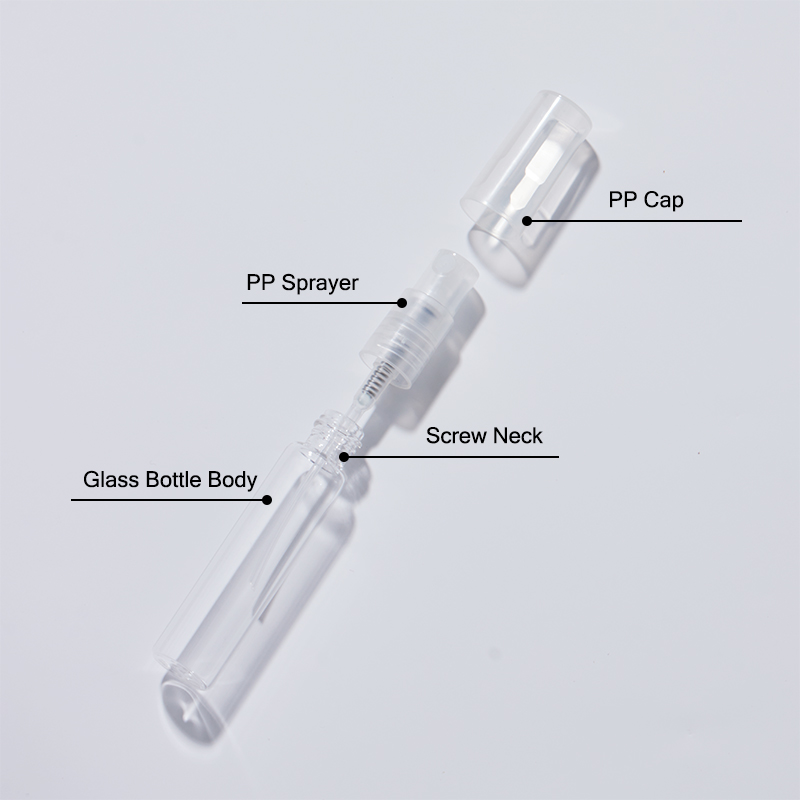
Most quality refillable travel glass perfume bottles use a bottom-fill valve. You invert the source bottle nozzle-down, align it with the fill valve on the bottom of the travel bottle, and press down. The internal valve opens and allows liquid to transfer directly. The process takes 3–5 seconds per fill. This method is preferred because it is contained, precise, and minimizes alcohol evaporation during transfer.
Funnel Method for Spray-Top or Crimp-Sealed Bottles
For glass perfume bottles with standard spray nozzles, you can use a small plastic funnel (typically 3 mm inner diameter) to transfer from the source bottle's nozzle into the travel bottle's opening. This is messier and requires a steady hand, but it works well for oil-based fragrances with lower alcohol content that evaporate more slowly. Always work over a paper towel and decant in a well-ventilated space.
Steps for the funnel method:
- Remove the spray head from your full-size bottle (most unscrew or pull off with a firm tug).
- Insert the small funnel into the opening of your travel glass perfume bottle.
- Carefully tilt the full-size bottle over the funnel in short, controlled pours.
- Fill to no more than 80% capacity to allow for pressure changes during air travel.
- Replace the spray head on the full-size bottle immediately to minimize fragrance oxidation.
- Seal the travel glass perfume bottle and store upright for at least 10 minutes before packing.
Packing Glass Perfume Bottles for Air Travel: Practical Tips
Glass requires more care in packing than plastic. A cracked or broken glass perfume bottle mid-trip is not just a fragrance loss — it is a significant cleaning problem for your entire luggage. Here are field-tested packing strategies:
Carry-On Packing
Place your travel glass perfume bottle inside a dedicated hard-shell case or padded pouch before placing it in the 1-quart clear plastic bag. Never pack a glass perfume bottle loose in the outer pockets of a backpack or soft-sided carry-on where it can be compressed against harder items. A small neoprene or silicone sleeve adds both cushioning and an extra layer of leak containment. Make sure the atomizer pump is locked or the cap is tightened before packing, even if the bottle has a secure overcap.
Checked Luggage Packing
For full-size glass perfume bottles in checked bags, the primary risks are breakage from rough baggage handling and pressure-related leaks. Wrap each glass perfume bottle individually in a thick clothing item — a sweater sleeve works perfectly — and place it in the center of the bag surrounded by soft items on all sides. Avoid packing glass perfume bottles near the edges or corners of suitcases, which absorb the most impact during loading and offloading. For additional security, place even checked glass perfume bottles in a ziplock bag inside their clothing wrap.
Temperature Considerations
Fragrance chemistry is sensitive to temperature. Checked luggage in aircraft cargo holds can reach temperatures as low as -20°C (-4°F) at cruising altitude, which can affect the texture of wax-based solid perfumes and slightly alter the viscosity of oil-heavy formulas in roll-on glass perfume bottles. The fragrance itself is not typically damaged by cold, but repeated freeze-thaw cycles over many trips can stress the seals on glass perfume bottle closures. Carry your most delicate fragrances in the cabin whenever possible.
How to Choose the Right Travel Glass Perfume Bottle for Your Needs
The market for travel glass perfume bottles is broad. With options ranging from ultra-minimal 5 ml crimp-sealed vials to decorative 30 ml art glass atomizers, the right choice depends on several personal factors. Consider the following when making a decision:
Trip Length and Fragrance Usage Habits
If you use fragrance once a day with 2–3 sprays, a 10 ml glass perfume bottle covers approximately six to eight weeks of use. For a standard one- to two-week vacation, a 5 ml glass perfume bottle is technically more than sufficient. Many travelers default to buying larger sizes than necessary. Match the bottle size to realistic consumption, not worst-case scenarios.
The Number of Fragrances You Want to Bring
If you prefer switching fragrances — a lighter citrus scent for daytime, a warmer oriental for evenings — the quart-sized bag approach means you are dividing your liquid allowance among multiple items. Two 10 ml glass perfume bottles, your toothpaste, face moisturizer, and hand sanitizer can quickly fill a quart bag. In this case, choosing smaller 5 ml or 7 ml travel glass perfume bottles for each fragrance preserves space for other essentials.
Glass Quality and Construction
Not all glass perfume bottles are manufactured to the same standard. Mass-market travel bottles often use thinner soda-lime glass (1.5 mm wall) with plastic atomizer components rated for only a few hundred actuations before the spring weakens. For frequent travelers, investing in a well-made travel glass perfume bottle with:
- 2.5–3 mm borosilicate glass walls for durability
- A stainless steel or brass atomizer mechanism rated for 10,000+ actuations
- A secure metal overcap with a pressure-fit seal
- Bottom-fill refill valve compatibility
— pays off significantly over time compared to replacing cheaper bottles after every few trips.
Aesthetic and Brand Considerations
For many fragrance enthusiasts, the visual appeal of a glass perfume bottle matters even in travel size. Several luxury brands offer travel-format glass perfume bottles in the same distinctive bottle shape as their full-size versions — Hermès, for example, produces a 7.5 ml version of its Twilly d'Hermès that mirrors the full bottle's glass design. These branded travel glass perfume bottles are significantly more expensive (often $30–$60 for 7–10 ml) but offer the full brand experience in a portable format. Generic high-quality travel glass perfume bottles from specialty fragrance supply retailers offer the same functional performance at $5–$15 for the same size.
International Travel Regulations Beyond the US
While the 100 ml (3.4 oz) limit is the most well-known standard, international travelers need to be aware that liquid regulations vary by country and even by airport. Here is a summary of key variations:
| Region / Authority | Carry-On Liquid Limit | Bag Requirement | Notes |
|---|---|---|---|
| USA (TSA) | 100 ml per container | 1 quart clear bag | Standard 3-1-1 rule |
| European Union | 100 ml per container | 1 liter clear resealable bag | One bag per passenger |
| United Kingdom | 100 ml per container | 1 liter clear bag | Post-Brexit rules align with EU |
| Australia (ATSA) | 100 ml per container | 1 liter clear bag | Alcohol-based fragrances noted separately |
| Japan (MLIT) | 100 ml per container | Clear plastic bag | Very strict enforcement at screening |
| UAE (GCAA) | 100 ml per container | Clear bag | High-concentration oud oils may face additional checks |
One important note: even where the container limit is 100 ml, customs regulations in certain countries restrict the total quantity or value of fragrance you can import without declaring it. For example, entering Australia with more than AUD $900 worth of fragrance products technically requires customs declaration. Always check the destination country's customs rules alongside the airline's carry-on regulations when packing multiple glass perfume bottles for international travel.
Best Practices From Fragrance Brands for Travel-Size Glass Perfume Bottles
Leading fragrance companies have developed distinct approaches to their travel glass perfume bottle lines. Understanding what the industry has refined over decades gives useful guidance for anyone choosing travel fragrance products.
Standardization at 10 ml
The fragrance industry has largely converged on 10 ml as the standard travel size for glass perfume bottles. This size allows brands to offer a meaningful fragrance experience without the economics of producing full-formula batches in tiny quantities becoming prohibitive. At 10 ml, the glass perfume bottle is substantial enough to hold a proper atomizer mechanism that delivers consistent spray performance, while remaining well within TSA limits and fitting comfortably in a pants pocket.
Discovery and Sampling Economics
Many niche fragrance houses now offer 2 ml glass perfume bottle samples as a standard discovery format. At roughly $5–$12 per 2 ml sample vial, this pricing positions fragrance sampling as an accessible entry point while also generating meaningful revenue per ml (the per-ml cost of a 2 ml sample is often 4–8 times higher than the per-ml cost of the full-size bottle). For travelers who want to test a fragrance before committing to a travel-size purchase, these 2 ml glass perfume bottle samples are the economical choice.
Branded Travel Sets as Premium Product Lines
Several luxury brands now treat their travel glass perfume bottle sets as premium product categories in their own right, not just as convenient accessories. Chanel's travel spray refill system, which uses 15 ml glass perfume bottle inserts that slot into a reusable leather case, exemplifies this approach. The case itself costs $50–$80 and each refill insert runs $30–$45. The system delivers a tangible luxury experience while keeping every component under the 100 ml carry-on limit. This model has been widely adopted across the industry because it creates both recurring revenue and a stronger physical relationship between the customer and the brand.
Frequently Asked Questions About Travel Perfume Sizes
Can I bring a 3.4 oz (100 ml) glass perfume bottle on a plane?
Yes. A 100 ml glass perfume bottle is the maximum allowable size for carry-on under TSA rules and matches the limit used by most international aviation authorities. However, it must fit in your one quart-sized clear bag along with all other liquids. Given that a 100 ml glass perfume bottle takes up a significant portion of that bag, most regular travelers prefer 10–30 ml bottles to leave room for other toiletries.
What happens if a glass perfume bottle breaks in my checked luggage?
A broken glass perfume bottle in checked luggage can saturate your clothes and potentially damage other items if the fragrance reacts with certain fabrics or dyes. Beyond the loss of the fragrance, the alcohol base of most perfumes is flammable, which creates a theoretical safety concern. This is why double-wrapping glass perfume bottles — in clothing and in a sealed plastic bag — is always recommended. If you are checking a particularly expensive or large glass perfume bottle, consider purchasing fragrance-specific protective pouches with foam padding sold by travel accessories retailers.
Is it better to buy travel-size glass perfume bottles or decant from a full-size bottle?
From a cost perspective, decanting from a full-size bottle into a quality refillable glass perfume bottle is almost always more economical per ml. From a convenience perspective, buying a dedicated travel glass perfume bottle of your preferred scent avoids the process of decanting and guarantees a factory-sealed product with no risk of transfer error. For fragrances you wear daily and travel with frequently, the refillable glass perfume bottle approach is the better long-term investment.
Do glass perfume bottles lose scent faster than plastic travel bottles?
No — glass perfume bottles actually preserve scent significantly better than plastic. Glass is non-porous, meaning fragrance molecules cannot permeate through the bottle walls. Many plastics, particularly soft polyethylene commonly used in travel bottles, are slightly porous and allow trace amounts of volatile fragrance compounds to escape over time. For storage periods longer than two to three months, glass perfume bottles will retain the original scent profile more faithfully.
What is the smallest glass perfume bottle available?
Commercial glass perfume bottles are manufactured as small as 1 ml for sample and discovery purposes, though 2 ml is the more common minimum for retail sample vials. For refillable travel use, 5 ml glass perfume bottles are the practical minimum — below this size, the atomizer mechanism occupies too large a proportion of the bottle's internal volume to be economically or functionally useful.
Our Products //
Related Product

- E-mail: [email protected]
- Phone: +86-15962399191
- Add: No. 60-7, East Side of Jinzhong Road, Jinfeng Town, Zhangjiagang City, Suzhou City, Jiangsu Province
Copyright © Zhangjiagang Haojie Packaging Technology Co., Ltd. All Rights Reserved.
 China Cosmetic Packaging Manufacturers
China Cosmetic Packaging Manufacturers