Home / News / Industry News / How Big is 100ml Bottle Size With Glass Perfume Bottle?
NEWS

How Big is 100ml Bottle Size With Glass Perfume Bottle?

Industry News-
Quick Answer

A 100 ml bottle holds exactly 100 milliliters of liquid — that's 3.38 fluid ounces or roughly 20 teaspoons. In the world of fragrance, a 100 ml glass perfume bottle is one of the most popular full-size formats sold by major brands globally. It's large enough to last a frequent wearer 12 to 18 months and small enough to sit elegantly on a vanity or dresser.

The Physical Dimensions of a 100 ml Bottle

When people ask "how big is a 100 ml bottle," they are usually picturing a perfume or cologne bottle. The answer depends on the shape and wall thickness of the glass, but standard industry ranges give a reliable picture.

H
Height
9 – 14 cm
3.5 – 5.5 inches
W
Width
5 – 8 cm
2 – 3 inches
D
Depth
3 – 6 cm
1.2 – 2.4 inches
Wt
Weight (full)
150 – 280 g
5.3 – 9.9 oz

Heavy-walled luxury glass perfume bottles can weigh considerably more. Some prestige flacon designs add decorative bases or thick glass panels that push the empty bottle weight past 200 g on its own. Lightweight travel-oriented designs may keep total filled weight under 160 g by using thinner glass and minimal hardware.

The physical footprint also depends heavily on bottle geometry. A tall, narrow cylindrical bottle might occupy only a 4 cm x 4 cm base footprint, while a wide rectangular bottle of the same 100 ml volume could span 7 cm x 5 cm at the base. Understanding this helps when planning retail shelf space or display arrangements.

How 100 ml Compares to Other Common Perfume Bottle Sizes

The fragrance industry uses a consistent set of volume sizes. Knowing where 100 ml sits in this lineup clarifies both value and practicality.

Common glass perfume bottle sizes and estimated usage duration for average wearers
Size (ml) Fluid Oz Typical Sprays Daily Use (2 sprays/day) Category
7.5 ml 0.25 oz 75 ~37 days Travel / Miniature
30 ml 1 oz 300 ~5 months Small / Sample
50 ml 1.7 oz 500 ~8 months Medium
100 ml 3.4 oz 1,000 ~16 months Full Size
200 ml 6.7 oz 2,000 ~2.7 years Jumbo / Collector

The 100 ml glass perfume bottle is positioned as the sweet spot between value and longevity. Brands like Chanel, Dior, and Yves Saint Laurent consistently offer their best-selling fragrances in this size as the primary full retail option. It delivers enough product to justify the price per milliliter while remaining practical for everyday storage.
Why Glass Is the Dominant Material for 100 ml Perfume Bottles

While plastic and aluminum containers exist in the fragrance space, the glass perfume bottle remains the industry benchmark. Several concrete reasons explain this dominance.

Chemical Neutrality

Glass is non-reactive. It does not interact with the volatile aromatic compounds found in eau de parfum or eau de toilette concentrations. Plastics, by contrast, can leach trace compounds into the fragrance over time, altering the scent profile — particularly in fragrances with high citrus or aldehyde content. A 100 ml glass perfume bottle preserves the original formula integrity for years.

UV and Light Protection

Many glass perfume bottles are manufactured with amber-tinted or UV-inhibiting glass. Exposure to ultraviolet light degrades fragrance molecules over time, causing top notes to fade and base notes to turn sour. A tinted or coated glass perfume bottle provides passive protection without any added preservatives in the formula.

Aesthetic Formability

Glass can be molded into virtually any shape — rounded, angular, faceted, or sculpted. This gives perfume houses the freedom to make the bottle itself a piece of design. The 100 ml format is large enough to showcase complex mold work. Bottles like the Baccarat Rouge 540 crystal flacon or the Thierry Mugler alien bottle only exist at this scale because smaller formats cannot carry the same visual weight.

Recyclability and Consumer Perception

Glass is infinitely recyclable without quality degradation. As sustainability concerns influence purchasing decisions, the glass perfume bottle carries a credibility that plastic simply cannot match. Research from the European Container Glass Federation indicates that glass recycling rates in some EU countries now exceed 80%, giving it a clear environmental story.

The Anatomy of a 100 ml Glass Perfume Bottle

A finished glass perfume bottle is not just the glass container. It is an assembly of multiple precision components, each with specific functional and aesthetic roles.

01

The Flacon (Glass Body)

The main glass container. For a 100 ml bottle, the glass body is typically manufactured through mold-blown or press-blow processes. High-end versions use optical-quality glass with a clarity rating above 90%, allowing the fragrance color — whether golden amber, pale pink, or deep violet — to be visible and appealing. Wall thickness typically ranges from 3 mm to 8 mm depending on the luxury tier.

02

The Pump Mechanism (Actuator + Ferrule)

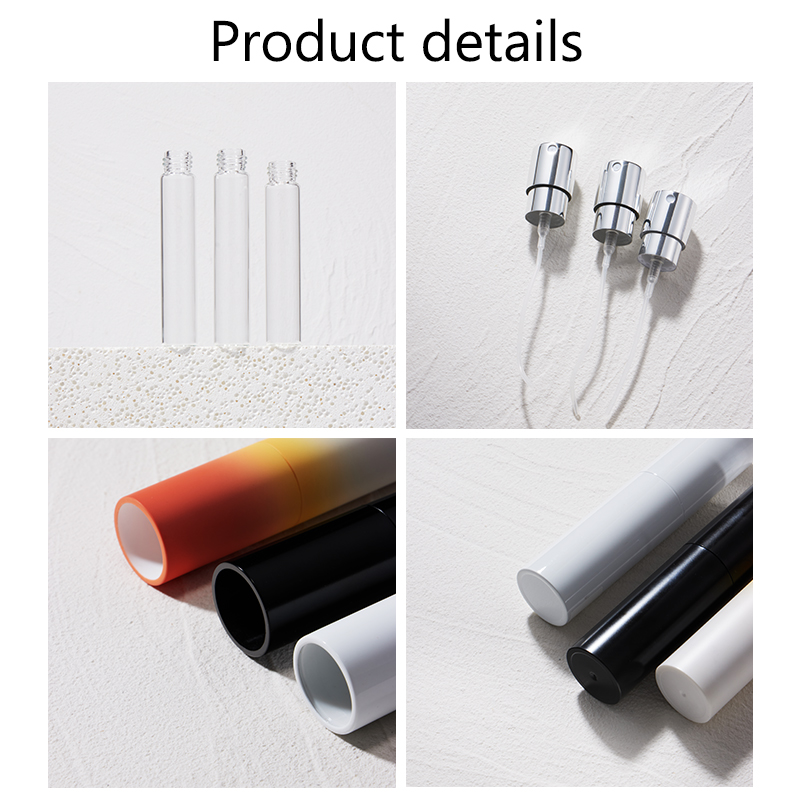
A standard perfume pump dispenses between 0.08 ml and 0.12 ml per spray. For a 100 ml bottle, this yields roughly 900 to 1,250 sprays. The ferrule is the metal collar that crimps the pump assembly onto the bottle neck. Most use aluminum ferrules in silver or gold finish, though some premium lines use zinc alloy for extra weight and texture.

03

The Cap or Overcap

Caps for 100 ml glass perfume bottles range from simple snap-fit plastic to machined zinc alloy, acrylic, or even natural materials like wood, stone resin, and leather. The cap protects the pump nozzle and completes the visual composition of the bottle. Magnetic closure caps, a growing trend in niche perfumery, use rare-earth magnets embedded in the glass neck collar to create a satisfying snap without threads.

04

The Dip Tube

A thin polyethylene or polypropylene tube runs from the pump mechanism down to the base of the glass bottle. Its length is calibrated to the exact internal depth of the 100 ml bottle so the pump draws liquid all the way until the last drop. A tube that is too short will leave 5 to 15 ml of product unreachable at the bottom — a real issue that quality manufacturers account for during production.

05

Surface Treatments and Decoration

The exterior of a glass perfume bottle can receive numerous treatments: sandblasting for a matte frosted effect, UV printing for crisp full-color graphics directly on the glass, hot stamping for metallic logo details, electroplating for full metallic color coverage, and acid etching for permanent decorative patterns. These treatments add both brand identity and tactile interest to the physical bottle.

How Long Does a 100 ml Perfume Bottle Last in Practice

This is one of the most searched questions alongside bottle dimensions, and the answer varies meaningfully depending on application habits.

Light User
1 spray per day
2.5 – 3 years
Average User
2–3 sprays per day
12 – 18 months
Heavy User
5+ sprays per day
6 – 8 months

Beyond spray count, fragrance shelf life itself matters. An opened glass perfume bottle stored at room temperature away from direct light will maintain olfactory quality for 3 to 5 years. Oils and isolates in the formula begin oxidizing after the bottle is opened, so a very light user might notice scent drift before they finish the bottle. Storing the bottle in a drawer, cabinet, or its original box slows this process significantly.

The type of fragrance also matters. Eau de parfum (EDP) formulas typically contain 15% to 20% aromatic concentrate, while eau de toilette (EDT) ranges from 5% to 15%. An EDP in a 100 ml glass perfume bottle delivers more concentrated scent per spray, which often means fewer sprays needed per application — effectively extending the useful life of the bottle further.

Custom 100 ml Glass Perfume Bottle Manufacturing Options

For brands and businesses sourcing 100 ml glass perfume bottles at scale, the range of customization available from modern glass manufacturers is extensive. Each variable affects lead time, minimum order quantity, and per-unit cost.

Glass Type

  • Soda-lime glass — standard, cost-effective, widely available
  • Borosilicate glass — higher thermal resistance, niche use
  • Crystal-clear ultra-white glass — low iron content, premium optical clarity
  • Tinted glass — amber, cobalt blue, emerald green for light protection and aesthetics

Mold and Shape

  • Standard stock molds — fastest lead time, no tooling cost
  • Semi-custom molds — engrave logo or pattern onto existing mold shape
  • Full custom molds — unique silhouette, tooling cost typically USD 3,000 to USD 15,000
  • Lead time for custom mold: 45 to 90 days depending on complexity

Surface Finishing

  • Frosted or matte finish via sandblasting or acid etching
  • Metallic coating via electroplating or vacuum metallization
  • Screen printing or UV printing for graphics and text
  • Hot stamping for gold or silver foil logo application

Hardware and Accessories

  • Pump: standard aluminum, custom-color coated, or premium zinc alloy
  • Cap: plastic, acrylic, zamak alloy, wood, or resin
  • Collar: smooth, knurled, or engraved metal collar options
  • MOQ for custom assembled units: typically 1,000 to 5,000 pieces minimum

When placing an order for custom 100 ml glass perfume bottles, it helps to specify wall thickness requirements upfront. A bottle intended to sit on a prestige retail counter benefits from walls above 5 mm to convey weight and substance. A direct-to-consumer online brand may prefer thinner walls at 3 mm to reduce shipping weight and carbon footprint without sacrificing visual appeal.

Traveling with a 100 ml Glass Perfume Bottle

The 100 ml bottle sits at a critical boundary in international air travel regulations. Understanding the rules prevents confiscation at airport security.

Carry-On Luggage: Not Permitted

Most international aviation authorities, including the TSA in the United States and similar bodies in the EU and UK, apply the 100 ml / 3.4 oz rule for liquids in carry-on bags. A full 100 ml glass perfume bottle is at the exact limit. However, the rules require containers to hold no more than 100 ml — a bottle labeled 100 ml qualifies. The bottle must fit in a single 1-quart (approximately 1-liter) clear resealable plastic bag, which typically holds 5 to 6 small containers. One 100 ml bottle alone almost fills the allotment.

Practically speaking, most security personnel will allow a 100 ml perfume bottle that is clearly labeled and more than half empty. A full sealed 100 ml bottle is technically compliant but may draw extra scrutiny.

Checked Luggage: Permitted with Precautions

A full 100 ml glass perfume bottle is generally permitted in checked baggage without volume restrictions in most countries, though some destinations limit total fragrance or alcohol-based product quantities per passenger. The main concern is breakage. Glass perfume bottles in checked bags benefit from:

  • Wrapping in bubble wrap or clothing for cushioning
  • Sealing in a resealable plastic bag to contain any leaks
  • Placing in the center of the bag away from hard edges
  • Keeping in original box when possible for added protection

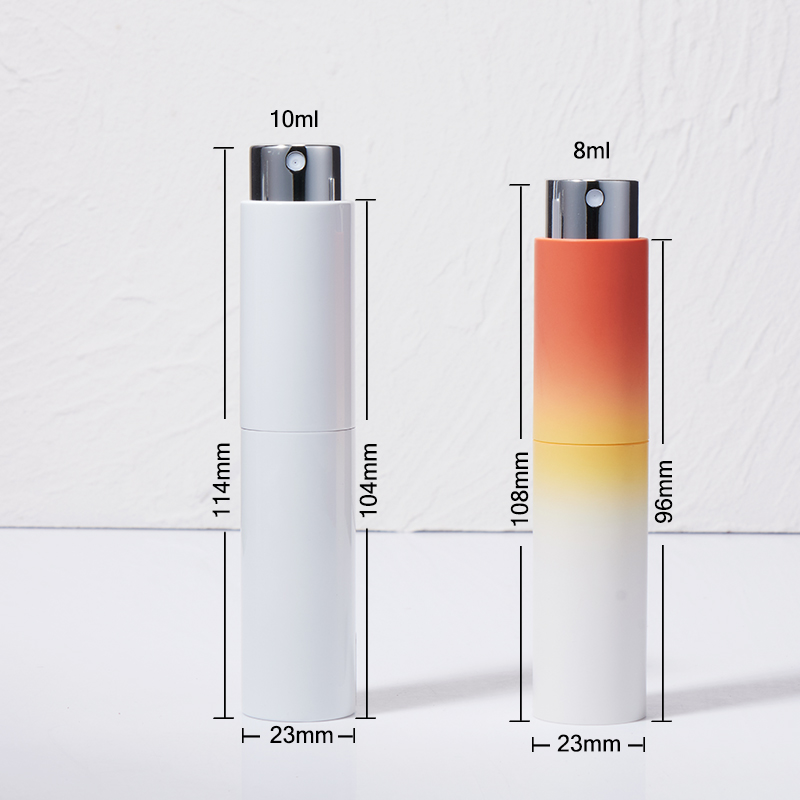
For frequent travelers, the most practical solution is purchasing a 10 ml to 15 ml refillable atomizer and decanting from the 100 ml glass perfume bottle at home. This keeps the main bottle safe, eliminates carry-on concerns, and allows bringing multiple fragrances in a single small pouch.

Displaying and Storing a 100 ml Glass Perfume Bottle

A 100 ml glass perfume bottle is large enough to be a meaningful display piece. Thoughtful placement extends both the aesthetic appeal and the product's lifespan.

1

Avoid Direct Sunlight

Even clear glass perfume bottles should not sit on windowsills in direct sun. UV radiation and heat accelerate oxidation of the fragrance oils. A north-facing surface or interior shelf away from windows is ideal. Fragrances kept out of direct light can maintain quality for 50% longer than those exposed to daily sun cycles.

2

Maintain Stable Temperature

Bathrooms are a popular storage location but not the best choice. Steam and temperature swings between shower use and non-use promote degradation. A bedroom dresser or dedicated fragrance tray in a climate-controlled space maintains the scent more effectively. Ideal storage temperature is between 15°C and 22°C (59°F to 71°F).

3

Use the Original Box for Long-Term Storage

If a 100 ml glass perfume bottle will not be used for weeks or months, returning it to its original cardboard or wooden box blocks light and buffers temperature. Many collectors store backup or seasonal bottles in their boxes specifically for this reason, only opening the box when ready to begin using a new bottle.

4

Keep the Cap On

An uncapped bottle allows volatile top notes to evaporate even when the pump is not pressed. Over time this changes the scent balance, making the fragrance smell heavier or flatter than intended. Always replace the cap after use. Magnetic closure caps on premium glass perfume bottles make this habit easier since they snap shut without needing to align threads.

The Design Language of 100 ml Glass Perfume Bottles by Category

The size, weight, and visual language of a 100 ml glass perfume bottle communicates brand positioning before the fragrance is even sprayed. Distinct conventions have developed across market segments.

Luxury / Couture
  • Thick glass walls, heavy base weight
  • Custom-mold silhouettes unique to the house
  • Minimal printed decoration, etching or embossed glass branding
  • Zamak or metal alloy caps with weighty feel
  • Example aesthetic: Chanel No.5, Tom Ford Private Blend
Niche / Artisan
  • Unconventional shapes or colors expressing concept
  • Natural materials incorporated into cap design
  • Handcraft elements: hand-tied ribbon, wax-sealed cap
  • Numbered limited editions creating collector value
  • Example aesthetic: Le Labo, Maison Margiela Replica
Mass Market / Designer
  • Thinner glass optimized for cost and weight
  • Screen-printed graphics and spray-painted color finishes
  • Plastic or lightweight acrylic caps
  • High visual pop at retail shelf: bright colors, bold logos
  • Example aesthetic: Calvin Klein, Davidoff, L'Oreal

Understanding these conventions helps brands developing their own 100 ml glass perfume bottle design brief. Consumers are fluent in the visual language of fragrance packaging, and the physical object must align with the price point and brand story being communicated. A mass-market price point with luxury-weight glass can feel discordant; equally, a prestige-priced fragrance in thin-walled glass with a plastic cap undermines credibility before the first spray.

Sustainability Trends Reshaping the 100 ml Glass Perfume Bottle

The fragrance packaging industry is undergoing visible shifts driven by both consumer demand and regulatory pressure. The glass perfume bottle is central to these conversations because glass already has a compelling sustainability story — but brands are pushing further.

Refillable Systems

Several major houses now sell a refill pouch or cartridge that clips into the base of the glass perfume bottle, replacing the entire pump assembly or refilling through the base valve. Hermès, Cartier, and Frederic Malle all offer refillable formats for select lines. The economic argument is strong: refill pouches typically cost 20% to 35% less than a full new bottle of the same volume.

Recycled Glass Content

Manufacturers are now offering 100 ml glass perfume bottles made with 20% to 50% post-consumer recycled glass. The challenge is optical quality — recycled glass can carry slight tints or inclusions that affect clarity. New sorting and melting technology is reducing this issue, making recycled-content glass increasingly viable even for optical-clarity applications.

Reduced Overcap Complexity

Historically, luxury fragrance caps combined multiple materials: plastic inner lining, metal shell, lacquered finish, magnetic insert. Simplifying caps to single-material construction improves recyclability. Some brands have moved to mono-material caps — entirely glass, entirely aluminum, or entirely a single polymer — to enable clean recycling streams at end of life.

Lightweighting

Reducing glass weight by 15% to 20% through advanced mold design lowers the carbon footprint of shipping without changing the bottle's external dimensions or perceived quality. Advanced glass manufacturers now use computer-aided mold flow simulation to optimize wall thickness distribution, removing glass from non-visible internal areas while maintaining structural integrity at contact points.

Frequently Asked Questions About 100 ml Perfume Bottles

Is 100 ml the same as 3.4 oz?

Yes. 100 ml converts to exactly 3.3814 fluid ounces, which the fragrance industry rounds to 3.4 oz on packaging. The two designations refer to the same volume.

How many sprays are in a 100 ml glass perfume bottle?

Approximately 900 to 1,250 sprays, depending on pump actuation volume (typically 0.08 to 0.11 ml per spray). Most people use 2 to 4 sprays per application, meaning a 100 ml bottle provides between 225 and 600+ individual applications.

What does 100 ml of perfume weigh?

The liquid fragrance itself weighs approximately 95 to 105 grams depending on alcohol and oil concentration (density slightly below or above 1 g/ml). Adding the glass bottle and hardware brings total weight to 150 to 280 g for a complete, full 100 ml glass perfume bottle.

Can you refill a 100 ml glass perfume bottle?

Yes, with care. The pump ferrule can be removed using a ferrule removal tool or carefully with pliers wrapped in cloth to avoid scratching the glass. Once removed, the bottle can be refilled and re-crimped. Some brands sell dedicated refill bottles specifically designed for this process. Attempting to pry off crimped ferrules risks scratching or cracking the glass neck, so caution is warranted.

Why do some 100 ml glass perfume bottles feel much heavier than others?

Wall thickness and base construction are the primary factors. A prestige glass perfume bottle with a 6 mm to 8 mm wall and weighted glass base can weigh over 200 g empty, while a lightweight commercial bottle with 3 mm walls may weigh only 70 to 90 g empty. This weight differential is often intentional — heavier bottles convey luxury and quality through tactile experience in the hand.