

 中文简体
中文简体 Español
 عربى
عربى
What Kind of Perfume Lasts Longer? Your Complete Guide
Industry News-Content
- 1 The Short Answer: Concentration Is the Biggest Factor
- 2 Fragrance Concentration Categories Explained
- 3 How Fragrance Notes Affect How Long a Scent Stays
- 4 Fragrance Families That Are Known for Longevity
- 5 How Your Skin Type Changes How Long Perfume Lasts
- 6 Application Techniques That Actually Make a Difference
- 7 Why Proper Storage in a Glass Perfume Bottle Matters
- 8 Ingredient Quality and Formulation: Why Cheaper Perfumes Fade Faster
- 9 Layering Techniques to Dramatically Extend Wear
- 10 Oil-Based Perfumes vs. Alcohol-Based Perfumes
- 11 Environmental Factors That Affect How Long Perfume Lasts on You
- 12 A Practical Buying Checklist for Long-Lasting Perfume
The Short Answer: Concentration Is the Biggest Factor
If you want a perfume that genuinely lasts all day, the single most important variable is fragrance concentration — that is, how much pure aromatic compound is mixed into the alcohol-and-water base. Parfum (also called extrait de parfum) contains 20–40% fragrance oil and can last 8 to 12 hours or more on skin, while Eau de Cologne sits at just 2–4% and typically fades within 2 hours. Everything else — your skin type, how you apply the scent, the notes in the formula, even the glass perfume bottle you store it in — layers on top of that fundamental truth.
That said, concentration alone does not tell the whole story. A cheaply formulated Parfum can fade faster than a well-crafted Eau de Parfum because the quality of the raw ingredients, the ratio of base notes to top notes, and the fixatives used in the blend all play significant roles. This guide breaks down every factor so you can make a genuinely informed decision next time you shop.
Fragrance Concentration Categories Explained
The perfume industry uses a tiered naming system to communicate concentration levels. Here is a clear comparison of each category:
| Type | Concentration | Typical Longevity | Sillage (Projection) |
|---|---|---|---|
| Parfum / Extrait | 20–40% | 8–12+ hours | Intimate, close |
| Eau de Parfum (EDP) | 15–20% | 5–8 hours | Moderate |
| Eau de Toilette (EDT) | 5–15% | 3–5 hours | Light to moderate |
| Eau de Cologne (EDC) | 2–4% | 1–2 hours | Very light |
| Eau Fraîche | 1–3% | Under 1 hour | Minimal |
One thing worth noting: the boundaries between these categories are not legally enforced in most countries. A brand can technically label a product Eau de Parfum even if the concentration falls closer to the EDT range. This is why reading independent fragrance reviews and checking ingredient transparency matters when you are specifically shopping for longevity.
How Fragrance Notes Affect How Long a Scent Stays
Every perfume is structured around a three-act composition: top notes, heart (middle) notes, and base notes. These layers evaporate at different rates, and understanding them explains why some perfumes seem to vanish quickly while others linger for hours.
Top Notes
Top notes are what you smell in the first 15 to 30 minutes after application. They are made from small, lightweight molecules that evaporate quickly. Common top notes include citrus ingredients like bergamot, lemon, and grapefruit, as well as fresh herbs like basil and mint. These smell bright and clean but they are never going to last — their job is to make a great first impression before handing off to the heart.
Heart Notes
Heart notes emerge after the top notes fade and form the core character of the fragrance. Florals like rose, jasmine, and ylang-ylang are classic heart note choices, as are spices like cinnamon and cardamom. These notes typically last anywhere from 2 to 4 hours on skin.
Base Notes
Base notes are the key to long-lasting perfume. They are made from large, heavy molecules that evaporate very slowly and can stay detectable on skin for 6 to 12 hours or even longer. Common long-lasting base note ingredients include:
- Sandalwood — a creamy, woody note that blends seamlessly with skin
- Vetiver — an earthy, smoky root with exceptional staying power
- Oakmoss and labdanum — classic fixatives from traditional chypre compositions
- Musks — synthetic or natural, they act as anchors that help all other notes hold
- Ambergris and ambrox — marine-animalic fixatives with extraordinary tenacity
- Patchouli — a polarizing but highly persistent earthy-sweet note
- Oud (agarwood) — one of the densest, most long-lasting raw materials in perfumery
- Benzoin and vanilla — resinous sweet notes that cling to skin and fabric
If you want a fragrance that genuinely lasts, look for one where heavy base notes dominate the composition. Perfumes built on oud, musk, and resins consistently outperform citrus-forward or aquatic scents in terms of wear time.
Fragrance Families That Are Known for Longevity
Certain scent families are structurally built for staying power. If longevity is your priority, these are the categories worth exploring first.
Oriental and Amber Fragrances
Oriental perfumes are rich, warm, and heavily centered on resins, spices, and musks. Think of compositions built around amber, incense, and vanilla with a dry-down that can last well over 10 hours on the right skin chemistry. Classic examples include Shalimar by Guerlain and Black Opium by YSL. These are among the most persistent fragrances commercially available.
Woody and Oud Fragrances
Oud-based fragrances are arguably the longest-lasting category in mainstream perfumery. Oud oil naturally contains complex macrocyclic compounds that bond with skin proteins, making the scent difficult to remove even after washing. Middle Eastern perfume houses like Amouage, Rasasi, and Swiss Arabian regularly produce oud-centric compositions that last 12 hours or longer. Even Western designer brands that use synthetic oud approximations tend to produce woody fragrances with above-average longevity.
Chypre Fragrances
The chypre family — built on the accord of bergamot, labdanum, and oakmoss or its modern substitutes — has a built-in structure that anchors beautifully on skin. Even though IFRA regulations have restricted natural oakmoss in recent decades, modern chypres reformulated with synthetic alternatives still demonstrate impressive wear time, typically 6 to 9 hours for an EDP concentration.
Gourmand Fragrances
Gourmand scents — those that smell edible, like caramel, chocolate, praline, or coffee — are almost always built on a heavy musk and vanilla base. This gives them natural longevity despite their sweet, approachable character. Many popular gourmands like La Vie Est Belle by Lancôme or Angel by Mugler are consistently praised for their all-day wear.
Fragrance Families That Fade Fastest
By contrast, these families are structurally less persistent and require more frequent reapplication:
- Citrus and citrus-forward aromatic fougères — citrus molecules are among the smallest and most volatile in perfumery
- Aquatic and marine fragrances — calone and similar marine aroma chemicals are highly volatile
- Light green fragrances — grassy, fresh-cut-herb compositions evaporate quickly by design
This does not mean these families are inferior — they are designed to be fresh and airy. But if you expect a single morning spray to carry you through a 10-hour workday, a citrus EDC will disappoint where a woody EDP would succeed.
How Your Skin Type Changes How Long Perfume Lasts
The same perfume can smell completely different — and last a wildly different amount of time — on two different people. Skin chemistry is a genuine variable, not a myth or a marketing excuse.
Oily Skin Holds Scent Much Better
People with naturally oily skin consistently report longer fragrance wear than people with dry skin. The sebum (natural skin oil) acts as a fixative that slows down the evaporation of fragrance molecules. In practice, a perfume that lasts 5 hours on dry skin might last 7 to 8 hours on oily skin with no other changes.
Dry Skin and What to Do About It
If you have dry skin, the single most effective technique to improve longevity is applying an unscented moisturizer or body lotion to pulse points before spraying your fragrance. The moisturizer creates a lipid layer that mimics the function of skin sebum. Petroleum jelly (Vaseline) is especially effective — applying a thin layer to wrists and neck before spraying can add 2 to 3 extra hours of wear. You can also use a fragrance-matched body lotion if the brand offers one, which layering also intensifies the scent profile.
Body Heat and pH
Warm body temperature accelerates the diffusion of fragrance molecules from skin, which is why pulse points (wrists, neck, inner elbows, behind knees) are the classic application spots — the blood vessels close to the surface generate warmth that continuously projects the scent. Skin pH also matters: slightly acidic skin (pH around 4.5–5.5) interacts differently with fragrance chemistry than alkaline skin, which can make some musks and florals smell sharper or shorter-lived.
Application Techniques That Actually Make a Difference
How you apply perfume affects longevity almost as much as the perfume itself. Several common habits can actually shorten wear time rather than extend it.
Do Not Rub Your Wrists Together
This is one of the most widespread misconceptions in perfume application. Rubbing your wrists together generates friction and heat that physically breaks apart the top note molecules before they can properly unfold. The result is a faster, flatter opening and a noticeably shorter dry-down. Spray or dab, then let the skin absorb the fragrance without rubbing.
Spray on Skin, Not on Clothes
While fabric can hold fragrance for an extremely long time (a well-sprayed scarf can smell weeks later), applying directly to skin allows the fragrance to interact with body heat and chemistry in the way the perfumer intended. The warmth activates the different note layers in sequence. Spraying fabric skips this interaction and can produce a flat, one-dimensional scent impression.
Apply to Multiple Pulse Points
Rather than spraying just one location heavily, distribute the fragrance across multiple warm spots: wrists, the hollow of the neck, inner elbows, behind the knees, and even on the chest. This creates a fuller scent envelope that projects from multiple directions and ensures that as one area fades, others continue to broadcast the fragrance.
Spray After Showering
The single best time to apply perfume is immediately after a warm shower. Your pores are open, your skin is warm, and it has just been cleared of competing odors. The fragrance absorbs deeply and begins a slow, even diffusion that typically adds 30 to 60 minutes of extra wear compared to applying perfume to cold, dry skin mid-day.
Hair as a Fragrance Carrier
Hair holds fragrance extraordinarily well due to its porous, fibrous structure. A light mist through hair or on a hairbrush before combing can extend the overall scent impression significantly. However, the alcohol in most fragrances can dry out hair over time, so hair-specific fragrance mists (which use lighter solvents) are gentler for frequent use.
Why Proper Storage in a Glass Perfume Bottle Matters
Even the longest-lasting perfume can have its longevity and quality degraded by poor storage. The glass perfume bottle is not just decorative — its material properties are specifically chosen to protect the fragrance inside, and how you store it directly affects how long both the scent and the bottle's contents remain viable.
Why Glass Is Used for Perfume Bottles
A quality glass perfume bottle is chemically inert — it does not react with the fragrance compounds inside the way plastic or metal containers might. Plastic can leach chemicals into the fragrance over time and may allow micro-evaporation through the walls. Metal can react with acidic fragrance components and alter the scent profile. Glass, particularly the thick borosilicate or lead-free crystal glass used in premium perfume vessels, maintains a completely neutral environment that preserves the original formula indefinitely when the bottle is properly sealed.
Beyond chemistry, a well-made glass perfume bottle provides an airtight seal through its crimped spray mechanism or ground glass stopper, preventing oxidation — one of the primary causes of fragrance degradation. When oxygen enters the bottle and reacts with fragrance molecules, it breaks down the more delicate components first (typically the top notes), leaving the perfume smelling unbalanced and stale.
Light Exposure Degrades Fragrance Faster Than Almost Anything Else
UV light is the most destructive environmental factor for perfume preservation. Photochemical reactions triggered by UV exposure break down the molecular structure of fragrance compounds in ways that cannot be reversed. A clear glass perfume bottle sitting on a sunny windowsill can have its contents noticeably degraded within a few months. Some darker-tinted glass perfume bottles — amber, cobalt blue, or opaque lacquered glass — offer inherent UV protection. For clear bottles, storing them in their original box or a dedicated drawer provides meaningful protection.
Temperature Stability Is Critical
Perfume should be stored at a stable, cool temperature — ideally between 15°C and 20°C (59°F to 68°F). Fluctuating temperatures cause the liquid inside the glass perfume bottle to expand and contract, which gradually compromises the seal and accelerates evaporation. Bathrooms are actually one of the worst places to store perfume despite being the most common choice — the heat and humidity from showers create exactly the kind of fluctuating environment that degrades fragrance quickly. A bedroom drawer, a closet shelf, or even the original fragrance box kept away from radiators are all better options.
Keep the Bottle Upright
Storing a glass perfume bottle on its side can cause liquid to press continuously against the spray nozzle seal, accelerating wear on the gasket and potentially leading to slow leaks. Upright storage keeps the liquid away from the closure mechanism and extends the functional life of the spray pump.
Decanting and Small Glass Perfume Bottles for Travel
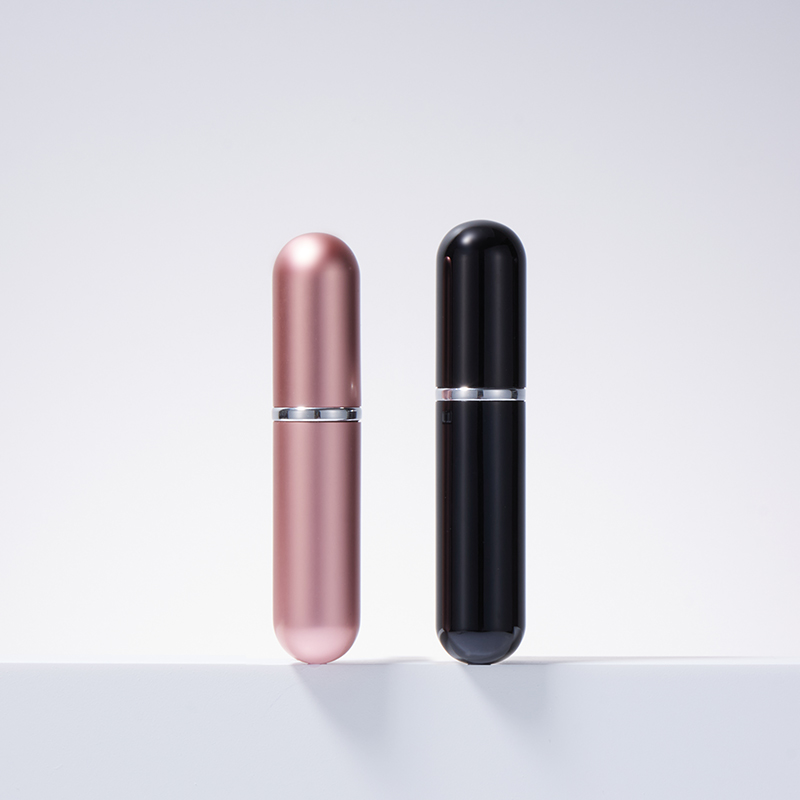
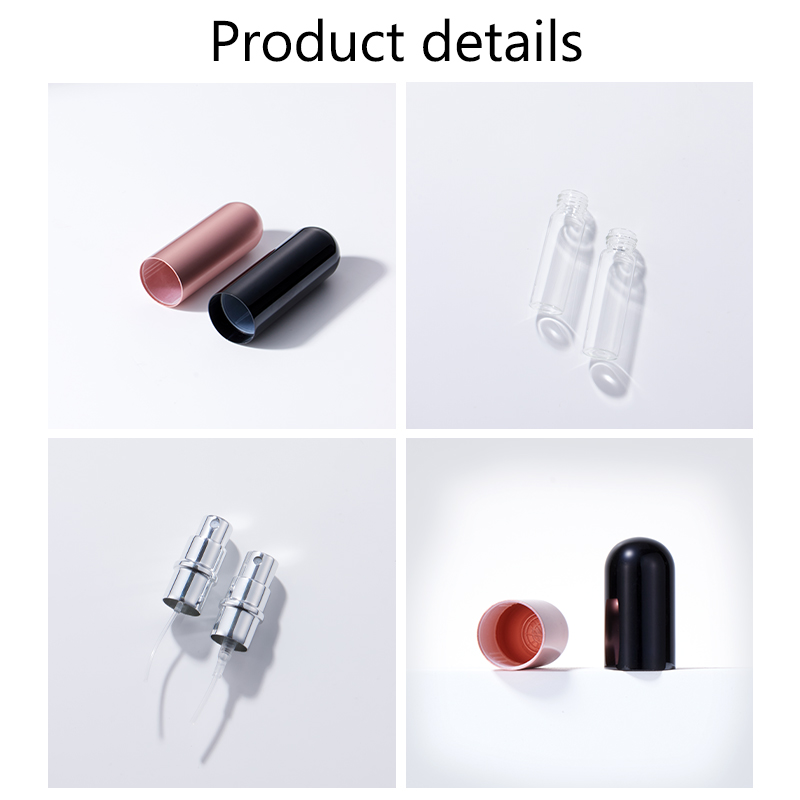
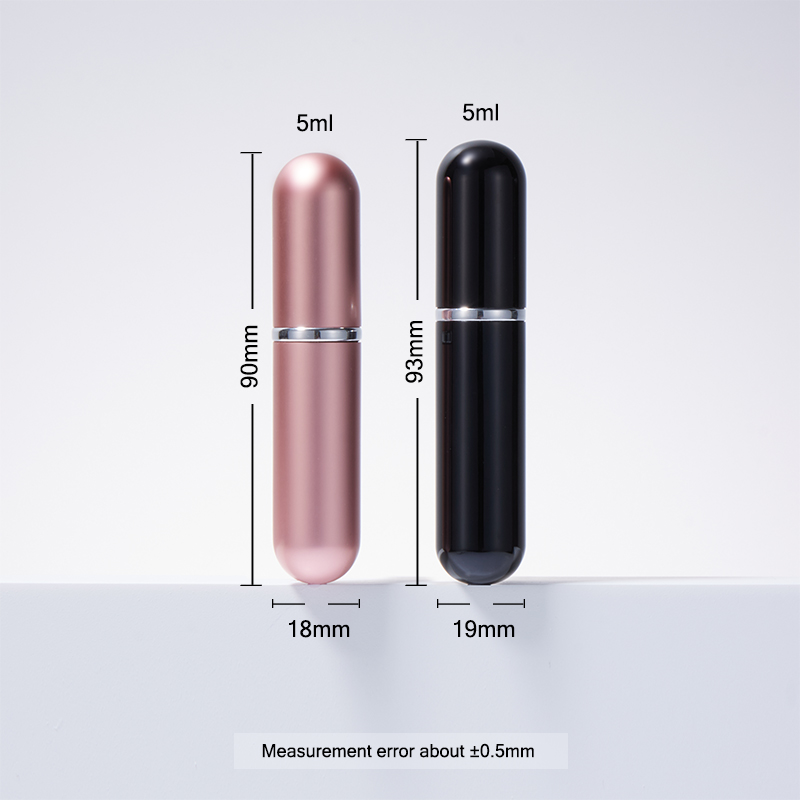
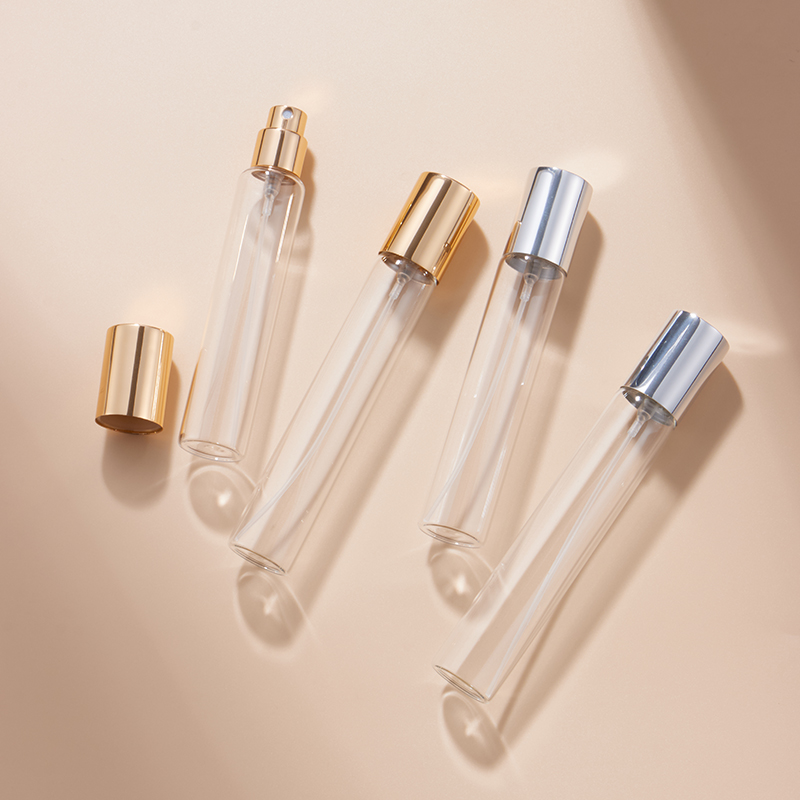
Repeatedly opening a full-sized bottle to decant small amounts for travel increases oxidation exposure. Many fragrance enthusiasts invest in small glass perfume bottles with atomizer mechanisms — typically 5ml or 10ml travel flacons — to carry a working supply without repeatedly exposing the main bottle. These small glass perfume bottles maintain the same chemical neutrality as the original, keeping the fragrance stable while limiting air contact with the primary supply.
Ingredient Quality and Formulation: Why Cheaper Perfumes Fade Faster
Not all perfumes at the same concentration level perform equally. The quality and quantity of ingredients — and the skill with which they are assembled — have a substantial impact on how long a fragrance lasts on skin.
Fixatives and Anchoring Ingredients
Fixatives are ingredients added specifically to slow down the evaporation of other components in the fragrance. In classical perfumery, natural fixatives like ambergris, civet, and oakmoss were used extensively. Modern regulations (particularly from the International Fragrance Association, IFRA) have restricted many natural fixatives due to allergen concerns, so contemporary perfumers rely heavily on synthetic alternatives. Iso E Super, Ambroxan, Cashmeran, and various polycyclic musks are among the most commonly used modern fixatives, and their quality and concentration in the formula significantly affect longevity.
Budget fragrances often use minimal fixative levels to keep production costs down, resulting in formulas that smell good at first spray but fade within 2 to 3 hours regardless of concentration labeling. Niche and artisan perfume houses that invest heavily in raw material quality frequently produce Eau de Parfum formulas that outlast designer-brand Parfums in real-world wear.
Natural vs. Synthetic Ingredients
This is a nuanced area. Natural ingredients are not automatically longer-lasting than synthetic ones — in fact, some high-quality synthetic aroma chemicals are specifically engineered for exceptional tenacity. Ambroxan (derived from ambergris) is a synthetic molecule that bonds with skin receptors in a unique way, producing a warm, skin-scent quality that can last 24 hours or more. Meanwhile, natural bergamot essential oil (a common top note) fades within 30 minutes despite being a natural ingredient.
The key factor is molecular weight and volatility, not natural vs. synthetic origin. Heavy molecular weight compounds — whether natural resins or synthetic musks — last longer because they evaporate more slowly.
The Role of Alcohol Quality
Perfume alcohol (typically ethanol at 95% purity or above) serves as the carrier that allows the fragrance to be applied as a fine mist and evaporate quickly from skin, leaving only the aromatic compounds behind. Low-grade alcohol or improperly denatured alcohol can leave unwanted residues on skin that compete with the fragrance, reducing clarity and potentially affecting longevity. High-quality perfumes use pharmaceutical-grade denatured alcohol that evaporates cleanly, leaving the fragrance composition to perform as designed.
Layering Techniques to Dramatically Extend Wear
Fragrance layering is one of the most practical and underused techniques for extending how long a scent lasts. It involves applying multiple fragrance products from the same line — or compatible complementary products — to build a multi-dimensional scent that has more depth, complexity, and staying power than any single product alone.
Body Wash + Lotion + Perfume
Many fragrance brands offer matching body washes, shower gels, and body lotions. Using all three in sequence creates a scent foundation on skin that can add 3 to 4 hours of extra longevity compared to applying the perfume on bare skin alone. The body wash deposits a faint base layer, the lotion adds a moisturizing fixative layer, and the perfume provides the concentrated top performance.
Fragrance Layering With Complementary Scents
More advanced fragrance layering involves combining two separate perfumes strategically. A common approach is to apply a simple, single-note base fragrance (like a pure musk or sandalwood oil) first and then apply the primary complex fragrance on top. The base note fragrance anchors the more volatile components of the top perfume, extending the overall wear. This technique is widely practiced in Middle Eastern fragrance culture, where oud oil is often applied to skin before a full fragrance to create a deeply personal, long-lasting scent experience.
Scented Oils Under Spray Perfume
Perfume oils (which contain no alcohol) last significantly longer on skin than alcohol-based spray perfumes because there is no alcohol to drive rapid initial evaporation. Applying a complementary perfume oil to pulse points before spraying your alcohol-based fragrance on top combines the immediate projection of the spray with the slow, sustained release of the oil underneath. This is an especially effective technique for people with dry skin who struggle with longevity.
Oil-Based Perfumes vs. Alcohol-Based Perfumes
The debate between oil-based and alcohol-based fragrances is directly relevant to the question of longevity, and both formats have genuine advantages depending on context.
How Oil-Based Perfumes Perform
Oil-based perfumes generally outlast alcohol-based equivalents by 2 to 4 hours on most skin types. Because there is no alcohol to evaporate and carry the fragrance away from skin, oil formulas release their aromatic compounds more slowly and steadily. The trade-off is projection — oil perfumes tend to stay very close to the skin (low sillage), creating an intimate scent experience rather than a room-filling presence. This makes them excellent for personal signature scents or professional environments where strong projection is inappropriate.
Oil-based perfumes are also typically sold in small roll-on or dabber bottles rather than spray glass perfume bottles, which changes the application dynamic. A roll-on allows precise application to pulse points without overspray, and the sealed rollerballs minimize air exposure between uses, keeping the formula fresher for longer.
Alcohol-Based Perfumes and Their Advantages
Alcohol-based perfumes in a quality glass perfume bottle with an atomizer spray offer superior sillage and a more complex, evolving scent experience. The alcohol carries top notes away from the skin rapidly, creating that initial burst of freshness and projection that makes a strong first impression. For social events, occasions where you want people to notice your fragrance across a room, or performance-focused wearing, alcohol-based formulas in a high concentration (EDP or Parfum) remain the standard choice.
Environmental Factors That Affect How Long Perfume Lasts on You
Even with the perfect perfume and ideal application technique, environmental conditions play a real role in how the fragrance behaves throughout the day.
Heat and Humidity
Hot weather accelerates evaporation, which is why the same perfume that lasts 8 hours in a cool European autumn might only last 5 hours in a humid tropical climate. High ambient humidity, however, can actually help carry fragrance molecules through the air more effectively, increasing perceived sillage even as wear time decreases. In hot conditions, reapplying from a small travel glass perfume bottle is often more practical than trying to overload skin with fragrance in the morning.
Wind
Wind disperses the fragrance cloud around you very effectively but also means the scent leaves your personal space faster. In windy conditions, perfume applied to neck and chest areas is more protected by clothing and hair than wrist-applied fragrance, which is fully exposed to airflow.
Physical Activity
Exercise and physical activity increase body temperature and sweating, which initially amplifies fragrance projection but ultimately accelerates evaporation and can alter the scent profile through interaction with sweat compounds. Fragrances with strong, simple base notes (musks, woods, amber) tend to survive physical activity better than complex floral or citrus compositions.
A Practical Buying Checklist for Long-Lasting Perfume
If you are actively shopping for a perfume specifically prioritizing longevity, use these criteria as a filter:
- Choose EDP or Parfum concentration — avoid EDT or below if all-day wear is the goal.
- Look for heavy base notes in the listed ingredients — oud, sandalwood, vetiver, musks, amber, labdanum, benzoin, or vanilla are all positive signals.
- Prioritize oriental, woody, gourmand, or chypre fragrance families over citrus, aquatic, or fresh green families.
- Test on your own skin before purchasing — wear time varies significantly by individual skin chemistry.
- Read community reviews on longevity specifically — sites like Fragrantica include longevity ratings from thousands of real users.
- Check the glass perfume bottle quality — a well-constructed glass perfume bottle with a secure atomizer seal protects the formula and ensures consistent spray performance over time.
- Consider niche or Middle Eastern brands — houses like Amouage, Initio, Maison Francis Kurkdjian, or Arabian Oud frequently outperform mainstream designer brands in raw longevity.
Longevity is ultimately a combination of chemistry, craft, application, storage, and skin biology. No single factor guarantees a fragrance that lasts all day — but by optimizing each element, you can dramatically extend the performance of whatever scent you love.
Our Products //
Related Product

- E-mail: [email protected]
- Phone: +86-15962399191
- Add: No. 60-7, East Side of Jinzhong Road, Jinfeng Town, Zhangjiagang City, Suzhou City, Jiangsu Province
Copyright © Zhangjiagang Haojie Packaging Technology Co., Ltd. All Rights Reserved.
 China Cosmetic Packaging Manufacturers
China Cosmetic Packaging Manufacturers