

 中文简体
中文简体 Español
 عربى
عربى
What is Fragrance Vials?
Industry News-Content
- 1 Fragrance Vials: The Direct Answer
- 2 Fragrance Vial vs Glass Perfume Bottle: What Actually Separates Them
- 3 Glass Types Used in Fragrance Vial Production
- 4 Standard Fragrance Vial Sizes and Their Uses
- 5 Cap and Closure Options for Fragrance Vials
- 6 Manufacturing Process: From Glass Tube to Finished Vial
- 7 Filling and Dispensing Mechanisms
- 8 Labeling, Printing, and Branding Options
- 9 Quality Control Checks Before Bulk Shipment
- 10 Sustainability Considerations in Glass Vial Sourcing
- 11 How to Choose a Fragrance Vial Supplier
- 12 Frequently Asked Questions
- 12.1 What is the difference between a fragrance vial and an atomizer?
- 12.2 Can fragrance vials be refilled?
- 12.3 Do fragrance vials need to be tinted to protect the fragrance oil?
- 12.4 What is the typical minimum order quantity for custom fragrance vials?
- 12.5 Why do some fragrance vials cost more per unit than similarly sized glass perfume bottles?
- 12.6 Is borosilicate glass necessary for standard perfume sampling?
Fragrance Vials: The Direct Answer
A fragrance vial is a small glass container, typically holding between 0.5ml and 15ml, used to sample, test, or sell perfume oils and concentrates without committing a customer to a full-size bottle. The core difference between a fragrance vial and a standard glass perfume bottle is purpose and volume: vials are built for single-use sampling, gifting sets, or subscription programs, while bottles are built for repeated daily use and refillable retail packaging. Buyers sourcing fragrance vials at scale should prioritize three things in this order: glass composition (soda-lime versus borosilicate), closure compatibility with the fragrance oil's viscosity, and fill-line consistency across a production batch. Get those three right and everything else in this guide becomes a matter of preference rather than risk.
Fragrance Vial vs Glass Perfume Bottle: What Actually Separates Them
The terms get used loosely in sourcing conversations, so it helps to separate them by function rather than size alone. A fragrance vial is disposable or semi-disposable by design. A glass perfume bottle is meant to survive months of handling, sun exposure, and repeated cap removal.
Fragrance Vial
- Volume range: 0.5ml to 15ml
- Common closures: snap cap, dab-on wand, or heat-sealed tip
- Primary use: sampling, testers, subscription boxes
- Glass wall thickness: usually 0.6mm to 1mm
Glass Perfume Bottle
- Volume range: 30ml to 200ml
- Common closures: crimp pump, screw cap, or atomizer spray head
- Primary use: retail shelf product, refill program
- Glass wall thickness: usually 1.5mm to 3mm
Glass Types Used in Fragrance Vial Production
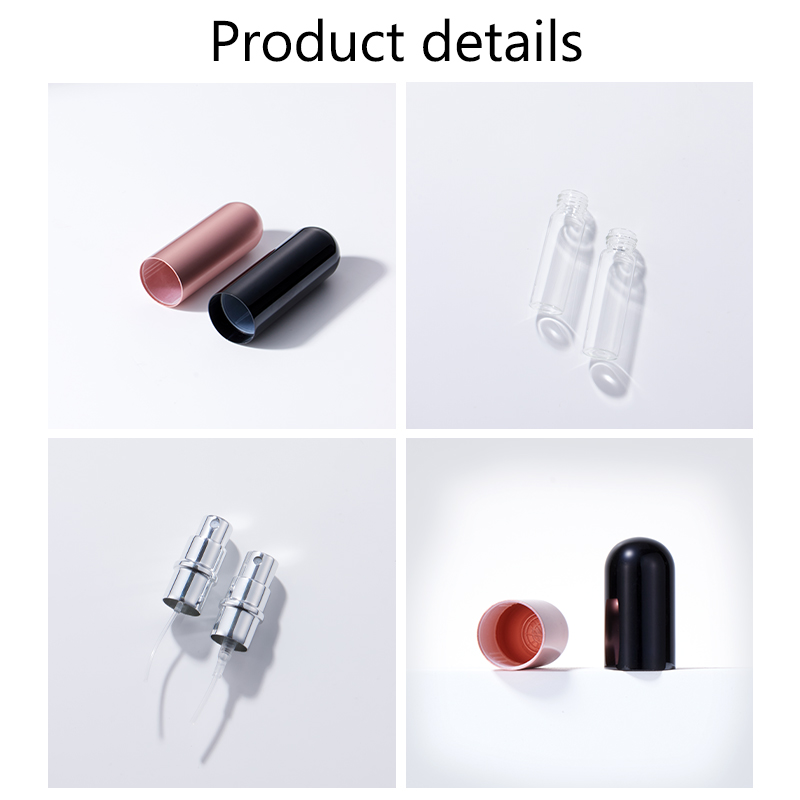
Most fragrance vials on the market are made from one of two glass families. The choice affects clarity, thermal shock resistance during filling, and how well the glass resists interaction with alcohol-based fragrance formulas over time.
| Glass Type | Typical Composition | Best For | Notes |
|---|---|---|---|
| Soda-Lime Glass | Silica, soda ash, limestone | Standard sample vials, gift sets | Lower cost, good clarity, moderate thermal resistance |
| Borosilicate Glass | Silica with boron trioxide | Concentrated oils, essential oil vials | Higher thermal shock resistance, more chemically inert |
| Amber or Cobalt Tinted Glass | Soda-lime or borosilicate with metal oxide tint | UV-sensitive fragrance oils | Blocks a portion of UV light, slows oxidation of light-sensitive notes |
Clear soda-lime vials remain the most requested option for testers and subscription sampling because customers want to see the liquid color before committing to a full bottle purchase. Amber and cobalt tints are more common in essential oil vials and niche perfume houses that hold formulas for longer storage periods before they reach the end customer.
Standard Fragrance Vial Sizes and Their Uses
Volume selection is rarely arbitrary. Each size range maps to a specific stage of the customer journey, from first impression to purchase decision.
| Size | Typical Application | Common Closure |
|---|---|---|
| 0.5ml to 1ml | Single-spray blotter samples, trade show giveaways | Heat-sealed tip |
| 2ml to 3ml | Standard perfume tester, subscription box sample | Snap cap or dab wand |
| 5ml | Travel-size purchase, mini gift set | Roller ball or spray atomizer |
| 10ml to 15ml | Entry-level retail size, refill vial | Fine mist spray pump |
Cap and Closure Options for Fragrance Vials
The closure decides whether a vial performs well in the field. A heat-sealed tip works for one-time sampling but cannot be reopened cleanly, while a snap cap allows repeated dabbing without leaking during shipping.
- Heat-sealed glass tip — the vial is drawn to a point and sealed with heat, then snapped open by the end user. Common for one-time blotter samples.
- Snap cap with rubber stopper — reusable, keeps the fragrance sealed between uses, standard for subscription sampling programs.
- Dab-on wand applicator — a small wand attached to the cap for direct skin application, popular for oil-based perfumes.
- Roller ball insert — a metal or plastic ball fitted into the neck, used for solid or oil perfumes that need controlled dispensing.
- Mini spray atomizer — a scaled-down version of a full perfume pump, used on larger vials from 5ml upward.
Fragrance oils with higher viscosity, such as attar or solid perfume bases, generally perform better with dab wands or roller balls. Alcohol-based eau de parfum and eau de toilette formulas move more freely through spray atomizers because the lower viscosity clears the pump mechanism without clogging.
Manufacturing Process: From Glass Tube to Finished Vial
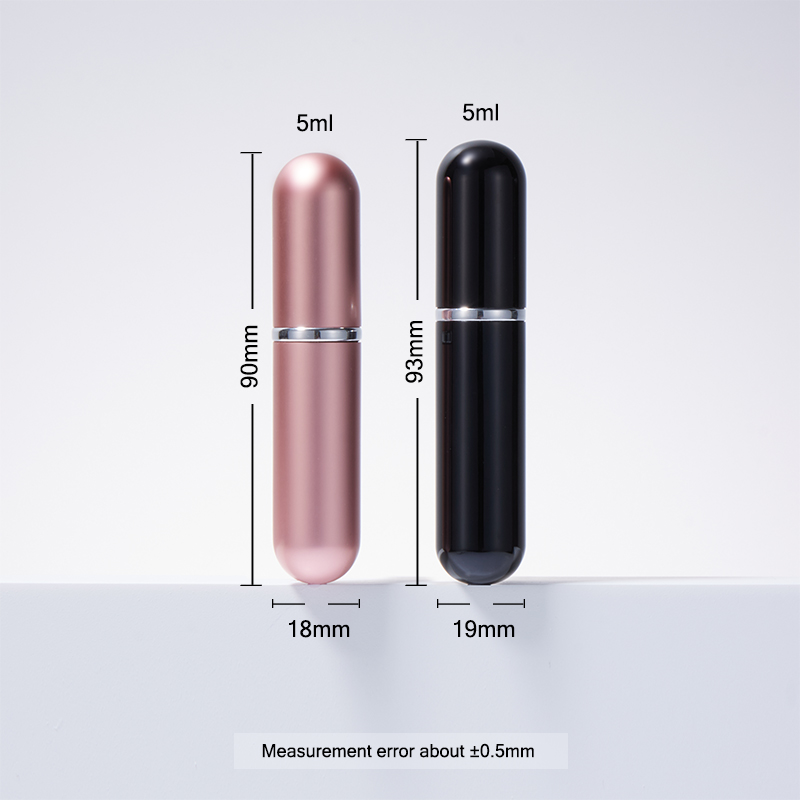
Fragrance vials are almost always produced through tube-forming rather than mold-blowing, since tube-forming gives tighter wall consistency at small volumes.
- Raw glass tubing is cut to the target vial length using a rotary cutting wheel.
- Each tube segment is heated at one end and shaped into the base using a flame-forming lathe.
- The opposite end is shaped into the neck and finish, matching the intended closure type.
- Vials pass through an annealing lehr, a controlled cooling tunnel that relieves internal stress in the glass.
- Finished vials are inspected for wall thickness, neck diameter, and surface defects before packing.
- Vials are boxed in partition trays to prevent glass-on-glass contact during transit.
Annealing is the step buyers overlook most often. A vial that skips proper annealing will show stress fractures under the exact conditions a fragrance vial faces daily: temperature swings during international shipping and repeated handling by hand.
Filling and Dispensing Mechanisms
Filling method depends on order volume and whether the buyer wants pre-filled vials or empty vials to fill in-house.
Manual Pipette Filling
Suited for small batches under 500 units, common for indie perfume houses testing new formulas before committing to automated filling.
Semi-Automatic Piston Filling
Handles a few thousand units per shift with consistent fill volume, a common middle-ground choice for growing brands.
Automated Rotary Filling Line
Used for large production runs, integrates capping and labeling into one continuous line, reducing per-unit labor cost.
Labeling, Printing, and Branding Options
Branding on a fragrance vial has to survive contact with alcohol-based liquid and skin oils, which rules out standard paper labels for anything the customer will handle repeatedly.
Common approaches include screen printing directly onto the glass surface, UV-cured digital printing for small-batch runs with variable artwork, and shrink sleeve labels that wrap fully around the vial body. Screen printing holds up best against solvent exposure and repeated handling, while shrink sleeves allow full-color branding at lower minimum order quantities, which suits smaller fragrance brands testing a new product line.
Quality Control Checks Before Bulk Shipment
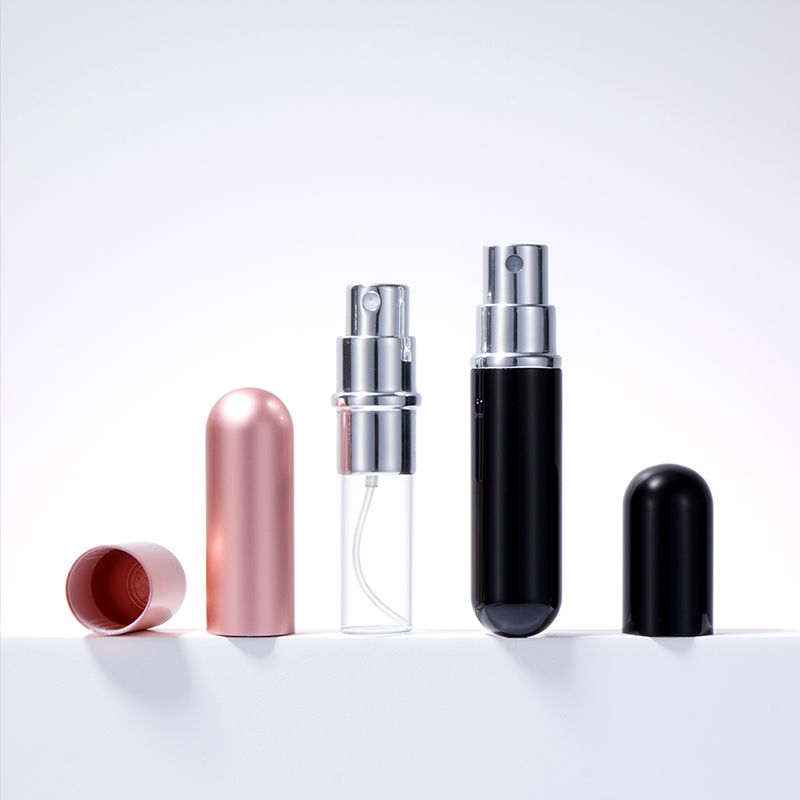
A vial order that looks fine in a sample batch can still fail once scaled to a full production run, so checks should happen at three points rather than only at the end.
- Neck finish measurement against the closure's inner diameter, checked with a go/no-go gauge
- Wall thickness sampling across the batch, not just the first and last unit produced
- Fill line accuracy check on a random sample from each production shift
- Cap seal test using an inverted-vial leak check over a 24-hour window
- Visual defect scan for bubbles, seed inclusions, and mold seam lines
Sustainability Considerations in Glass Vial Sourcing
Glass is fully recyclable without loss of material quality, which sets fragrance vials apart from plastic sample packaging in terms of end-of-life impact. Buyers focused on sustainability messaging should ask suppliers directly about recycled cullet content in the glass batch, since this varies significantly between manufacturers and is not always disclosed unless requested. Reducing vial wall thickness where structurally safe also lowers shipping weight and the associated fuel use per unit shipped, which matters more at container-load volumes than it does for a single sample order.
How to Choose a Fragrance Vial Supplier
Price per unit is the easiest number to compare and the least reliable way to judge a supplier. These factors matter more once an order moves past a few hundred pieces.
- Ask for a physical sample batch before confirming a bulk order, not just a product photo
- Confirm minimum order quantity per glass color and closure combination, since mixing options often raises the minimum
- Check whether the factory produces the closure in-house or sources it from a separate vendor, which affects lead time
- Request the annealing process documentation if the order is for export, since stress-related breakage during ocean freight is a common claim dispute
- Compare packaging methods for transit, since partition trays reduce breakage far more than bulk-packed boxes
Frequently Asked Questions
What is the difference between a fragrance vial and an atomizer?
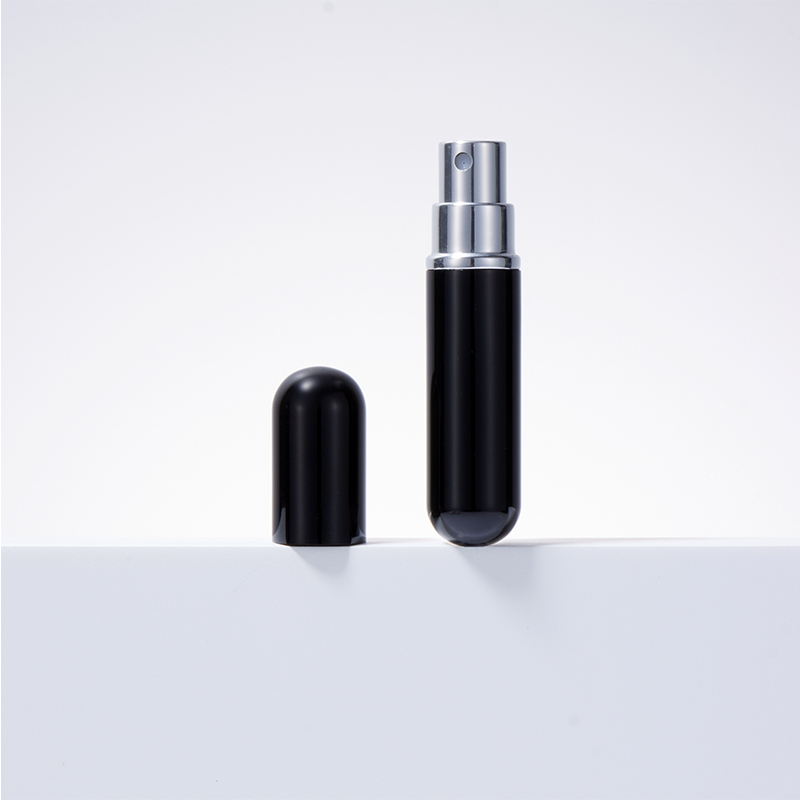
An atomizer refers to the spray mechanism itself, while a fragrance vial refers to the glass container. A vial can be fitted with an atomizer, a dab wand, or a simple snap cap depending on how the fragrance will be dispensed.
Can fragrance vials be refilled?
Vials with a snap cap or spray pump can usually be refilled by hand. Heat-sealed tip vials are designed for single use and cannot be resealed cleanly once opened.
Do fragrance vials need to be tinted to protect the fragrance oil?
Tinting helps with light-sensitive formulas but is not required for every fragrance. Clear glass is standard for short-term samples that will be used within weeks, while amber or cobalt glass suits products expected to sit in storage or on a shelf for longer periods.
What is the typical minimum order quantity for custom fragrance vials?
This varies by manufacturer and by how much customization is requested. Stock shapes with standard closures generally carry lower minimums than fully custom molds or unusual tinted glass runs.
Why do some fragrance vials cost more per unit than similarly sized glass perfume bottles?
Small-volume tube-formed glass requires more precise handling per unit than larger mold-blown bottles, and low-volume custom printing or tinting adds cost that does not scale down proportionally with size.
Is borosilicate glass necessary for standard perfume sampling?
Not for most sampling programs. Borosilicate is worth the added cost mainly for concentrated oils or formulas that will face temperature swings during storage or shipping.
Our Products //
Related Product

- E-mail: [email protected]
- Phone: +86-15962399191
- Add: No. 60-7, East Side of Jinzhong Road, Jinfeng Town, Zhangjiagang City, Suzhou City, Jiangsu Province
Copyright © Zhangjiagang Haojie Packaging Technology Co., Ltd. All Rights Reserved.
 China Cosmetic Packaging Manufacturers
China Cosmetic Packaging Manufacturers