

 中文简体
中文简体 Español
 عربى
عربى
What Actually Makes Perfumes Last Longer?
Industry News-Content
- 1 The Short Answer: What Actually Makes Perfumes Last Longer
- 2 Fragrance Concentration: The Biggest Driver of Longevity
- 3 How Your Skin Chemistry Affects How Long Perfume Lasts
- 4 Where and How You Apply Perfume Changes Everything
- 5 Layering Techniques That Multiply Longevity
- 6 How Proper Storage Preserves Fragrance Longevity Over Time
- 7 Environmental Factors That Shorten Fragrance Wear
- 8 Olfactory Fatigue: Why You Think Your Perfume Has Faded When It Hasn't
- 9 Strategic Reapplication: Making Your Bottle Last and Your Scent Persist
- 10 Common Mistakes That Shorten Perfume Life on Skin and in the Bottle
- 11 Summary: A Practical Longevity Checklist
The Short Answer: What Actually Makes Perfumes Last Longer
Perfume longevity comes down to four core factors: fragrance concentration, the chemistry of your skin, how and where you apply the scent, and how you store the bottle. Fragrances with a higher concentration of aromatic compounds — like Eau de Parfum or Parfum — typically last 6 to 12 hours on skin, while Eau de Toilette versions of the same scent may fade within 3 to 4 hours. Beyond concentration, skin that is well-moisturized, slightly oily, and properly pH-balanced holds fragrance molecules far longer than dry or freshly exfoliated skin. Application technique matters too: pulse points generate heat that activates and projects scent continuously throughout the day. And finally, storing your fragrance in a cool, dark place — ideally in its original glass perfume bottle — preserves the volatile compounds that give a perfume its staying power in the first place.
Most people focus only on which perfume they buy, but the real gains come from how you treat the fragrance before, during, and after application. This guide covers every variable in detail.
Fragrance Concentration: The Biggest Driver of Longevity
The single most reliable predictor of how long a perfume lasts is its concentration — the percentage of aromatic compounds dissolved in the carrier (usually alcohol and water). Understanding the classification system helps you make smarter purchasing decisions rather than simply buying more expensive bottles.
| Classification | Concentration of Aromatic Compounds | Typical Longevity | Best Use Case |
|---|---|---|---|
| Parfum (Extrait) | 20–40% | 10–24 hours | Evening, special occasions |
| Eau de Parfum (EDP) | 15–20% | 6–12 hours | All-day wear |
| Eau de Toilette (EDT) | 5–15% | 3–5 hours | Daytime, warm weather |
| Eau de Cologne (EDC) | 2–4% | 2–3 hours | Refreshing splash, gym |
| Eau Fraîche | 1–3% | 1–2 hours | Light refreshment only |
An important nuance: the same fragrance name sold as an EDP and an EDT is not simply the same juice at different strengths. Perfumers often reformulate the entire composition — adjusting which base notes are emphasized, changing the ratio of top to heart notes — to suit the concentration level. This means an EDP version can smell noticeably different from an EDT, not just longer-lasting. Always sample both versions before committing.
Fragrance Families That Naturally Last Longer
Beyond concentration, the ingredients themselves determine longevity. Some aromatic materials have enormous molecular weight and a naturally low volatility, meaning they evaporate slowly and cling to skin and fabric for hours or even days. Orientals, musks, woods, and amber-based fragrances consistently outperform light citrus or aquatic compositions in longevity tests — not because they are better made, but because their chemical building blocks are physically heavier.
- Ouds and resins — Agarwood (oud) and resins like benzoin and labdanum can project for 12+ hours and leave detectable traces on clothing for days.
- Ambers and musks — Synthetic musks such as ISO E Super or Ambroxan are specifically engineered for tenacity; they are present in nearly every long-lasting commercial fragrance.
- Sandalwood and vetiver — Both are classic fixatives with base notes that anchor lighter materials and extend the overall dry-down significantly.
- Vanilla and gourmand notes — Vanillin and ethyl vanillin are highly stable molecules that persist long after top notes have evaporated.
- Citrus and ozonic notes — These are highly volatile; even the best Eau de Parfum built around lemon or grapefruit will fade faster than a woody oriental at the same concentration.
How Your Skin Chemistry Affects How Long Perfume Lasts
Two people can wear the exact same fragrance from the same glass perfume bottle and experience completely different longevity. This is not mythology — it is biochemistry. Your skin's pH, sebum production, hydration level, diet, and even medications all influence how fragrance molecules bond to and release from your skin surface.
Skin pH and Sebum Production
Healthy skin sits at a pH of roughly 4.5 to 5.5 — slightly acidic. This acidity is part of your skin barrier and plays a direct role in how fragrance compounds behave. People with naturally oilier skin tend to find that fragrances last noticeably longer on them because the skin's sebum acts as a fixative substrate, giving fragrance molecules something to cling to rather than simply evaporating into the air. Conversely, people with very dry or dehydrated skin often notice that scents fade within an hour or two, even from an Eau de Parfum.
This is also why the same fragrance can smell slightly different on different people. Skin pH affects which molecules are amplified and which are muted, and sebum composition — which varies by genetics, diet, and hormonal state — adds a personal dimension to how the dry-down evolves.
Hydration Is the Most Underused Longevity Hack
Properly hydrated skin is one of the easiest and most effective ways to extend fragrance wear. Moisture helps trap fragrance molecules close to the skin surface, slowing their evaporation rate. Applying an unscented lotion or body oil to your pulse points before spraying can extend longevity by 30 to 50% compared to applying fragrance directly onto dry skin. Some perfumers specifically design body lotions to complement their fragrance lines for exactly this reason — layering the scented lotion under the spray creates a two-layer reservoir that releases continuously.
If you prefer unscented bases, petroleum jelly (Vaseline) is a particularly effective option. A very thin layer applied to pulse points before fragrance application creates an occlusive barrier that slows evaporation dramatically. This technique is especially useful in hot, dry climates where fragrances tend to burn off quickly.
Diet, Medications, and Hormonal Changes
Foods high in sulfur compounds — garlic, onions, some cruciferous vegetables — can alter the way skin interacts with fragrance, sometimes making musks smell sharper or more animalic than they would otherwise. Certain medications, particularly those that affect liver metabolism or hormone levels, can change skin chemistry enough to noticeably alter fragrance performance. Women frequently report that their favourite perfume smells and lasts differently during different phases of their menstrual cycle, which is consistent with the established effect of estrogen and progesterone on sebum production and skin pH.
Where and How You Apply Perfume Changes Everything
Application technique has an outsized effect on how long a fragrance lasts and how well it projects into the surrounding air. Most people apply fragrance in a way that wastes a significant portion of its potential longevity.
Pulse Points: The Classic Recommendation That Still Works
Pulse points are areas where blood vessels sit close to the skin surface, generating warmth. This heat acts as a natural diffuser, continuously activating and projecting the fragrance throughout the day. The most effective pulse points for fragrance application are:
- Inner wrists
- Inside of the elbows
- Sides and base of the neck
- Behind the ears
- Behind the knees (especially effective for projecting scent upward as you move)
- Chest and décolletage
Applying to the back of the knees is often overlooked but works particularly well for evening events where you want a trail of scent as you walk through a room. Body heat rises, carrying the fragrance molecules with it.
Stop Rubbing Your Wrists Together
This is one of the most persistent bad habits in fragrance application. Rubbing the wrists together after spraying generates friction heat that accelerates the evaporation of top notes — precisely the volatile aromatic compounds responsible for the first impression of the fragrance. Rubbing does not "blend" the perfume into your skin; it destroys the molecular structure of the most delicate compounds. Spray and let it dry naturally. If you applied too much, gently dab with a fingertip rather than rubbing.
Spraying Distance and Coverage
Hold the bottle approximately 15 to 20 centimetres from the skin. Too close and the fragrance is deposited in a concentrated wet patch that takes longer to dry and can irritate sensitive skin; too far and much of the spray evaporates in the air before ever reaching you. Two to four sprays on separate pulse points is usually sufficient for an Eau de Parfum. More than that does not necessarily extend longevity — it mostly increases projection in the immediate term and can become overwhelming to people nearby.
Hair and Fabric: Extended Longevity with Trade-offs
Hair holds fragrance exceptionally well because the porous keratin structure traps aromatic molecules. A light spray in your hair can extend detectable scent to 12+ hours even from lighter concentrations. The trade-off is that alcohol in most fragrances is drying to hair over time. Hair mists — fragrances formulated specifically for hair without dehydrating alcohol — are worth considering if you use this technique regularly. Spraying the inside of a scarf or collar is another approach that keeps fragrance close to your nose and the noses of people near you without directly contacting your hair or skin.
On clothing, fragrances can last for days rather than hours — natural fibres like wool and cotton absorb and release aromatic molecules more slowly than synthetic materials. However, some fragrance ingredients (particularly those containing fixatives or colorants) can stain light-coloured clothing. Always test on a hidden area first.
Layering Techniques That Multiply Longevity
Layering is the practice of applying fragrance at multiple stages of your grooming routine and using complementary scented products to build a deeper, longer-lasting olfactory base. Perfume houses that sell body washes, lotions, and candles in the same scent are not just upselling — they understand that layering genuinely extends wear time by creating multiple overlapping reservoirs of fragrance on and around the body.
The Full Layering Stack
- Scented shower gel or soap — Creates a faint base layer of fragrance directly on clean skin. Even if the scent is minimal after drying, it primes skin to interact better with the subsequent layers.
- Scented body lotion or oil — Applied to damp skin immediately after showering, this layer hydrates and deposits fragrance molecules into the skin. This is arguably the most impactful step for longevity beyond the fragrance itself.
- Petroleum jelly or solid balm on pulse points — Creates an occlusive base for the final fragrance layer to adhere to.
- Eau de Parfum or Parfum spray — The primary fragrance application, applied last onto prepared skin.
You do not need to use products from the same fragrance line. Using an unscented lotion under a complex fragrance avoids muddying the scent profile while still gaining the longevity benefits of hydration. However, if your primary fragrance is from a line that also offers a body cream or oil, using matching products tends to enhance rather than complicate the scent — the lotion reinforces the base notes, making the overall fragrance smell richer and deeper.
Fragrance Wardrobe Layering: Combining Multiple Scents
Advanced layering involves combining two or more separate fragrances to create a custom scent with better longevity. The technique works because you can pair a fragrance you love (but that fades quickly) with a heavier, more tenacious base fragrance — typically a skin musk, sandalwood, or amber — that anchors and extends the whole composition. For example, applying a light citrus cologne on top of a woodsy or musky base fragrance gives the citrus notes better "grip" and can double their perceived wear time.
How Proper Storage Preserves Fragrance Longevity Over Time
A perfume that has degraded in its bottle will never perform well on skin, no matter how skillfully you apply it. Fragrance degradation is a real and often underestimated problem. Light, heat, humidity, and air exposure are the four main enemies of fragrance quality — and most bathroom countertops expose fragrances to all four simultaneously.
Why the Glass Perfume Bottle Is the Gold Standard for Preservation
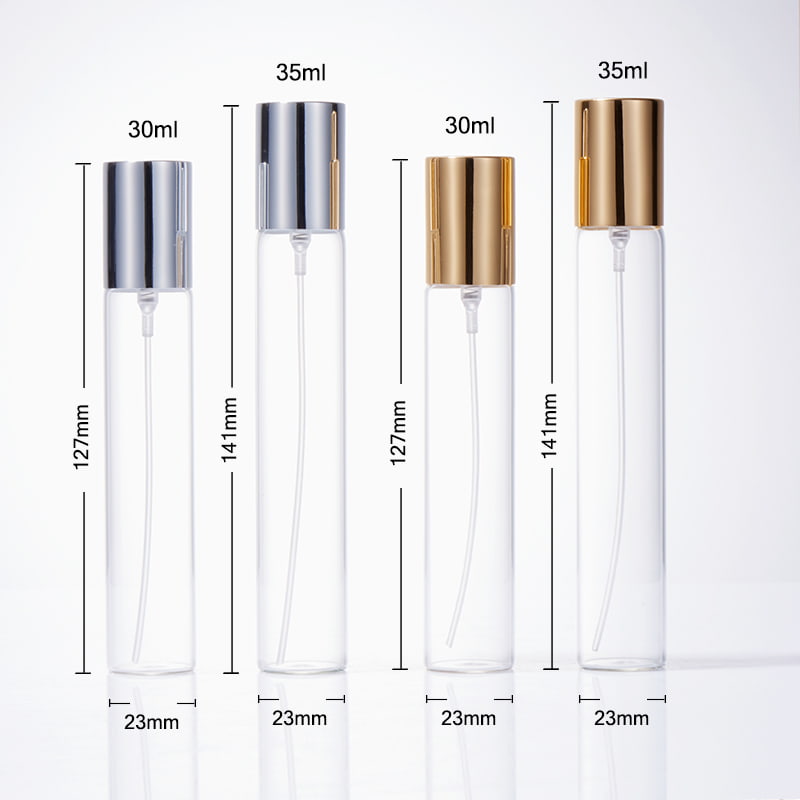
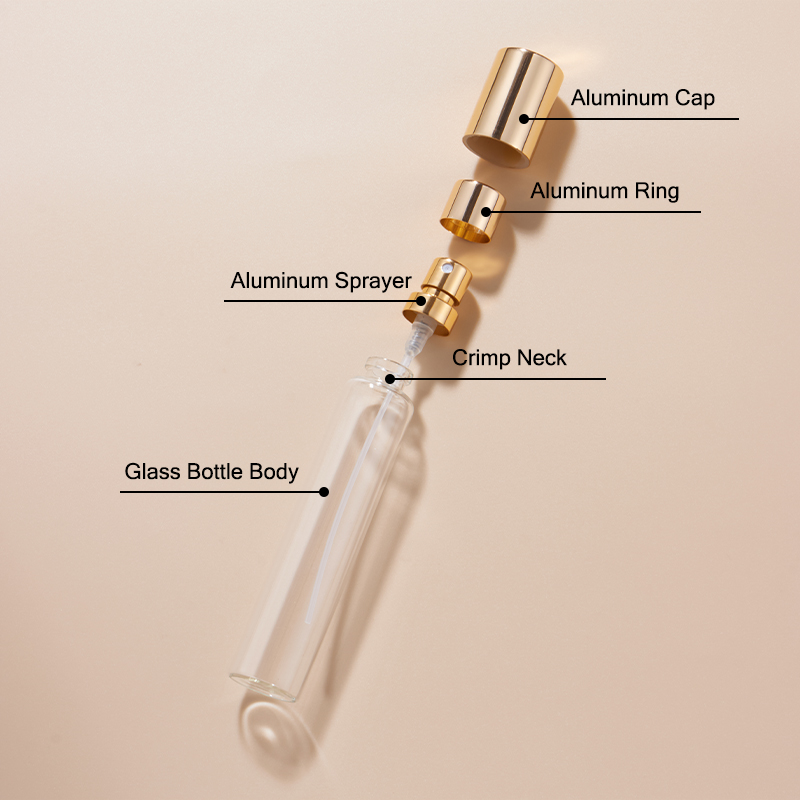
High-quality fragrance has always been packaged in glass perfume bottles, and the reason is not purely aesthetic. Glass is chemically inert — it does not react with fragrance compounds the way plastics or metals can. Plasticizers in synthetic containers can leach into fragrance over time, subtly altering the scent profile. A sealed glass perfume bottle with a tight-fitting cap or atomizer provides a genuinely protective environment when combined with proper storage conditions.
Many luxury glass perfume bottle designs also incorporate dark-tinted glass — amber, cobalt, or black — to block UV light, which is one of the primary drivers of fragrance oxidation. If your glass perfume bottle is clear, keeping it in its original box or a drawer provides comparable protection.
The type of closure also matters. Splash bottles (those without a pump atomizer) expose the liquid to more air with each use, since you invert the bottle and allow air to replace the volume you pour out. Atomizer-equipped glass perfume bottles are preferable for longevity because each spray dispenses fragrance without introducing significant air into the remaining liquid. For splash bottles, transferring the fragrance into a smaller atomizer bottle as the level drops can reduce the headspace and slow oxidation.
Temperature: The Most Important Storage Variable
Heat accelerates virtually every chemical reaction that causes fragrance degradation. Bathrooms, windowsills, and car interiors are the worst possible storage environments. The ideal storage temperature for most fragrances is between 15°C and 20°C (59°F to 68°F) — cool, stable, and away from heating vents or direct sunlight. A drawer in a bedroom or a dedicated fragrance cabinet away from exterior walls satisfies these conditions in most homes.
Some enthusiasts store fragrances in the refrigerator. This works well for preserving the chemical composition, particularly for delicate citrus or green fragrances that are especially vulnerable to heat degradation. However, the repeated condensation from removing a cold bottle into a warm room can introduce moisture, so it is best to allow refrigerated fragrances to reach room temperature before opening, and to keep them in a dedicated section away from strongly scented food.
Light Exposure and the Oxidation Problem
UV light breaks down aromatic molecules through a process called photodegradation. Citral (found in citrus notes), linalool (found in lavender and many floral fragrances), and many other common aromatic compounds are susceptible. A fragrance exposed to direct sunlight for months will not just fade on your skin — it will smell noticeably different at the bottle level, often taking on a sour, flat, or medicinal character. Never display your glass perfume bottle collection on a sunny windowsill, regardless of how aesthetically appealing it looks. The damage is cumulative and irreversible.
Signs That a Fragrance Has Degraded
- The colour of the liquid has darkened significantly (light yellow becoming amber or brown)
- The top notes smell sharp, vinegary, or metallic rather than fresh
- The overall scent is flat, one-dimensional, or smells primarily of alcohol
- The fragrance fades within minutes of application rather than lasting several hours
- There is visible sediment or cloudiness in the liquid
If a fragrance shows multiple signs of degradation, no application technique will restore its performance. Prevention through proper storage in a sealed glass perfume bottle in cool, dark conditions is the only reliable answer.
Environmental Factors That Shorten Fragrance Wear
External conditions on the day you wear a fragrance matter almost as much as the fragrance itself. Heat, humidity, and wind all interact with fragrance molecules in different ways, and understanding these dynamics helps you adjust your application strategy.
Heat and Humidity
Hot weather accelerates evaporation, which means fragrances project more strongly but fade faster. In tropical or summer conditions, a fragrance that normally lasts 8 hours in a temperate office environment might only last 4 to 5 hours. The counterintuitive solution is not to apply more fragrance — it is to choose a lower concentration applied more frequently, or to layer with a hydrating base as described above. Humidity has a dual effect: moderate humidity slows evaporation slightly and can actually extend longevity, but very high humidity dilutes the perception of scent on skin and makes projection feel muted.
Cold Weather and Indoor Heating
Cold air significantly suppresses the projection of fragrance molecules — they simply do not travel as far from the skin. However, longevity on skin often improves in cooler temperatures because slower evaporation means the scent stays close to you rather than diffusing rapidly into the surrounding air. Wearing fragrance close to the body in winter — on the chest and neck beneath clothing — takes advantage of the trapped body heat while the cold air prevents the fragrance from dissipating too quickly. Central heating in winter creates very dry indoor air, which can strip moisture from skin and paradoxically shorten fragrance longevity indoors even when the outdoor temperature is low — another argument for consistent skin hydration.
Activity Level and Sweat
Physical activity and the associated sweating has a complex relationship with fragrance longevity. Light perspiration actually enhances the projection of some fragrances, particularly musks and ambers that interact well with skin warmth. Heavy sweating dilutes the fragrance, washes it off pulse points, and can create an unpleasant interaction with the organic compounds in sweat. For high-activity days, applying fragrance to less-sweated areas (inner elbows, behind knees, hair) rather than the wrists and neck gives better results.
Olfactory Fatigue: Why You Think Your Perfume Has Faded When It Hasn't
One of the most frustrating experiences in fragrance wearing is the conviction that your perfume has faded completely, only to have a colleague or friend mention that you smell great. Olfactory fatigue — also called nose blindness — is the temporary inability of your olfactory receptors to detect a scent after prolonged exposure. It is a normal neurological process, not a sign that your fragrance is performing poorly.
Your olfactory receptors can detect your own scent for approximately 30 minutes before adapting to it and filtering it from conscious awareness. This adaptation is faster for scents you wear frequently — your brain learns to categorize them as "background" rather than "notable." The fragrance has not gone anywhere; you have simply stopped being able to smell it on yourself.
Before re-applying a fragrance because you think it has faded, try smelling your inner elbow or a fabric you sprayed earlier. If the scent is still present, olfactory fatigue rather than actual evaporation is the more likely explanation. Reapplying an Eau de Parfum that you simply cannot smell anymore but that is still projecting to others around you is a common cause of unintentionally overpowering fragrance application.
Sniffing coffee beans or the back of your own wrist is often cited as a way to "reset" your nose, but the scientific evidence for these methods is limited. The most reliable reset is simply spending 20 to 30 minutes away from the fragrance environment — going outside, moving to a differently scented room, or eating something aromatic — before reassessing whether the perfume has genuinely faded.
Strategic Reapplication: Making Your Bottle Last and Your Scent Persist
Carrying a fragrance for touch-ups during the day is a common practice, but there are smarter and less-smart ways to do it. Reapplying on top of a fading base fragrance generally produces a better result than attempting to layer additional fragrance over a fully fresh application — the remaining base notes provide a platform for the new top notes to interact with.
Travel Atomizers and Their Advantages
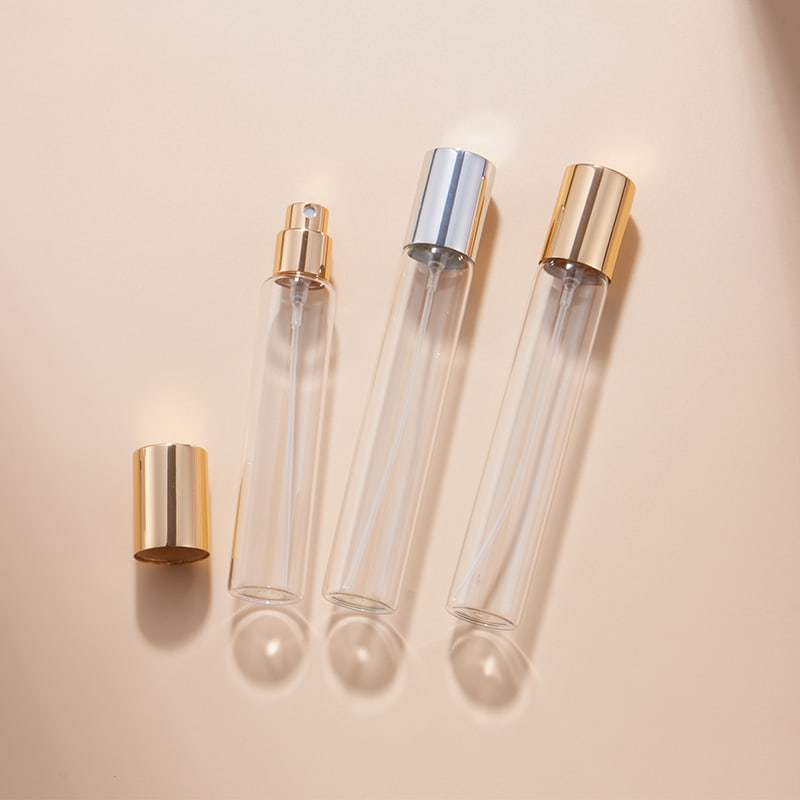
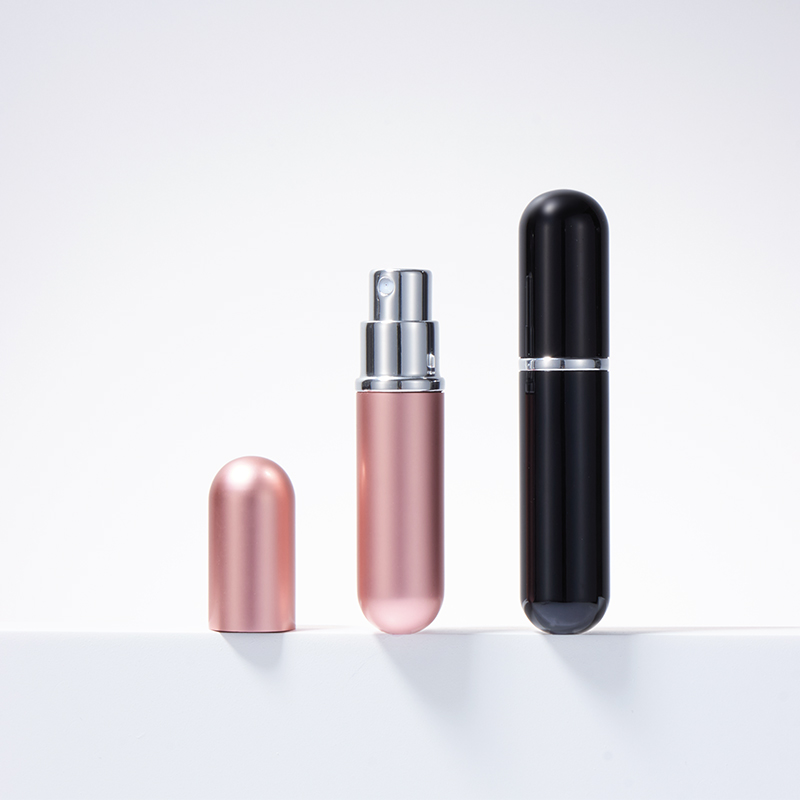
Decanting a small amount of fragrance into a dedicated travel atomizer is significantly better for the main glass perfume bottle than carrying the full-size bottle everywhere. Each time a bottle is opened and used in different conditions — especially warm or sunny environments — the liquid inside is exposed to degrading conditions. A travel atomizer holds 5 to 10 ml, lasts several days of normal use, and keeps the primary bottle safely stored at home in controlled conditions. Many high-quality travel atomizers use aluminium or frosted glass bodies that protect the fragrance from light, closely mirroring the function of a quality glass perfume bottle.
Timing Your Reapplication
The best time to reapply is before the fragrance has faded completely rather than after. A fragrance applied on top of fading base notes creates a layered depth — the reapplication's top notes mingle with the original's remnant base — that is often richer than either application alone. For a typical Eau de Parfum, a touch-up after 4 to 6 hours strikes this balance well. Waiting until the fragrance has fully evaporated means starting from a clean skin baseline each time, losing the benefit of any remaining foundation.
Common Mistakes That Shorten Perfume Life on Skin and in the Bottle
Pulling together all of the above, here is a consolidated list of the most common errors that undermine fragrance longevity — both on skin and in storage:
- Applying to dry, unhydrated skin — Fragrance evaporates faster from dry skin. Always moisturize first.
- Rubbing wrists together after application — Destroys top notes through friction heat. Let it air-dry naturally.
- Storing on a bathroom countertop — Heat, steam, and light exposure degrade fragrance compounds rapidly. Store in a cool, dark place instead.
- Leaving the cap off for extended periods — Air exposure oxidizes aromatic compounds. Always replace the cap immediately after use.
- Displaying fragrance on a sunny windowsill — UV light is one of the most damaging factors for fragrance preservation. Store the glass perfume bottle in its box or a drawer.
- Buying more fragrance than you can use in 2 to 3 years — Most fragrances have a practical shelf life of 3 to 5 years when properly stored; collecting more than you can reasonably cycle through leads to degradation.
- Reapplying to skin that still has fragrance on it without checking — Olfactory fatigue may be making you think the fragrance has faded when it hasn't. Check with a friend or a sniff of your inner elbow before adding more.
- Applying fragrance immediately after showering with strongly scented products — Competing fragrances from shampoo, conditioner, or body wash can clash with your perfume. Use unscented products or products from the same line if longevity matters to you.
- Spraying into the air and walking through the mist — The majority of the fragrance never reaches your skin. Direct application to pulse points is vastly more efficient.
Summary: A Practical Longevity Checklist
If you want to get the most from any fragrance — from the moment you open a new glass perfume bottle to the last drop years later — the following practices make the greatest practical difference:
- Choose an Eau de Parfum or Parfum concentration for maximum longevity, particularly if your skin tends to be dry.
- Moisturize your skin before applying. An unscented lotion on pulse points can extend wear by 30 to 50%.
- Apply to pulse points — wrists, neck, inner elbows, behind knees — and let the fragrance air-dry.
- Never rub your wrists together after applying.
- Consider applying to hair (or a hairbrush) for exceptional longevity, especially with a hair mist formulation.
- Store your glass perfume bottle in a cool, dark, stable environment — a bedroom drawer or cabinet, not the bathroom.
- Keep the cap tightly sealed when not in use to minimize air exposure and oxidation.
- Before reapplying, check whether olfactory fatigue rather than actual fading is the issue.
- Use a travel atomizer to protect your main bottle from variable conditions when you need fragrance on the go.
- Favour fragrance families built around woods, musks, ambers, and resins if longevity is your primary concern.
Fragrance longevity is not a mysterious property that only expensive perfumes possess. It is the result of deliberate choices at every stage — from the concentration and ingredient profile you select, to how you prepare your skin, to how carefully you store the bottle between uses. The difference between a fragrance that fades in two hours and the same fragrance lasting all day is almost always technique and storage, not the price tag on the bottle.
Our Products //
Related Product

- E-mail: [email protected]
- Phone: +86-15962399191
- Add: No. 60-7, East Side of Jinzhong Road, Jinfeng Town, Zhangjiagang City, Suzhou City, Jiangsu Province
Copyright © Zhangjiagang Haojie Packaging Technology Co., Ltd. All Rights Reserved.
 China Cosmetic Packaging Manufacturers
China Cosmetic Packaging Manufacturers