

 中文简体
中文简体 Español
 عربى
عربى
How to Start a Perfume Business: Complete Launch Guide With Real Cost Breakdown
Industry News-Content
- 1 The Direct Answer: What It Really Takes to Launch a Perfume Business
- 2 Start by Defining Your Market Segment
- 3 Estimate the Total Investment Required
- 4 Understand the Full Workflow from Scent to Shelf
- 5 Packaging Is the Most Visible Part of Your Brand
- 6 Choose Dispensing Systems That Match Your Product
- 7 Build a Lean Supply Chain from Day One
- 8 Avoid the Costliest Mistakes
- 9 FAQ
- 9.1 How much does it cost to start a small perfume business?
- 9.2 How long does it take to launch a perfume brand?
- 9.3 Do I need a supplier to produce the fragrance formula?
- 9.4 What is the most important packaging component for perfume?
- 9.5 How do I choose between crimp and screw pumps for perfume bottles?
- 9.6 Can I do a small batch as a test run?
- 9.7 Should I use glass or plastic bottles for perfume?
- 9.8 What is the most common reason new perfume brands fail?
Starting a perfume business is not as simple as ordering a bulk bottle of fragrance oil and putting your name on it. From working with cosmetics brands and packaging supply chains, the companies that succeed do three things early: they choose a realistic market position, they invest in a reliable packaging system, and they keep their first production run lean. The core answer is this — you can launch a small-scale perfume brand with roughly $10,000 to $15,000 if you work with a manufacturing partner, but a fully developed brand with custom packaging typically needs $35,000 to $80,000 and 9 to 18 months of preparation.
The Direct Answer: What It Really Takes to Launch a Perfume Business
The short answer is that you need a minimum of $10,000 to test a formula and produce 500 to 1,000 units using an existing bottle and pump design. A fully custom launch with your own glass container, branded pump, box, and a press-ready label typically requires $35,000 to $80,000 before your first batch reaches a warehouse.
The timeline is just as important. Expect 12 to 18 months for the complete path, from choosing a fragrance house to shipping your first order. Fragrance development and stability tests typically take 3 to 6 months. Packaging customisation takes another 2 to 4 months, and the first production batch usually runs 2 to 3 months after that.
You also need at least three reliable suppliers: one for the scent concentrate, one for the bottle and pump components, and one for the labels and folding cartons. Each supplier relationship affects your final cost, lead time, and product quality.
Start by Defining Your Market Segment
The biggest mistake new founders make is designing a product for everyone. The market splits into three practical segments, and each one has a different cost profile and audience expectation.
- Mainstream perfume — sold in department stores and large online retailers. Requires a strong brand story, a recognizable bottle design, and a marketing budget of at least $30,000 to $50,000.
- Indie niche scent — sold through your own website, Etsy, or a few select boutiques. Can start with $8,000 to $15,000, using standard glass perfume bottles and a simple pump from the catalogue.
- Luxury artisan perfume — high price point, heavily customised packaging, small quantities. Startup costs often exceed $20,000 just for the bottle and cap development.
If you are entering the market as an independent founder, the indie niche route gives you the highest chance of success. You can learn the production process, test pricing, and build an audience without committing the same capital as a mainstream launch. Data from the fragrance industry in 2025 confirms that the middle segment of small brands has grown faster than the mass market, largely because online commerce allows a small label to reach global customers directly.
Estimate the Total Investment Required
The table below gives a practical breakdown of the three launch tiers, based on 2025 pricing from packaging manufacturers and fragrance houses. Using a packaging partner who can supply the pump and bottle together reduces the number of communication channels and helps control costs.
| Cost item | Lean model | Standard model | Premium model |
|---|---|---|---|
| Fragrance development | $2,000 | $5,000 | $12,000 |
| Glass bottle + pump + cap | $2,500 | $6,000 | $15,000 |
| Label and folding carton | $1,200 | $3,500 | $8,000 |
| First production run | $4,000 | $10,000 | $24,000 |
| Marketing and photos | $1,500 | $4,500 | $12,000 |
| Total estimated range | $11,200 | $29,000 | $71,000 |
The biggest hidden cost for first-time founders is product replacement. Perfume products are sometimes rejected by fragrance suppliers or fail their stability check after several months; the cost of reworking a batch or restarting the development process can easily add another $3,000 to $8,000. Build this contingency into your budget from day one.
Understand the Full Workflow from Scent to Shelf
The production workflow is more structured than many founders expect. Each stage has a clear output and a specific supplier or partner.
- Brand concept — define the target customer, price range, and scent style. This locks down the entire product brief.
- Fragrance development — brief a fragrance house to create 3 to 10 samples. This stage takes 4 to 8 weeks.
- Fragrance stability testing — place the formula in the final bottle and pump combination, then store it under typical and elevated temperatures for at least 8 weeks. Changes in scent, color, or pump performance will trigger revisions.
- Packaging development — select the bottle, pump, cap, and label. This is where most of the physical product character takes shape.
- First production run — normally 1,000 to 5,000 units, depending on the minimum order quantity of your partners.
- Quality inspection and shipping — check batch consistency, pump action, packaging sealing, and label alignment before distribution.
Understanding how a lotion pump works and how a sprayer mechanism behaves is important when you combine a new fragrance with a standard component; reading about the working principle of a lotion pump helps you ask the right questions of your packaging supplier before placing an order.
Packaging Is the Most Visible Part of Your Brand
Packaging is the first physical thing a customer holds, feels, and remembers. A 2025 fragrance industry survey showed that consumers form a purchase decision about a perfume in under 12 seconds, and most of that impression comes from the bottle and pump design rather than the scent itself.
For this reason, the choice of bottle and dispensing system is far more critical than most founders realise. A perfume with an elegant fragrance but a sticky pump, a misaligned atomizer, or a cap that doesn't sit flush can destroy a brand's perception before the scent is even sprayed.
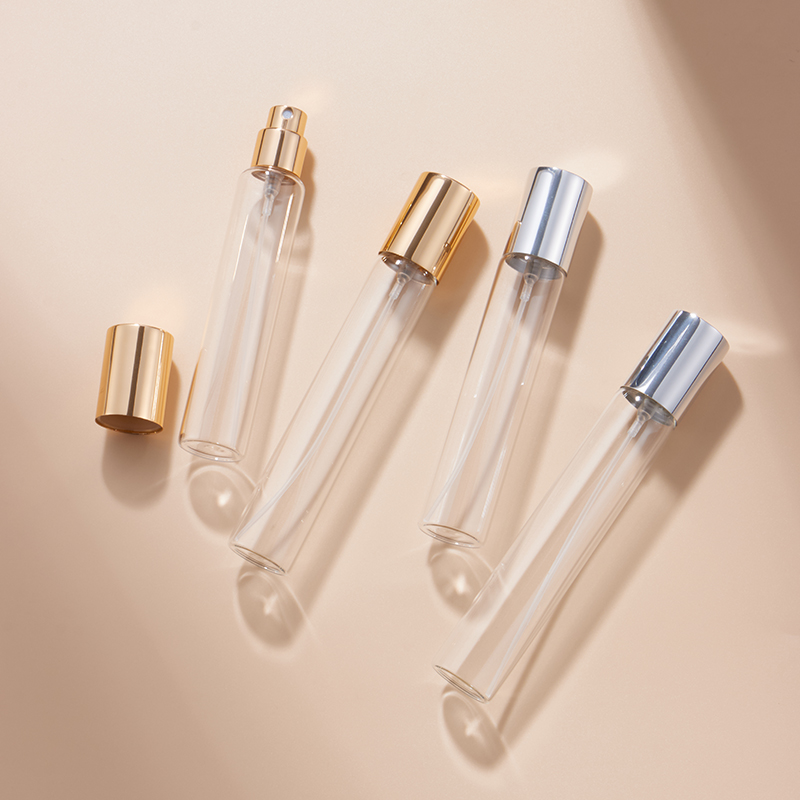
Start with the glass bottle, because its shape and weight define your product's identity. A refillable glass bottle with a matching mist sprayer gives you flexibility for small test quantities, in a way that custom glass moulding cannot. This type of 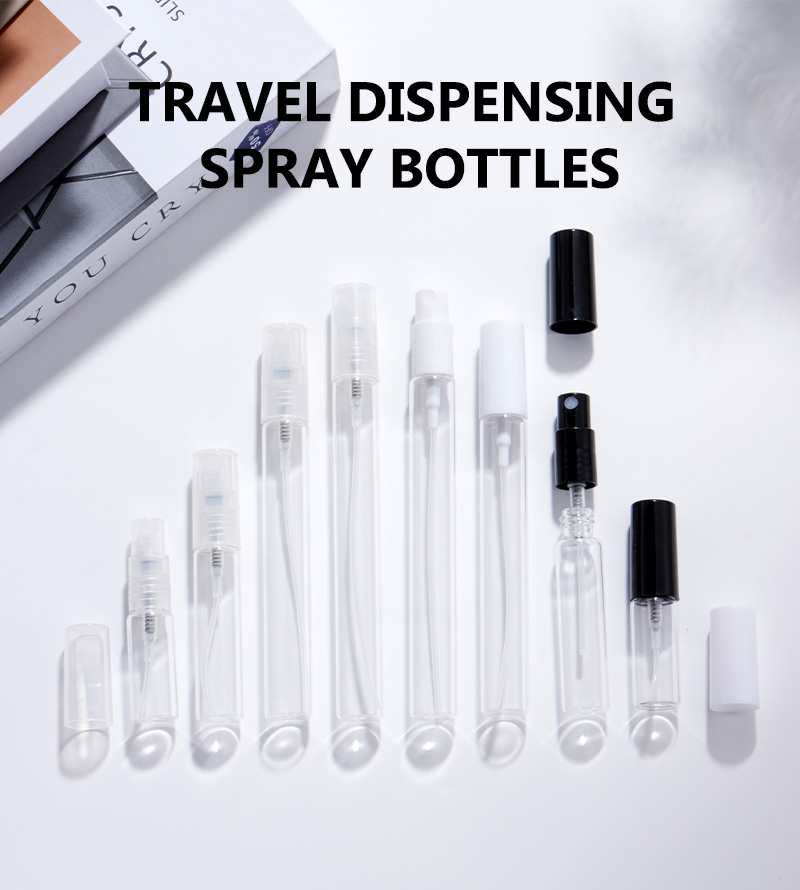 Refillable Glass Perfume Spray Bottle in 3ml to 12ml SizesThis small refillable glass bottle is ideal for sample sets and travel formats. It offers multiple sizes and accepts customization, making it a flexible choice for testing fragrance concepts before scaling up to larger custom containers.View Product → is ideal for sample sets and travel formats. When you know which scent sells, you can invest in a larger custom container.
The pump and cap must always be tested with the specific fragrance. Alcohol-based perfumes can behave differently across pump materials. A plastic pump with an aluminum cap is a common reliable choice, and it suits a range of product formats including 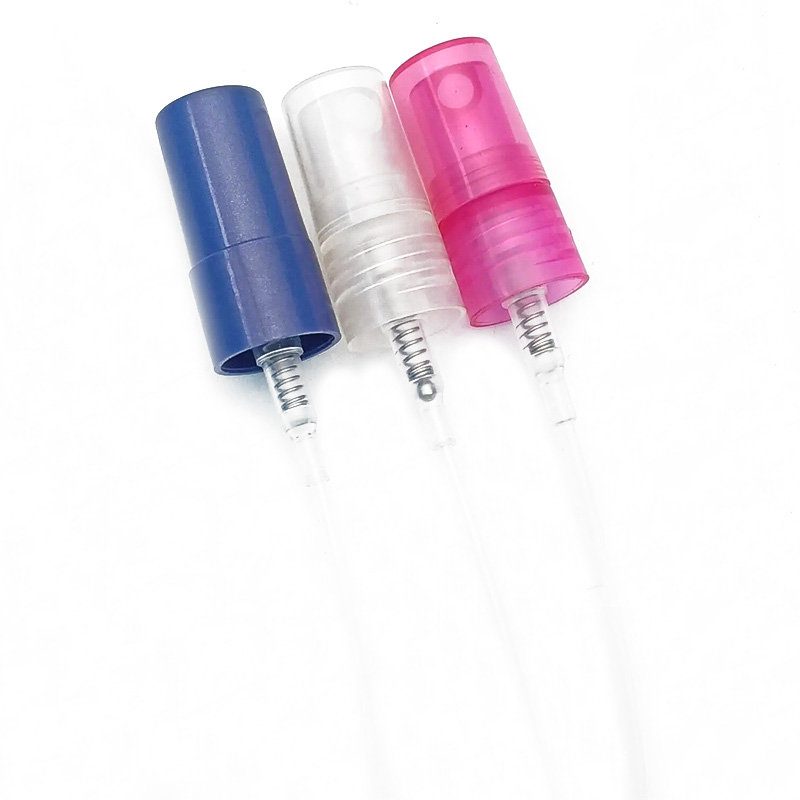 11mm Plastic Mist Pump Sprayer with Aluminum CapThis 11mm mist sprayer with an aluminum cap fits small perfume bottles. The plastic pump body resists corrosion and drops, while the aluminum cap helps prevent volatilization and keeps the fragrance lasting longer.View Product →, which are particularly suited to small bottles in the 5ml to 15ml range. Test the full set with your fragrance before production.
Choose Dispensing Systems That Match Your Product
The dispensing system is the mechanical part that controls how much liquid comes out and how it spreads. It includes a pump, a dip tube, and often a cap. Most early-stage brands only consider the visual look, but the pump's working principle directly influences spray quality, dosage, and long-term shelf performance.
There are three main types of perfume pump connections used in the industry today, and each one suits a different bottle design. The table below summarises the practical differences for a new brand.
| Connection type | Typical neck size | Common bottle type | Best suited for |
|---|---|---|---|
| Crimp pump | 11mm, 12mm, 15mm, 18mm, 20mm | Thick-wall glass | Premium and classic perfume bottles |
| Screw pump | 13/410, 15/410, 18/410, 20/410 | Standard and refillable bottles | Mid-range products and refill systems |
| Bayonet pump | 11mm, 12mm, 14mm, 15mm, 16mm | Thin-wall and compact containers | Travel minis and small sample bottles |
For a classic perfume product, a 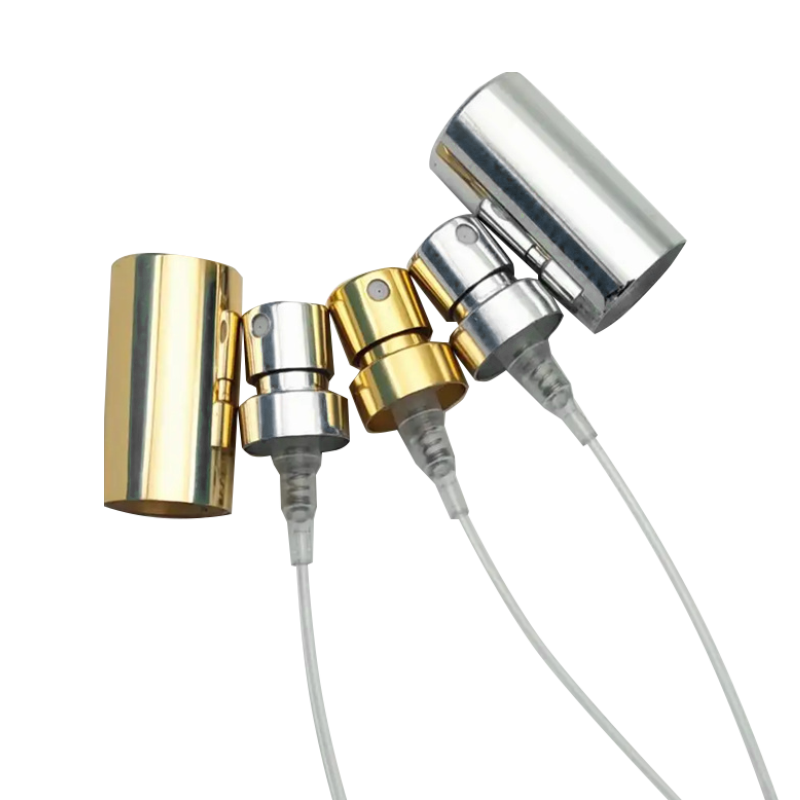 15mm Crimp Pump Sprayer with Aluminum Cap for PerfumeThis crimp pump permanently seals a glass bottle's neck, delivering a fine mist. The aluminum cap and pump head provide impact resistance and wear durability, protecting the perfume while ensuring an even spray.View Product → is a common configuration, using a crimped metal collar that permanently seals the neck of a glass bottle. This type delivers a fine mist and is regularly used in standard 30ml to 50ml glass perfume bottles. If you choose this route, make sure your glass bottle has the matching crimp neck profile, and always order a trial batch of bottles and pumps together so you can test them as a set.
Build a Lean Supply Chain from Day One
A lean supply chain reduces the risk of over-ordering and helps preserve cash for marketing and launch costs. You need suppliers that can respond to small batch quantities and still provide consistent quality across runs.
When choosing a packaging supplier, evaluate five practical factors:
- Compatibility — can they provide the bottle, pump, and cap as a matched set? This avoids mismatched thread sizes and saves weeks of back-and-forth.
- Lead time — 30 to 45 days for standard catalogue items, 60 to 90 days for custom moulded components.
- Minimum order quantity — most pump suppliers require 5,000 to 10,000 pieces for a custom color, but stock items can start at 1,000 to 2,000 units.
- Customisation capability — anodized aluminum caps, gold or rose gold plating, or a special surface texture will affect the price and minimum quantity.
- Quality consistency — request samples of the final combination and run a basic functional check on at least 20 pumps before placing a bulk order.
A packaging supplier who also combines bottle, pump, and cap supply handles the matching risk for you, and they can also provide practical recommendations on standard neck sizes and component availability. That kind of guidance shortens your development cycle by 4 to 6 weeks.
Avoid the Costliest Mistakes
Most new perfume brands do not fail because the fragrance is weak. They fail because of avoidable mistakes that drain capital and break the launch timeline. From packaging defects to unstable formulas, these five have the highest financial impact.
- Mismatched pump and bottle — a 15mm crimp pump will not fit a 20mm neck. Order both components from one supplier and test the full assembly before ordering production quantities.
- Skipping a full stability test — a perfume that smells fine after four weeks may fade or discolor after nine. Run at least a 12-week stability check with your final fragrance, final bottle, and final pump.
- Ignoring the spray output rate — a standard perfume pump sprays around 0.1ml per press. Some pumps deliver more or less than this, so test the dosage with your own fragrance. Too little output feels weak to the user; too much causes the consumer to use up the bottle faster.
- Over-ordering inventory with no demand evidence — order 1,000 bottles for launch, not 10,000. With a small first batch you can adjust your formula, scent, or packaging on the second run without writing off a large capital amount.
- Ignoring the dip tube — the dip tube length must match the bottle height. A tube that is too short leaves liquid at the bottom that will never dispense; a tube that is too long causes noise and leakage. Always confirm the tube length with the supplier when ordering.
The cost of avoiding your own mistakes is much lower than fixing a bad batch. Factoring in the average replacement rate for first batches, keeping a lean inventory that sells through in 6 to 9 months is a far better strategy than a large launch that sits in a warehouse for two years.
FAQ
How much does it cost to start a small perfume business?
A small indie launch with 1,000 to 2,000 units can be done for about $8,000 to $15,000 if you use standard glass bottles and stock pump components. A more complete launch with custom packaging and a larger volume usually requires $35,000 to $80,000.
How long does it take to launch a perfume brand?
The total timeline from concept to first sale is typically 12 to 18 months. Fragrance development and stability testing take the longest single block of time. Packaging supply adds 2 to 4 months, and the first production batch adds another 2 to 3 months.
Do I need a supplier to produce the fragrance formula?
Yes, unless you have your own perfume laboratory. Most indie brands work with a fragrance house that creates the scent compound according to your brief and then supplies the concentrate for you to mix with alcohol. The fragrance house also provides the initial odour sample set for you to evaluate before purchasing a larger batch.
What is the most important packaging component for perfume?
The pump and bottle combination. The pump controls the spray quality and the dosage. The bottle defines the first visual impression. These two components must be tested together because a mismatch causes leaking or a weak spray that will be noticed by every customer.
How do I choose between crimp and screw pumps for perfume bottles?
Use a crimp pump for a classic glass bottle with a fixed cap, where the pump is permanently sealed onto the glass. Use a screw pump for refillable bottles or a design where the consumer can remove the nozzle. Crimp pumps are common in premium positioning; screw pumps are more flexible and easier to use with a wider range of bottle shapes.
Can I do a small batch as a test run?
Yes. A test run of 500 to 2,000 units is a practical approach for an indie brand. It allows you to validate the flavour profile and packaging with real consumers while keeping costs low. Many packaging suppliers offer stock components at lower minimum quantities; being willing to accept standard colour options lets you place a smaller initial order.
Should I use glass or plastic bottles for perfume?
Almost all standard perfumes use glass bottles because the fragrance can eventually affect some plastics, and glass is more suitable for the high alcohol content. Glass also provides a premium visual appearance. Glass is the expected standard for a perfume brand, and we recommend it for anything above 10ml.
What is the most common reason new perfume brands fail?
The most common failure is underestimating packaging development. New brands spend months on the fragrance, then assume a standard bottle and pump will simply fit. When the first production batch arrives with leaking pumps or a mismatch between the dip tube and the bottle, the launch is delayed and the cost increases sharply. Testing the complete package before placing a bulk order avoids this.
Our Products //
Related Product

- E-mail: [email protected]
- Phone: +86-15962399191
- Add: No. 60-7, East Side of Jinzhong Road, Jinfeng Town, Zhangjiagang City, Suzhou City, Jiangsu Province
Copyright © Zhangjiagang Haojie Packaging Technology Co., Ltd. All Rights Reserved.
 China Cosmetic Packaging Manufacturers
China Cosmetic Packaging Manufacturers