

 中文简体
中文简体 Español
 عربى
عربى
How to Make Eau de Parfum: A Complete Step-by-Step DIY Guide with Formulas
Industry News-Content
- 1 What Is Eau de Parfum, and Why the 15-20 Percent Range Matters
- 2 Ingredients and Tools: What You Actually Need
- 3 The Working Formula: Percentages That Deliver
- 4 Step-by-Step: How to Make Eau de Parfum at Home
- 5 Top, Heart, and Base Notes: Building a Balanced Scent
- 6 Bottles and Pumps: Packaging Decisions That Change the Result
- 7 Seven Common Mistakes That Ruin Homemade Eau de Parfum
- 8 Aging, Storage, and Shelf Life after Bottling
- 9 Frequently Asked Questions about Making Eau de Parfum
- 9.1 Can I use vodka or rum instead of perfumer's alcohol?
- 9.2 How long should homemade eau de parfum age before use?
- 9.3 Why has my perfume turned cloudy?
- 9.4 Will adding more oil make the perfume stronger?
- 9.5 What is the practical difference between eau de parfum and eau de toilette?
- 9.6 How many sprays does a 50 ml bottle deliver?
- 9.7 Can I make eau de parfum using only essential oils?
- 9.8 Can I use a lotion pump for my perfume bottle?
What Is Eau de Parfum, and Why the 15-20 Percent Range Matters
Eau de parfum is a hydroalcoholic fragrance that carries roughly 15 to 20 percent aromatic concentrate dissolved in 96 percent ethanol, with 3 to 5 percent distilled water completing the fill. For a reliable first batch at home, target the 18 percent mark: it projects well, lasts six to eight hours on most skin types, and remains fully soluble and stable in high-proof alcohol.
The percentage is not a decorative detail. It controls how fast the alcohol evaporates, how widely the scent radiates, how much oil remains on the skin after the alcohol dries, and whether the liquid stays clear after weeks of aging. A 20 percent blend will not automatically smell stronger than a 15 percent blend if the top notes are poorly chosen; the balance of the materials matters just as much as the total concentration.
How Eau de Parfum Compares with Other Concentrations
| Product Type | Aromatic Concentrate | Wear Time on Skin | Best Use |
|---|---|---|---|
| Parfum (Extrait) | 20-30% | 8+ hours | Skin-close, formal wear |
| Eau de Parfum (EDP) | 15-20% | 6-8 hours | Everyday long wear |
| Eau de Toilette (EDT) | 8-15% | 4-6 hours | Daytime, warm weather |
| Eau de Cologne (EDC) | 3-8% | 2-4 hours | Refreshing summer splash |
| Eau Fraiche | 1-3% | 1-2 hours | Light body-fresh feel |
The boundary between EDP and EDT is not a regulated specification; brands interpret it with some freedom. Some commercial eau de parfums contain 15 percent concentrate, others 20 percent. For your own batches, staying within 15 to 20 percent is the practical sweet spot because the alcohol can fully dissolve the oils, the liquid stays thin enough for a fine mist pump, and the perfume keeps a sensible balance between longevity and projection over months of use.
Ingredients and Tools: What You Actually Need
You can make a 50 milliliter batch of eau de parfum with three ingredients and about fifteen minutes of hands-on work. Everything else is waiting time while the blend ages into a coherent scent.
The Alcohol: 96 Percent Ethanol, Not Vodka
Alcohol is the workhorse of the formula. It dissolves the aromatic molecules, lifts them to the skin, and evaporates quickly so the perfume oil can settle in. Perfumer's alcohol is normally a specially denatured ethanol at 96 percent, sold under names such as SDA 40B. A practical and much cheaper alternative for small batches is 190-proof neutral grain alcohol like Everclear, which sits at 95 percent ethanol and contains no heavy fusel compounds.
Vodka at 40 percent alcohol is a common beginner workaround, and it will technically hold a few drops of oil. But at that proof, most fragrance oils do not dissolve completely, the liquid smells harsh and boozy for the first weeks, and wear time drops to roughly half of what a 96 percent base delivers. If you want to test the process with vodka, keep the batch small and treat the result as an eau de cologne-style experiment rather than a true EDP.
The Fragrance Concentrate
The concentrate can be one pre-blended fragrance oil, a handful of essential oils, or a mix of essential oils and aroma chemicals such as Iso E Super, hedione, and synthetic musks that extend the scent's lift and lasting power. For a first batch, three to five materials are enough. Restrain the urge to add every expensive oil you own; a small number of notes in the right proportions almost always produces a more coherent perfume than a crowded palette.
Equipment Checklist
- A 50 to 100 ml glass beaker or measuring jug
- 1 ml graduated pipettes or syringes for precise oil measurement
- A glass stirring rod; avoid plastic, because alcohol and essential oils can pull plasticizers into the blend
- Coffee filters or laboratory-grade filter paper
- Amber glass bottles with tight caps
- A small digital scale accurate to 0.1 g if you prefer weighing instead of measuring by volume
- A fine mist pump or crimp pump for the final bottle
Use distilled water, never tap water. Tap water contains dissolved minerals that can react with essential oils and create haze over time. Distilled water is clean, neutral, and mixes predictably with ethanol.
The Working Formula: Percentages That Deliver
The simplest dependable structure is 18 percent concentrate, 78 percent ethanol, and 4 percent distilled water. This combination sits inside the classic EDP window while leaving enough alcohol to keep every oil molecule dissolved. For a richer, more intimate perfume, move the concentrate up to 20 percent and reduce water to 3 percent.
| Batch Size | Concentrate (18%) | Alcohol (78%) | Distilled Water (4%) |
|---|---|---|---|
| 30 ml | 5.4 ml | 23.4 ml | 1.2 ml |
| 50 ml | 9 ml | 39 ml | 2 ml |
| 100 ml | 18 ml | 78 ml | 4 ml |
Let us fix the idea with a complete example. To make 50 ml of a floral, slightly powdery eau de parfum, build a 10 ml concentrate in the following proportions:
- Top notes (2.5 ml): bergamot 1.5 ml, sweet orange 1.0 ml
- Heart notes (4.5 ml): rose absolute 2.5 ml, jasmine absolute 2.0 ml
- Base notes (3.0 ml): sandalwood 1.5 ml, vanilla 1.5 ml
Once the concentrate is mixed, add 38 ml of 96 percent alcohol, stir gently, and finish with 2 ml of distilled water. The total fill reaches 50 ml. The bergamot gives the bright opening, the rose and jasmine form the main body, and the sandalwood plus vanilla anchor the blend for hours. If one material is difficult to source, swap in a similar family: neroli or petitgrain for the citrus lift, geranium for part of the rose, patchouli for part of the sandalwood. Keep the total concentrate volume the same to preserve the EDP concentration.
Step-by-Step: How to Make Eau de Parfum at Home
The complete process takes about fifteen minutes on the first day and holds the perfume in one bottle for four to six weeks before you judge it. Follow the order below closely; each step exists to prevent cloudiness, preserve volatile molecules, or control oxidation.
- Measure the fragrance oils with pipettes, syringes, or a scale. Write down each amount and the date; you will need these notes to repeat or adjust the blend.
- Blend the concentrate. Combine the base, heart, and top notes in a glass beaker and stir slowly for one minute. Let the oil mixture rest for ten minutes so the components merge before they meet the alcohol.
- Add the alcohol in small pours. Pour the 96 percent ethanol into the concentrate and stir gently for two to three minutes. Do not shake hard; vigorous shaking traps air and can make the finished perfume look milky.
- Cold rest. Cap the beaker and place it in a refrigerator or a cold, dark cabinet for 48 hours. Low temperature forces waxes and resins to settle at the bottom, which is why the next step requires filtration.
- Filter cold. Pour the liquid through a coffee filter or filter paper while it is still cold. If the liquid remains cloudy, run it through a second time with fresh paper.
- Add the distilled water and stir once. The solution may turn faintly milky for a few minutes; this is normal and usually clears within the first days of aging.
- Age. Transfer the perfume into a clean amber glass bottle and store it at 15 to 20 degrees Celsius, away from direct light. Wait a minimum of four weeks. The raw alcohol smell softens, and individual notes fuse into a single balanced scent.
- Filter again and bottle. After four to six weeks, filter once more, pour the perfume into the final bottle, fit the pump or cap, and label it with the date, the concentration, and the blend name.
If you are in a hurry, a two-week aging gives a wearable perfume that is still slightly sharp. At four weeks the blend is considerably rounder; at six to eight weeks, most floral and citrus-forward formulas reach their best. Woody and spicy formulas continue to improve for several months.
Top, Heart, and Base Notes: Building a Balanced Scent
Perfume works by evaporation in three waves. The top notes are the most volatile, registering within seconds and fading after five to fifteen minutes. The heart notes surface during the next hour or two and deliver the main character. The base notes are the heaviest and can stay on skin or fabric for six to twelve hours, acting as the perfume's anchor.
| Note Family | Evaporation Window | Example Materials | Role in the Blend |
|---|---|---|---|
| Top | 5-15 minutes | Bergamot, lemon, sweet orange, elemi, yuzu | First impression |
| Heart | 15 minutes to 2 hours | Rose, jasmine, lavender, geranium, neroli | Main character |
| Base | 2-12 hours | Sandalwood, vetiver, patchouli, vanilla, musk, cedarwood | Anchor and lasting power |
A widely used ratio for eau de parfum is 25 to 30 percent top, 40 to 50 percent heart, and 20 to 30 percent base, calculated within the concentrate. The example from the previous section fits this: 25 percent top, 45 percent heart, 30 percent base. That profile produces a sparkling opening, a full floral middle, and a long drydown. If you want more longevity, shift 5 percent from the top to the base. If you want a fresher, more casual scent, raise the top share, but stay under about 35 percent; above that, the blend smells sharp and the heart disappears too quickly.
Bottles and Pumps: Packaging Decisions That Change the Result
The liquid is only half the product; the rest is how it is protected and dispensed. Alcohol evaporates through poorly sealed caps, ultraviolet light degrades citrus top notes in weeks, and the wrong pump turns a refined eau de parfum into a coarse wet stream. Good packaging preserves the hours of work you put into the blend.
Glass over Plastic, Dark over Clear
Eau de parfum is 75 to 85 percent alcohol, which acts as an active solvent. Over months of contact, alcohol can slowly extract plasticizers from common polyester or polyethylene bottles, and essential oils can corrode certain plastics. Clear glass protects the liquid chemically but leaves it exposed to light, which accelerates the fading of citrus and floral molecules. Amber or dark blue glass is the safe default for aging and storage. If you prefer a clear bottle for the final presentation, keep the bottle inside a box or cupboard between uses.
Crimp Pumps versus Screw Pumps
Small perfume bottles usually take a crimp pump fitted over a 15 or 20 millimeter glass neck. The metal crimp collar squeezes the gasket against the glass, creating a mechanical seal that blocks oxygen for years when applied correctly. Screw-on pumps, common on 18 to 24 millimeter necks, are easier to remove for refilling and work well on travel atomizers and larger decant bottles. For a first project, choose the pump that matches the neck of your bottle, not the other way around. The way a cosmetic pump head is assembled determines how reliably the seal holds and how cleanly the stem draws liquid up each time.
Spray quality is the second thing to check. A true fine mist pump breaks the liquid into droplets of roughly 30 to 60 micrometers, creating the soft cloud of scent around the wearer. Nozzle geometry, orifice size, and the internal swirl chamber all influence the atomization, which is why nozzle geometry has a direct effect on spray quality.
For a classic, stable presentation, thick-bottom glass perfume bottles in 30, 50, or 100 ml sizes give the finished batch a solid base, a clean visual, and a neck compatible with both crimp and screw pumps.
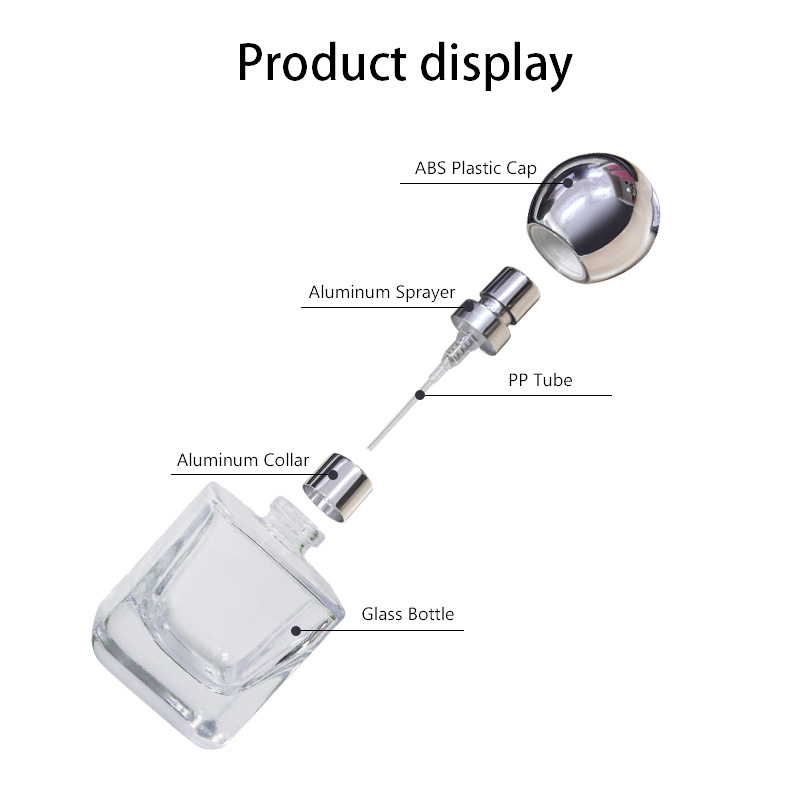 Custom 30ml 50ml 100ml Transparent Square Thick Bottom Glass Perfume Bottles ManZhangjiagang Haojie Packaging Technology Co., Ltd is China OEM/ODM 30ml 50ml 100ml Transparent Square Thick Bottom Glass Perfume Bottles ...View Product →
If you prefer the traditional small-neck look, pair the glass bottle with a parfum crimp pump sprayer with an aluminum cap to get a tight long-term seal and a fine mist out of the same assembly.
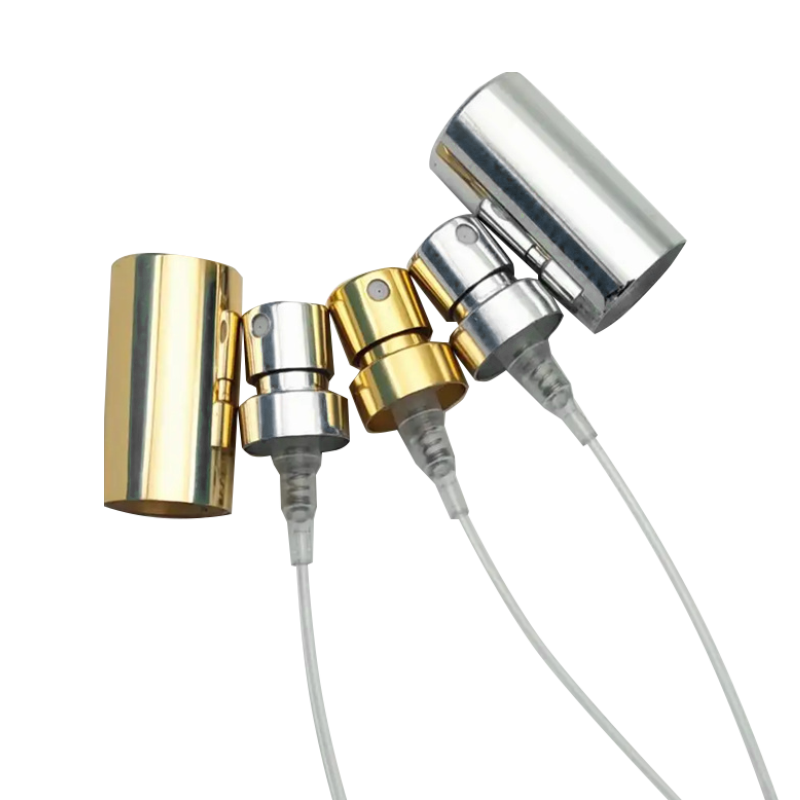 Custom 15mm Parfum Crimp Pump Sprayer With Aluminum Cap Manufacturer, Company - Zhangjiagang Haojie Packaging Technology Co., Ltd is China OEM/ODM 15mm Parfum Crimp Pump Sprayer With Aluminum Cap manufacturer and 15mm...View Product →
A typical fine mist pump releases 0.08 to 0.12 milliliters per actuation, so a 50 ml bottle yields roughly 400 to 600 sprays. That is a useful number when you are deciding sample sizes or planning how long a batch will last.
Seven Common Mistakes That Ruin Homemade Eau de Parfum
- Judging the perfume immediately. A freshly mixed EDP smells like raw alcohol with a chaotic blend. Wait four weeks before making any judgment; what smells sharp on day two often smells polished in week five.
- Using 40 percent vodka as the base. Too much water and too little alcohol leave the oils undissolved; the result is cloudy, short-lived, and harsh. Upgrade to 96 percent ethanol for a real EDP.
- Chasing strength with more oil. Above roughly 25 percent concentrate, the excess oil separates, makes the liquid cloudy, and increases skin irritancy without increasing projection. Concentration and perceived strength are not the same thing.
- Skipping the cold rest and filtration. Natural oils contain waxes, resins, and plant particles. Without a 48-hour cold rest and filtration, these settle as gray sediment inside the bottle after weeks.
- Storing in clear or plastic containers. Light destroys citruses; plastic leaches into alcohol. Amber glass is the only sensible choice for long-term storage.
- Shaking the bottle. Vigorous shaking generates microscopic air bubbles that take days to clear and can make the perfume appear foggy. Stir slowly; if you move the bottle, do it gently.
- Transferring between bottles too often. Every transfer introduces oxygen and tiny losses. Age the perfume once, filter once, and pour it into the final bottle exactly one time.
Aging, Storage, and Shelf Life after Bottling
The most common cause of disappointment is starting to wear the perfume too early. The timeline below reflects what happens inside the bottle during aging:
- Days 1-2: the solution is harsh; alcohol dominates and the notes stay separated.
- Week 2: rough edges soften; the top notes begin to behave but the base is still thin.
- Week 4: a usable perfume; most materials have fused into one coherent blend.
- Weeks 6-8: the typical commercial freshness window; citrus and floral blends peak here.
- Months 3-6: woody, amber, and oriental blends continue to deepen and gain smoothness.
Shelf life depends mostly on packaging discipline. An unopened bottle of 96 percent alcohol-based EDP stored at 15 to 20 degrees Celsius in amber glass can stay fresh for three to five years. Once opened and regularly used, expect one to three years before the sparkling top notes fade; citrus-heavy perfumes lose their freshness after six to twelve months, while woody and amber compositions can remain pleasant for much longer.
Store the bottle upright, keep it away from direct sunlight and heat sources, and close the cap or pump immediately after spraying. The sealing performance of the pump matters more than most DIYers realize; a weak seal lets alcohol escape and oxygen in, which ages the perfume unevenly. This is why pump sealing performance during long-term storage deserves attention before you commit to a closure.
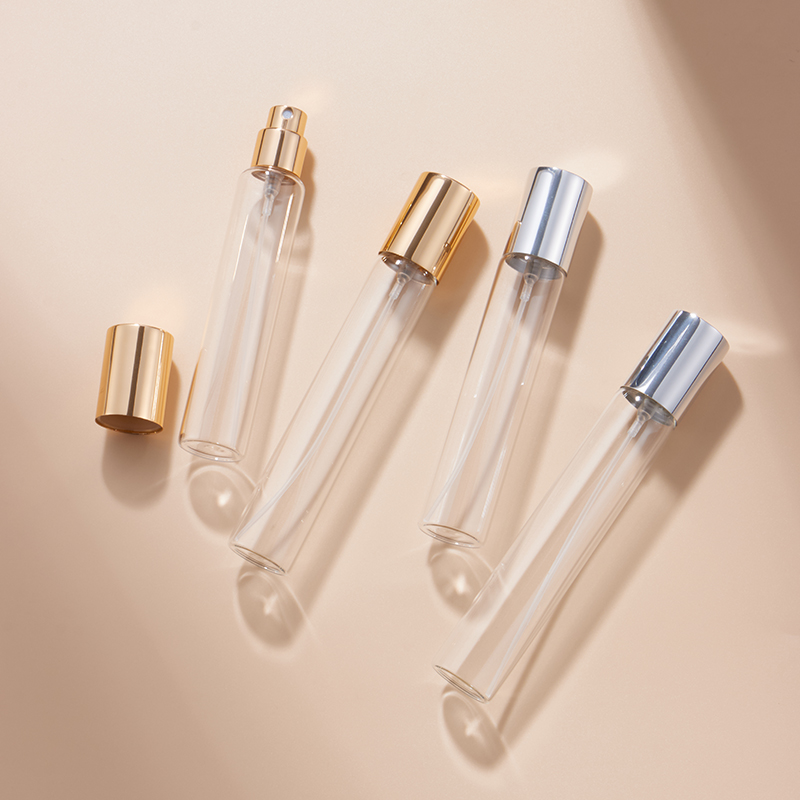
When you want to carry a few milliliters in a handbag or test the formula during the aging phase, a small refillable glass perfume spray bottle in 3, 5, 10, or 12 ml is far more practical than carrying the full bottle. Decanting a small amount also lets you track how the scent evolves week by week without exposing the main batch to oxygen each time.
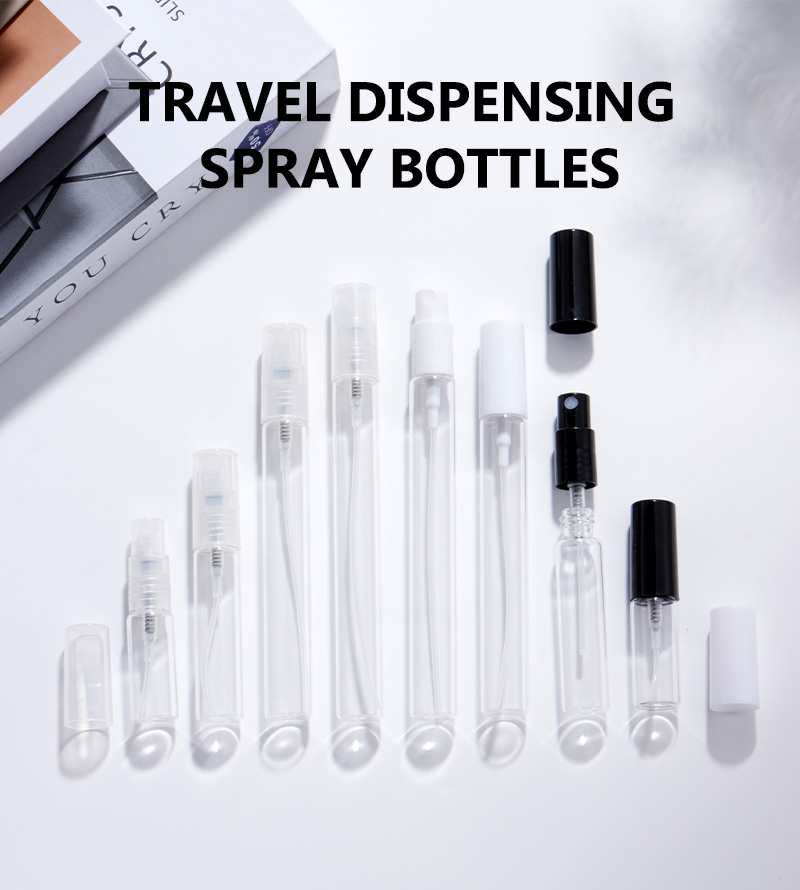 Custom 3ml 5ml 10ml 12ml Refillable Glass Perfume Spray Bottle Manufacturer, ComZhangjiagang Haojie Packaging Technology Co., Ltd is China OEM/ODM 3ml 5ml 10ml 12ml Refillable Glass Perfume Spray Bottle manufacturer a...View Product →
Frequently Asked Questions about Making Eau de Parfum
Can I use vodka or rum instead of perfumer's alcohol?
You can, but the result behaves like a body splash, not an eau de parfum. Drinkable spirits are 40 to 50 percent alcohol, which cannot dissolve a 15 to 20 percent oil load. The excess oil floats, the mixture looks dull, and the scent evaporates within an hour or two. Use 96 percent ethanol or 190-proof neutral grain alcohol for a true EDP.
How long should homemade eau de parfum age before use?
A minimum of four weeks. Six to eight weeks is the most common sweet spot for citrus and floral blends, and woody or oriental compositions continue improving for three to six months. Age in one bottle, filter once, and do not open it too often.
Why has my perfume turned cloudy?
Cloudiness usually comes from one of four causes: too much oil for the alcohol to hold, low-proof alcohol as the base, water added before the cold rest, or unfiltered waxes from natural oils. Check the formula first, then re-filter the cold liquid. If the cloudiness disappears when the bottle warms, the cause is simply cold temperature.
Will adding more oil make the perfume stronger?
Only up to the solubility limit. At 25 to 30 percent concentrate, the alcohol is essentially saturated; additional oil separates, dulls the liquid, and increases the chance of scent fatigue and irritancy. Raising the oil percentage does not equal raising the perfume's strength when you wear it. The quality of the materials and the balance of the notes do far more.
What is the practical difference between eau de parfum and eau de toilette?
Roughly twice the concentrate. An EDP uses 15 to 20 percent and usually lasts six to eight hours; an EDT uses 8 to 15 percent and typically lasts four to six. The same formula can be made at both strengths by doubling or halving the concentrate and adjusting the alcohol accordingly.
How many sprays does a 50 ml bottle deliver?
A typical fine mist pump releases 0.08 to 0.12 ml per press, so a 50 ml bottle gives roughly 400 to 600 sprays. If you apply three to five sprays each wear, a bottle lasts around three to four months of daily use.
Can I make eau de parfum using only essential oils?
Yes, and many DIYers do. The trade-off is longevity: natural essential oils are volatile, and a pure-natural EDP will not hold as long as a blend containing synthetic musks or heavier resins. Add fixatives such as vetiver, frankincense, sandalwood, or a small amount of synthetic musk to keep the drydown alive longer.
Can I use a lotion pump for my perfume bottle?
Technically it fits if the neck matches, but a lotion pump is calibrated for thicker fluids and dispenses 0.2 to 0.5 ml per stroke in a thick stream. That wastes a thin alcohol-based perfume and creates a wet patch instead of a mist. Use a fine mist pump designed for alcohol-based liquids; the spray volume, orifice, and swirl chamber are all matched to the thin solvent.
Our Products //
Related Product

- E-mail: [email protected]
- Phone: +86-15962399191
- Add: No. 60-7, East Side of Jinzhong Road, Jinfeng Town, Zhangjiagang City, Suzhou City, Jiangsu Province
Copyright © Zhangjiagang Haojie Packaging Technology Co., Ltd. All Rights Reserved.
 China Cosmetic Packaging Manufacturers
China Cosmetic Packaging Manufacturers