

 中文简体
中文简体 Español
 عربى
عربى
How to Fix a Perfume Spray: Clear Clogged Nozzles, Reset Airlocks & Replace Pumps
Industry News-Content
- 1 Short Answer: Most Perfume Spray Problems Are Fixable in Minutes
- 2 How a Perfume Spray Pump Works Before You Start Fixing
- 3 Diagnosis Guide: Match the Symptom to the Quickest Fix
- 4 Step-by-Step Fixes for a Perfume Spray
- 5 When to Replace the Pump Instead of Repairing It
- 6 How to Keep a Perfume Spray Working Longer
- 7 FAQ About Fixing Perfume Sprays
Short Answer: Most Perfume Spray Problems Are Fixable in Minutes
The short answer is yes: you can usually fix a perfume spray without buying a new bottle. In the large majority of cases, the spray fails for one of four reasons: a clogged nozzle, an airlock inside the dip tube, a loose or tilted actuator, or a worn pump spring. Each of these faults has a simple home repair that takes less than ten minutes.
Before you throw the bottle away, do three quick checks: clear the tiny nozzle orifice with a sewing pin, prime the pump three or four times, and confirm that the dip tube still reaches the bottom of the glass. In most cases, these steps alone restore the spray. A complete pump head replacement is only necessary when the mechanism itself is mechanically damaged, and even that is a straightforward job once you know your bottle neck size.
Perfume spray pumps are mass-produced mechanical parts, not sealed electronics. They are designed to be serviced: the actuator pulls off, the dip tube pulls out, and the spring sits in an accessible chamber. That design is exactly why a broken sprayer is rarely a reason to discard the fragrance inside.
How a Perfume Spray Pump Works Before You Start Fixing
A perfume sprayer is a small piston pump. When you press the actuator, the piston compresses a spring inside the pump body, forcing liquid through a swirl chamber in the nozzle. The fast-moving stream breaks into fine droplets as it leaves the orifice. When you release the actuator, the spring pushes the piston back and creates a vacuum that pulls more perfume up the dip tube. Knowing this cycle tells you which part to inspect first. For a component-by-component explanation, read the internal structure of a cosmetic pump head.
The Four Pump Parts That Fail Most Often
| Component | Job in the pump | What fails first |
|---|---|---|
| Actuator (nozzle head) | Turns liquid into a fine mist | Dried perfume blocks the tiny orifice; plastic cracks after drops |
| Dip tube | Carries perfume from the bottle bottom to the pump | Curls upward, cracks, or no longer reaches the liquid |
| Piston and spring | Create suction and return the actuator after each press | Spring loses tension; piston seal dries out and sticks |
| Gasket and ferrule | Seal the pump against the glass neck | Gasket flattens after years of use, causing leaks around the neck |
Perfume bottles use one of two closure systems. A screw pump has visible threads and twists off easily; a crimp pump has a smooth metal collar pressed onto the glass neck. Crimp pumps are common on 5ml to 30ml sample and travel bottles, while screw pumps dominate full-size 50ml and 100ml packaging. Identifying yours tells you whether you can clean it in place or need to pull the whole assembly out.
Diagnosis Guide: Match the Symptom to the Quickest Fix
You do not need to disassemble the pump just to find the problem. Watch what the sprayer actually does when you press it, then compare it with the fault table below. The pattern of failure points straight to the worn part.
| Symptom | Most likely cause | Fastest fix |
|---|---|---|
| Spray produces nothing at all | Clogged nozzle or airlock in the pump chamber | Pass a pin through the orifice, then prime the pump three to five times |
| Weak, dribbling stream | Dip tube bent, too short, or not submerged | Pull out the tube, straighten or trim it, and reinsert |
| Pump feels loose and offers no resistance | Broken spring or missing check ball | Replace the entire pump head with a matching neck size |
| Liquid shoots out sideways | One-sided residue partially blocking the nozzle orifice | Soak the nozzle in warm water for five to ten minutes |
| Leak around the bottle neck | Flattened gasket or loose crimp collar | Tighten the screw collar or install a new pump |
One extra clue is worth noting: if the sprayer works after sitting unused for a few minutes but dies again after five or six presses, the dip tube is almost certainly cracked or lifted off the bottle bottom. Air is being drawn in faster than the liquid can fill the tube.
Step-by-Step Fixes for a Perfume Spray
Work through these repairs in order. Start with the least invasive fix, because roughly 60 percent of perfume spray failures are just a blocked nozzle or an airlock. Only move to tube and spring repairs when cleaning does not help.
Fix 1: Clear a Blocked Nozzle
- Pull the actuator straight up and off the pump stem. Grip it by the sides so you do not snap the nozzle tip.
- Hold the underside up to a bright light. Dried perfume looks like a white crust inside the small orifice.
- Insert a sewing pin or needle into the opening and rotate it gently to break up the deposit. Do not push hard; the actuator bore is only about 0.3mm to 0.5mm wide.
- Soak the actuator in warm water with one drop of dish soap for five to ten minutes, rinse it, and shake off the water.
- Dry the actuator completely before pressing it back onto the stem. Test with two or three pumps.
Fix 2: Reset an Airlock and Restore Pressure
- Tap the bottom of the bottle gently on a folded towel. This settles the liquid and helps the tube pick it up again.
- Hold the bottle upright and press the pump fully down four or five times in a row, releasing slowly between presses.
- If nothing appears, tilt the bottle at a 45-degree angle so the tube opening stays submerged, then repeat.
- For a stubborn airlock, turn the bottle completely upside down and press once. Liquid will flood the pump chamber immediately. Return the bottle upright and prime once more until the mist is even.
Fix 3: Realign or Replace the Dip Tube
- Unscrew the pump head, or for a crimp pump, use a coin to gently pry the collar away from the glass rim. Work around the edge slowly.
- Pull the dip tube out of the pump body and inspect it in daylight. A healthy tube is straight or slightly curved at the bottom.
- If the tube has curled into a coil, cut the bent section off with scissors. Make the cut at a 45-degree angle so the opening cannot seal flat against the bottle floor.
- Push the tube firmly back into the pump body until it stops. Shorten the tube only if it was rubbing against the bottom of the bottle, because a tube that is too long can fold back on itself.
Fix 4: Reattach a Tilted or Stuck Actuator
- Remove the actuator and place it in warm tap water for one minute. Warmth softens the plastic socket that grips the pump stem.
- Press the actuator onto the stem with even downward force until the top sits level with the collar.
- If the actuator spins freely without engaging, its gripping ring is worn. Replace the head; this part costs very little and cannot be reliably rebuilt.
When to Replace the Pump Instead of Repairing It
Cleaning solves clogs, and realignment solves tube problems, but some failures are mechanical. A cracked actuator, a rusted spring, a missing check ball, or a deformed crimp collar cannot be repaired with a needle or warm water. The practical rule is simple: if the pump offers no resistance when pressed, or if liquid leaks from the neck after every cleaning attempt, replace the whole pump head rather than wasting time on individual parts.
| Decision factor | Repair | Replace |
|---|---|---|
| Cost | Free or a few cents for soap and water | A few dollars per pump |
| Time | Five to ten minutes | Less than two minutes |
| Skill needed | Needle, warm water, scissors | Only need to know the neck diameter |
| Best for | Clogs, airlocks, misaligned tubes, tilted heads | Broken springs, cracked actuators, leaking crimps |
To buy the right replacement, measure the outside diameter of the glass neck with a ruler in millimetres. Common perfume sizes are 11mm, 12mm, 13mm, 15mm, 18mm, 20mm and 24mm. A screw pump with a 11mm-410 thread, for example, suits most narrow sample vials, while a 20mm crimp pump fits standard atomizer bottles. If you want to know what keeps a metal pump sealed over months of storage, this overview of the sealing performance of aluminum pump sprayers during long-term storage explains the factors that cause leaks.
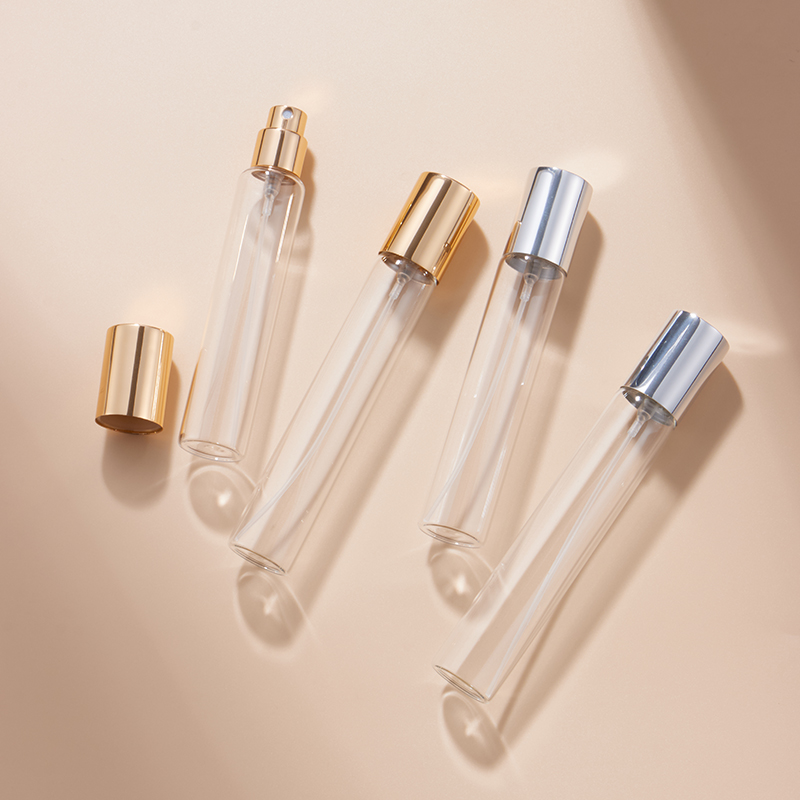
If the original bottle is still intact, a direct swap is the cleanest path. A perfume plastic mist pump sprayer with an aluminum cap is a reliable screw-on replacement for small 11mm necks, while a rose gold aluminum crimp pump sprayer matches wider 20mm crimp bottles and adds a premium finish. When the glass itself is chipped or the original bottle has no branding you need to keep, transfer the perfume into a refillable glass perfume spray bottle and skip the damaged bottle entirely.
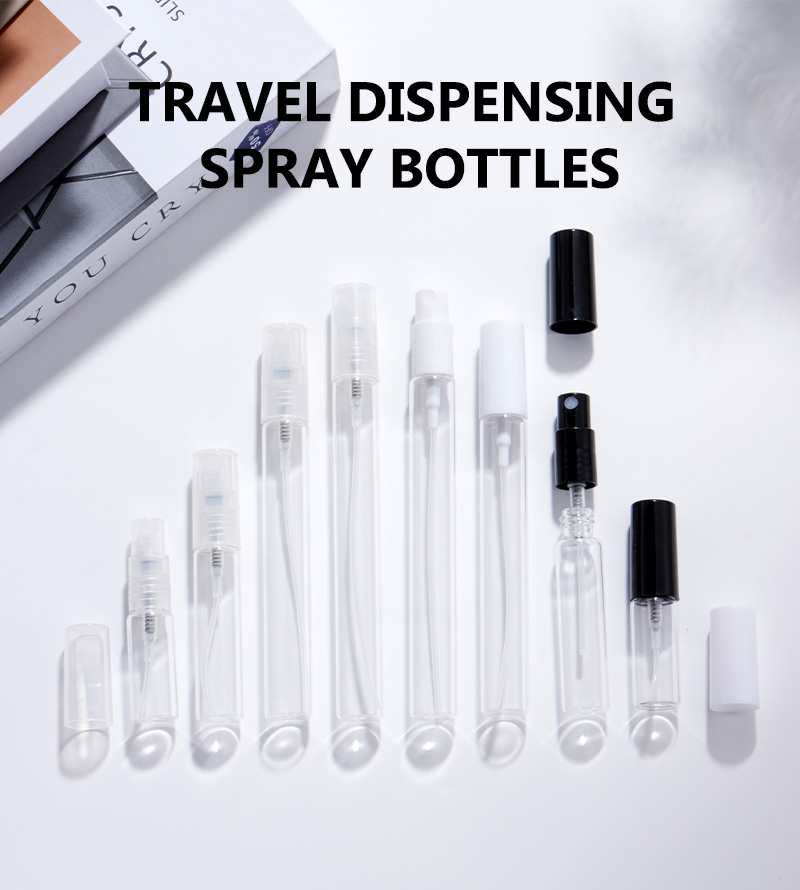 Custom 3ml 5ml 10ml 12ml Refillable Glass Perfume Spray Bottle Manufacturer, ComZhangjiagang Haojie Packaging Technology Co., Ltd is China OEM/ODM 3ml 5ml 10ml 12ml Refillable Glass Perfume Spray Bottle manufacturer a...View Product →
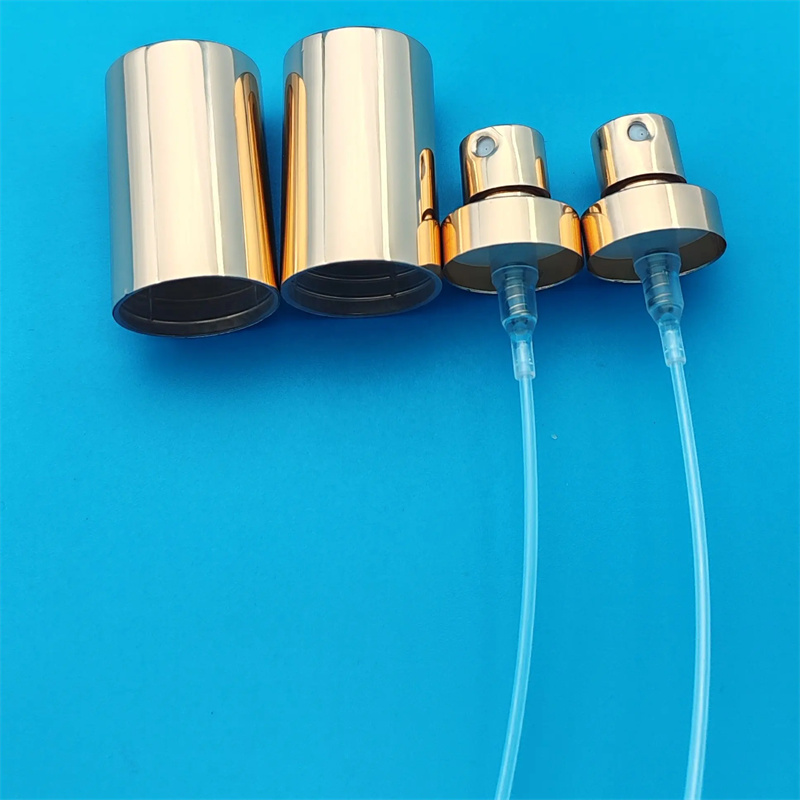 Custom 20mm Rose Gold Aluminum Crimp Pump Sprayer Manufacturer, Company - ZhangjZhangjiagang Haojie Packaging Technology Co., Ltd is China OEM/ODM 20mm Rose Gold Aluminum Crimp Pump Sprayer manufacturer and 20mm Rose ...View Product →
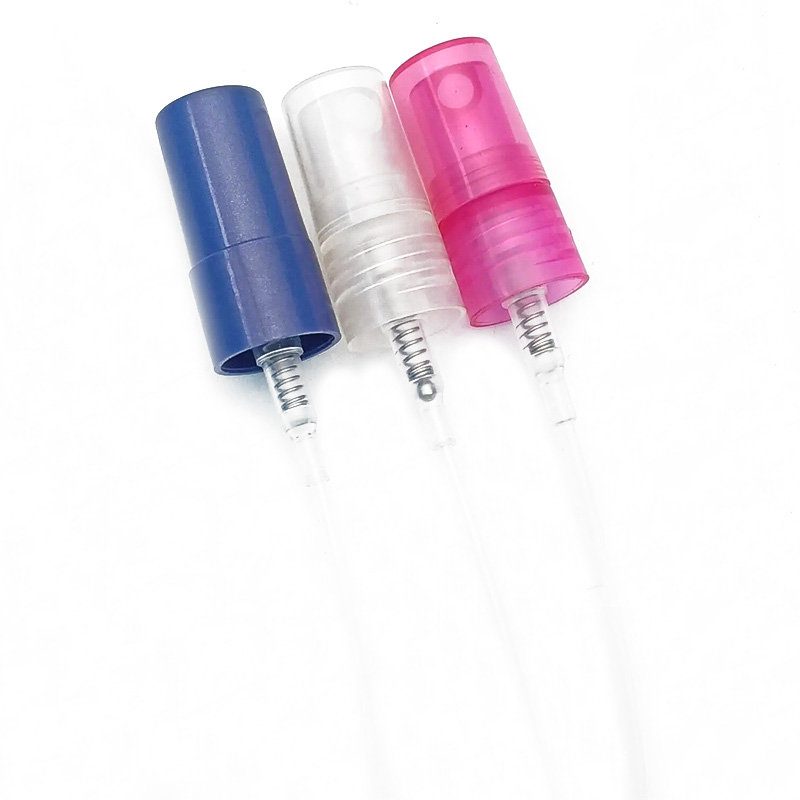 Custom 11mm/410 Perfume Plastic Mist Pump Sprayer With Aluminum Cap ManufacturerZhangjiagang Haojie Packaging Technology Co., Ltd is China OEM/ODM 11mm/410 Perfume Plastic Mist Pump Sprayer With Aluminum Cap manufactu...View Product →
How to Keep a Perfume Spray Working Longer
Preventing a perfume spray failure is far easier than repairing one. Perfume is mostly alcohol and fragrance oil, and both leave sticky residue when they evaporate. That residue is the main reason sprayers clog after a few months of daily use.
- Store the bottle upright. Lying a perfume bottle on its side lets liquid pool inside the actuator, where it evaporates into crust around the nozzle.
- Keep the cap on when not in use. Dust and air are the two biggest contributors to nozzle clogs.
- Avoid heat and direct sunlight. Warmth accelerates alcohol evaporation, thickens the liquid, and can warp the plastic actuator.
- Wipe the nozzle after each use. A quick wipe with a tissue removes the thin layer of perfume that would otherwise dry in the orifice.
- Do not store the pump in the pressed-down position. Keeping the spring compressed for weeks gradually reduces its return force.
A monthly rinse of the actuator under warm running water takes about twenty seconds and eliminates 80 percent of perfume spray complaints before they start. For bottles used daily, that single habit is the most reliable protection against a jammed nozzle.
FAQ About Fixing Perfume Sprays
- Why does my perfume spray stop working when the bottle is half full?
The dip tube no longer reaches the liquid, or an airlock has formed in the pump chamber. Tap the bottle bottom, tilt it at 45 degrees, and prime the pump several times. If it still fails, pull out the dip tube and cut two or three millimetres off the end at an angle. - Can boiling water unclog a perfume nozzle?
No. Boiling water can warp the plastic actuator and the small internal socket that grips the pump stem. Use comfortably warm tap water and let the nozzle soak for five to ten minutes. Combine the soak with a sewing pin for faster results. - How can I tell if my perfume bottle uses a crimp pump or a screw pump?
Look at the collar. A screw pump has visible threads running around the neck and can be twisted off by hand. A crimp pump has a smooth, seamless metal sleeve pressed onto the glass rim. Crimp pumps are more common on small sample sizes, while full-size bottles typically use screw pumps. - Can I use a lotion pump on a perfume bottle?
Physically yes, if the neck size matches, but the spray quality will be poor. Lotion pumps are designed to dispense thick creams in a single stroke and use a different spring rate and orifice size. A perfume mist pump atomizes low-viscosity alcohol much better. The same pump family used for thicker formulas is explained in how a lotion pump works internally. - Why does my perfume spray once and then stop?
This is the classic airlock symptom. The first press empties the pump chamber, but the dip tube is not picking up more liquid. Tap the bottle, tilt it, and pump three to five times. If the problem returns after every short pause, inspect the dip tube for a hairline crack. - How do I know which replacement pump size I need?
Measure the outside diameter of the glass neck with a ruler. Standard perfume sizes are 11mm, 12mm, 13mm, 15mm, 18mm, 20mm and 24mm. With a screw pump, also note the thread code printed or stamped on the collar, such as 11mm-410 or 18mm-410. When in doubt, order a universal pump with a wide thread range and verify the fit before pressing it in.
Our Products //
Related Product

- E-mail: [email protected]
- Phone: +86-15962399191
- Add: No. 60-7, East Side of Jinzhong Road, Jinfeng Town, Zhangjiagang City, Suzhou City, Jiangsu Province
Copyright © Zhangjiagang Haojie Packaging Technology Co., Ltd. All Rights Reserved.
 China Cosmetic Packaging Manufacturers
China Cosmetic Packaging Manufacturers