

 中文简体
中文简体 Español
 عربى
عربى
Fragrance Bottle Sizes Guide: Chart, Sprays & Glass Bottle Tips
Industry News-Content
- 1 Fragrance Bottle Sizes: The Complete Sizing Guide
- 2 How Today's Standard Fragrance Bottle Sizes Came to Be
- 3 Milliliters, Ounces, and Spray Counts: Reading the Numbers
- 4 Small Fragrance Bottle Sizes: Vials, Miniatures, and Travel Formats
- 5 Large and Bulk Fragrance Bottle Sizes
- 6 How Concentration Changes the Way a Fragrance Bottle Size Performs
- 7 Matching a Fragrance Bottle Size to How It Will Be Used
- 8 Why the Glass Perfume Bottle Remains the Industry Standard
- 9 How Bottle Shape Changes the Way a Size Looks and Feels
- 10 Fragrance Bottle Sizes Across Different Product Types
- 11 Bottle Size and the Business Side: Cost, MOQ, and Margins
- 12 Refillable Bottles and the Move Toward Smaller Repeat Purchases
- 13 Regional Preferences in Fragrance Bottle Sizes
- 14 Common Mistakes When Choosing a Fragrance Bottle Size
- 15 Storing Any Fragrance Bottle Size Correctly
- 16 Frequently Asked Questions About Fragrance Bottle Sizes
- 16.1 What is the most common fragrance bottle size?
- 16.2 How long does a 50ml fragrance bottle last?
- 16.3 Can I bring a 100ml perfume bottle on a plane?
- 16.4 Why are sample vials so much smaller than retail bottles?
- 16.5 Does bottle size affect how long the fragrance itself stays fresh?
- 16.6 Why do fragrance brands almost always use a glass perfume bottle instead of plastic?
- 16.7 What size fragrance bottle is best for gifting?
- 16.8 Is it cheaper to buy a larger fragrance bottle size?
- 16.9 Why do some fragrance lines skip 100ml and stop at 50ml?
- 16.10 What is the difference between a bottle's declared size and how much it looks like it holds?
- 16.11 How do fragrance bottle sizes differ between perfume and body mist?
- 16.12 What should a brand check before ordering a custom bottle size in bulk?
Fragrance Bottle Sizes: The Complete Sizing Guide
Fragrance bottle sizes generally run from tiny 1ml sample vials to bulk 200ml and larger formats, with 30ml, 50ml, and 100ml standing out as the three most purchased sizes worldwide. A 30ml bottle suits someone testing a new scent, 50ml covers regular daily wear, and 100ml delivers the lowest cost per milliliter for a signature fragrance worn often. The right size depends less on price and more on how frequently the fragrance gets used, how many sprays a bottle can deliver, and whether the bottle needs to travel.
This guide breaks down every common fragrance bottle size, explains how concentration affects spray count, looks at why the glass perfume bottle remains the standard container across the industry, and goes further into the packaging, sourcing, and storage details that shape how a bottle performs once it leaves the shelf. Tables, size charts, and a detailed FAQ follow, so readers can jump straight to the section that matches their question.
| Size range | Common label | Typical use |
|---|---|---|
| 1ml – 2ml | Sample vial | Testing a scent before buying |
| 5ml – 10ml | Miniature / rollerball | Purse carry, gifting, collecting |
| 15ml – 30ml | Travel size | Carry-on friendly, short trips |
| 50ml | Standard bottle | Everyday wear, most-purchased size |
| 100ml | Large bottle | Signature scent, best value per ml |
| 200ml and above | Bulk / refill | Retail refill stations, heavy users |
Fragrance packaging did not settle on these particular numbers by accident. Each size range reflects decades of retail testing, shipping economics, and shopper behavior, which is why the sections below go beyond a simple chart and explain the reasoning behind each bracket.
How Today's Standard Fragrance Bottle Sizes Came to Be
Fragrance bottle sizes were not standardized overnight. Early twentieth-century perfume houses filled bottles in whatever volume suited their glassmaker's molds, which meant a shopper could find the same fragrance sold in wildly inconsistent amounts from one boutique to the next. As department stores and duty-free retail expanded through the mid-1900s, brands began converging on a smaller set of repeatable sizes so that pricing, shelf planning, and inventory forecasting could work the same way across an entire product line.
The 30ml, 50ml, and 100ml brackets that dominate today grew out of that retail standardization rather than any single technical requirement. Round metric numbers were easier for distributors across different countries to stock consistently, and a three-tier ladder gave marketing teams a simple way to frame a purchase decision: try it small, live with it at a medium size, or commit at the large size. That three-step ladder is still the backbone of how most fragrance lines are packaged today, even as niche and artisanal brands experiment with less conventional volumes like 75ml or 90ml to stand out on a crowded shelf.
Duty-free and travel retail pushed sizes in a new direction
Airport shopping added its own pressure on fragrance bottle sizes starting in the 1970s and 1980s. Duty-free retailers wanted large-format bottles that looked like an obvious bargain compared to city-center department stores, which is part of why 100ml and even 150ml bottles became closely associated with travel shopping. At the same time, airline liquid restrictions introduced decades later pushed demand back toward smaller 15ml to 30ml formats for anyone carrying fragrance in hand luggage rather than checked bags, creating the two-sided market that exists now: bulk-oriented duty-free bottles on one end, and compact travel bottles on the other.
Milliliters, Ounces, and Spray Counts: Reading the Numbers
Fragrance labels mix two measurement systems. Milliliters (ml) are used almost everywhere outside the United States, while fluid ounces (fl oz) dominate American shelves. The conversion is simple enough to keep in mind while shopping: one milliliter is roughly 0.034 fl oz, so a 100ml bottle equals about 3.4 fl oz and a 50ml bottle equals about 1.7 fl oz. Reading both numbers matters when comparing a domestic brand listed in ounces against an imported one listed in milliliters, since the two rarely round to identical figures.
Confusion also comes from the difference between the US fluid ounce and the UK fluid ounce, which are not quite the same unit. The gap is small enough that it rarely changes a buying decision, but it explains why a bottle labeled 3.4 fl oz in one country might be printed as 3.3 fl oz somewhere else even though both refer to the same 100ml of liquid.
Spray count is not fixed by volume alone
A bottle's spray count depends on the pump mechanism as much as the liquid inside it. A well-calibrated atomizer typically releases 0.07ml to 0.1ml per spray, which means a 50ml bottle can deliver anywhere from roughly 500 to 700 sprays before running dry. Cheaper or looser pumps release more liquid per press and shorten that count noticeably, which is one reason two bottles of the same declared size can feel like they empty at very different speeds.
Spray count also drifts over a bottle's life. The first few presses after purchase often prime the pump and release a fine mist with very little liquid, while the final sprays as a bottle nears empty can sputter or under-dose because the dip tube can no longer draw liquid efficiently from the bottom corners of the glass. Buyers who track spray count closely, such as brands running cost-per-use calculations, generally build in a five to ten percent buffer below the theoretical maximum to account for this.
| Milliliters | Fluid ounces | Approx. sprays |
|---|---|---|
| 5ml | 0.17 fl oz | 50 – 70 |
| 10ml | 0.34 fl oz | 100 – 140 |
| 15ml | 0.5 fl oz | 150 – 210 |
| 30ml | 1.0 fl oz | 300 – 420 |
| 50ml | 1.7 fl oz | 500 – 700 |
| 75ml | 2.5 fl oz | 750 – 1050 |
| 100ml | 3.4 fl oz | 1000 – 1400 |
| 200ml | 6.8 fl oz | 2000 – 2800 |
Small Fragrance Bottle Sizes: Vials, Miniatures, and Travel Formats
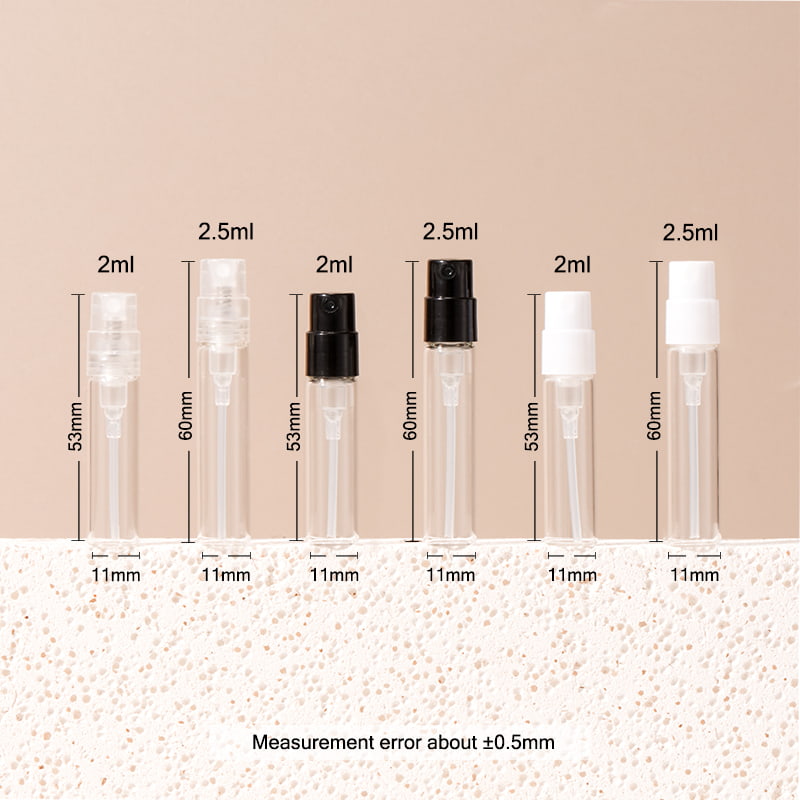
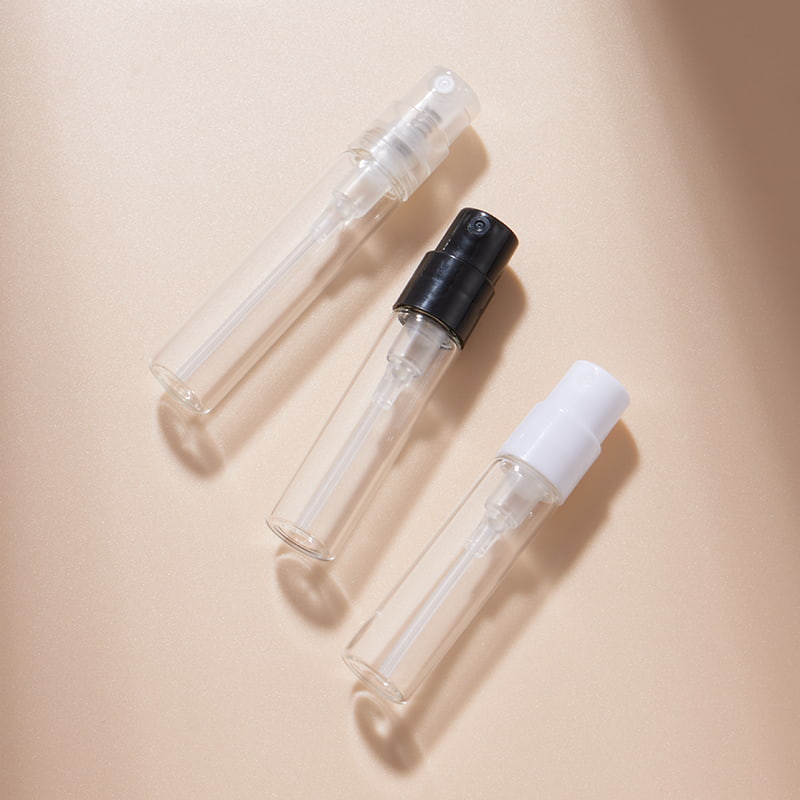
The smallest end of the fragrance bottle sizes spectrum exists mainly to remove risk. A 1ml or 2ml vial lets someone try a scent on skin for a few hours without committing to a full bottle, which is why sampling programs and subscription boxes lean on this range so heavily. Packaging guides in the fragrance trade note that these tiny formats often use simple tube shapes fitted with roller balls or basic spray pumps rather than the decorative glass work seen on full-size bottles, since the goal is function over display.
- 1ml – 2ml vials: single-use or few-use samples, common in magazine inserts and counter testing
- 5ml – 7.5ml miniatures: scaled-down replicas of full-size bottles, popular with collectors
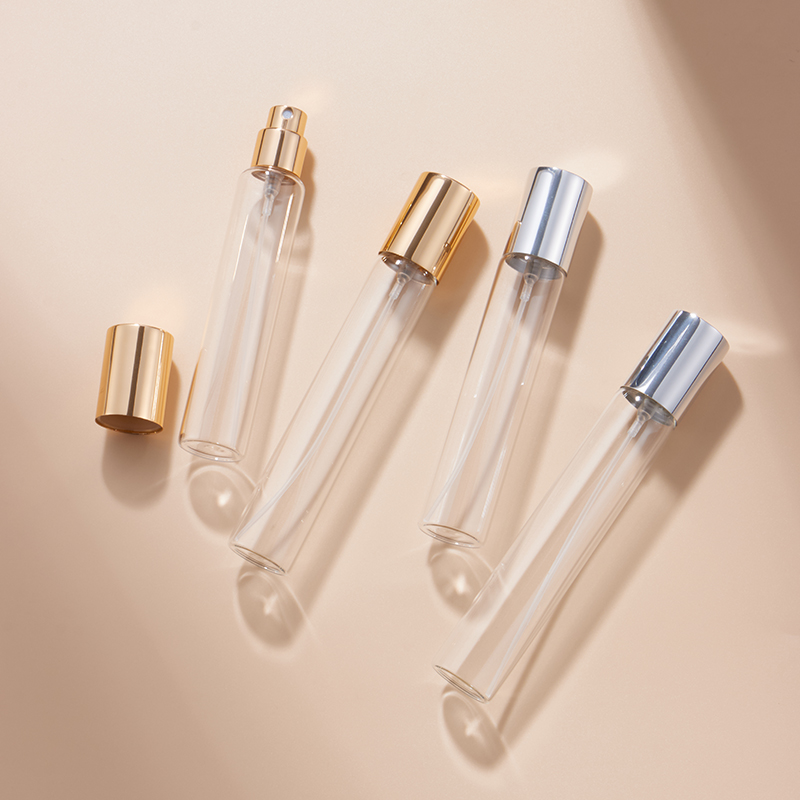
- 10ml – 30ml travel sizes: sized to fit airline carry-on liquid rules in most regions
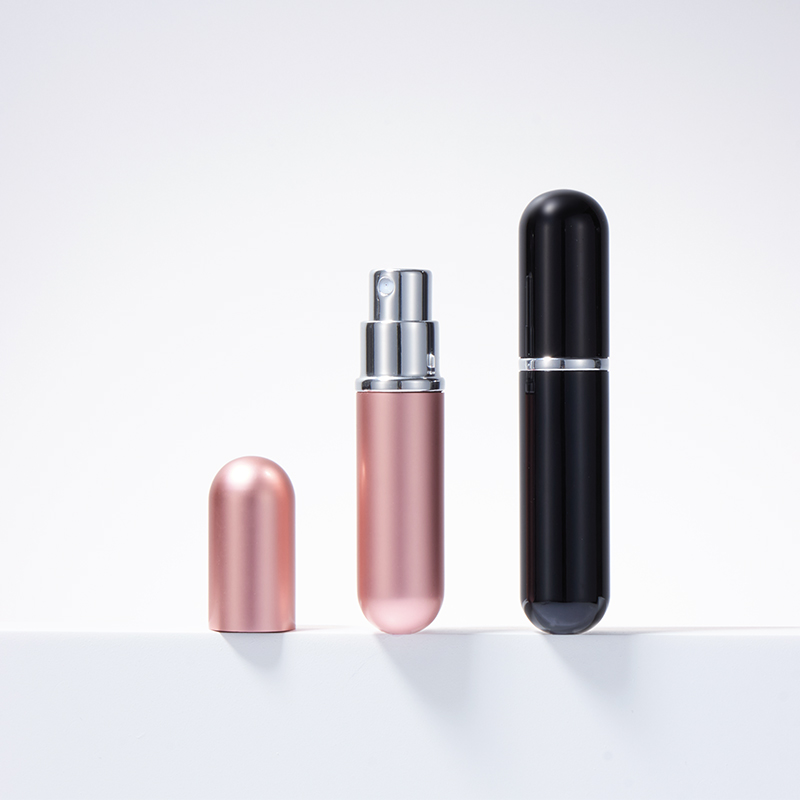
- Purse sprays and atomizer refills: usually 5ml – 15ml, refillable from a larger bottle at home
Travel-size bottles deserve a separate note because their popularity is regulatory as much as practical. Most carry-on liquid allowances cap individual containers at 100ml, but a fragrance bottle that size still takes up an entire allotment on its own, so travelers who want to bring more than one scent tend to reach for 15ml to 30ml bottles instead. A small bottle also survives a checked bag better, since less liquid means less mess if a cap loosens in transit.
Miniature bottles carry a collecting culture of their own that is separate from ordinary sampling. Fragrance collectors, sometimes called mini collectors, specifically seek out the 5ml and 7.5ml replica bottles that mirror a full-size release, and some limited-edition fragrance launches are sold exclusively in miniature format as a way to test demand before investing in full-size tooling and glasswork. Because these bottles are handled frequently and displayed rather than stored away, manufacturers tend to use slightly thicker glass at this size than the volume alone would require, simply to withstand repeated handling.
Standard Fragrance Bottle Sizes: 30ml, 50ml, and 100ml Compared
| 30ml | 50ml | 100ml |
|---|---|---|
| Entry point for a new fragrance; low commitment while still offering months of regular use | The most purchased size worldwide; balances shelf presence, price, and daily wear | Lowest cost per milliliter; suited to a fragrance worn most days for a year or more |
| Good fit for occasional or special-occasion wear | Good fit for a rotation of two or three fragrances | Good fit for a single signature scent used daily |
These three sizes dominate retail shelves because they map neatly onto how people actually use fragrance. Someone unsure about a new scent rarely wants to gamble on a 100ml bottle, while a person who has worn the same fragrance for years has little reason to keep buying small 30ml bottles at a higher price per milliliter. Brands generally launch a new fragrance in 30ml and 50ml first, then add a 100ml option once demand is proven, which is also why 100ml bottles are more often discounted or bundled in gift sets.
A less obvious factor also plays into the popularity of these three sizes: shelf photography and counter display space. Retail counters are usually planned around a fixed footprint per brand, and stocking three bottle heights that share the same base diameter but grow taller with volume lets a merchandiser fit a full size range into a tidy row without redesigning the display. Brands that break from the 30/50/100 pattern, such as releasing an unusual 65ml or 120ml bottle, often do so deliberately to stand out visually rather than to solve a packaging problem.
Large and Bulk Fragrance Bottle Sizes
Beyond the standard retail range, bottles of 150ml, 200ml, and even 500ml appear in two very different contexts: heavy personal use and commercial refill operations. A household that shares one fragrance among several people, or a barbershop and spa that spritzes clients, burns through volume fast enough that a large format cuts packaging waste and per-use cost substantially. A 500ml bottle holds roughly the same liquid as five 100ml bottles, but uses a single cap, pump, and glass body instead of five, which matters for anyone buying in volume.
Large bottles also show up on the manufacturing side of the industry, where a fragrance house or contract filler stores concentrate in bulk containers before it ever reaches a retail-size glass perfume bottle. For a private-label brand deciding how to package a new scent, choosing between a run of 30ml, 50ml, or 100ml bottles is a packaging and margin decision as much as a design one, since bottle cost per unit drops as fill volume increases but shelf price expectations shift too.
Hospitality and wellness settings represent a growing use case for large-format fragrance bottles. Hotels stocking signature scent diffusers, spas offering post-treatment mist, and retail stores using ambient scenting all favor 200ml to 1000ml refill bottles paired with a dedicated dispensing pump, since staff refilling a diffuser daily need a container that does not require constant reordering. These commercial formats rarely use decorative glasswork at all, favoring plain cylindrical bottles that prioritize ease of handling and stacking in a stockroom over shelf appeal.
How Concentration Changes the Way a Fragrance Bottle Size Performs
Two bottles of identical size can last very differently depending on what is inside them. Fragrance concentration is graded by the percentage of aromatic oil in the mixture, and that percentage determines how many sprays are needed per application. Eau fraiche and eau de cologne formulas sit at the lower end of concentration and typically need four to five sprays to register clearly, while eau de parfum and parfum extrait sit at the higher end and need only one or two sprays for the same effect.
| Concentration | Approx. oil content | Sprays per use |
|---|---|---|
| Eau fraiche / cologne | 2% – 4% | 4 – 5 |
| Eau de toilette | 5% – 15% | 2 – 3 |
| Eau de parfum | 15% – 20% | 1 – 2 |
| Parfum / extrait | 20% – 30% | 1 |
This is why a 30ml bottle of parfum extrait can outlast a 50ml bottle of eau de cologne even though it holds less liquid. Anyone comparing fragrance bottle sizes across concentrations should treat the milliliter number as only half the story and check the concentration line on the box before assuming a bigger bottle automatically means more wear.
Concentration also affects how brands size their bottle range in the first place. A parfum extrait line rarely needs a 100ml option because most wearers would take years to finish it, so extrait releases commonly top out at 30ml or 50ml. Eau de toilette and eau de cologne lines, by contrast, use up liquid faster per wear and therefore justify offering 100ml and even 200ml bottles without the fragrance sitting unused long enough to fade in quality.
Matching a Fragrance Bottle Size to How It Will Be Used
Picking a size becomes far simpler once the buying reason is clear. The list below covers the most common scenarios and the size range that tends to fit each one best.
- Trying a brand-new scent for the first time: 5ml – 15ml, low cost if the fragrance turns out to be a poor match
- Gifting to someone whose taste is uncertain: 30ml, generous enough to feel like a real present without excess risk
- Carrying on a flight or short work trip: 15ml – 30ml, fits standard liquid allowances with room for other items
- Wearing a fragrance in daily rotation with others: 50ml, enough volume without dead stock sitting unused for years
- Committing to a long-term signature scent: 100ml or larger, the strongest value per milliliter over time
- Outfitting a business, spa, or retail refill counter: 200ml and above, minimizes packaging cost per application
Fragrance oils also degrade slightly once a bottle is opened and exposed to air and light repeatedly, so buying far more volume than will be used within one to two years rarely pays off even at a lower per-ml price. Matching bottle size to realistic usage speed protects both the scent quality and the money spent on it.
Household composition changes this calculation as well. A single person wearing one or two signature scents in steady rotation gets the most value from settling into 50ml or 100ml bottles, while someone who enjoys switching fragrances by mood or season often ends up better served by a shelf of 15ml to 30ml bottles, even though the per-milliliter price is higher, simply because the smaller size range prevents any single bottle from sitting untouched long enough to lose its edge.
Why the Glass Perfume Bottle Remains the Industry Standard
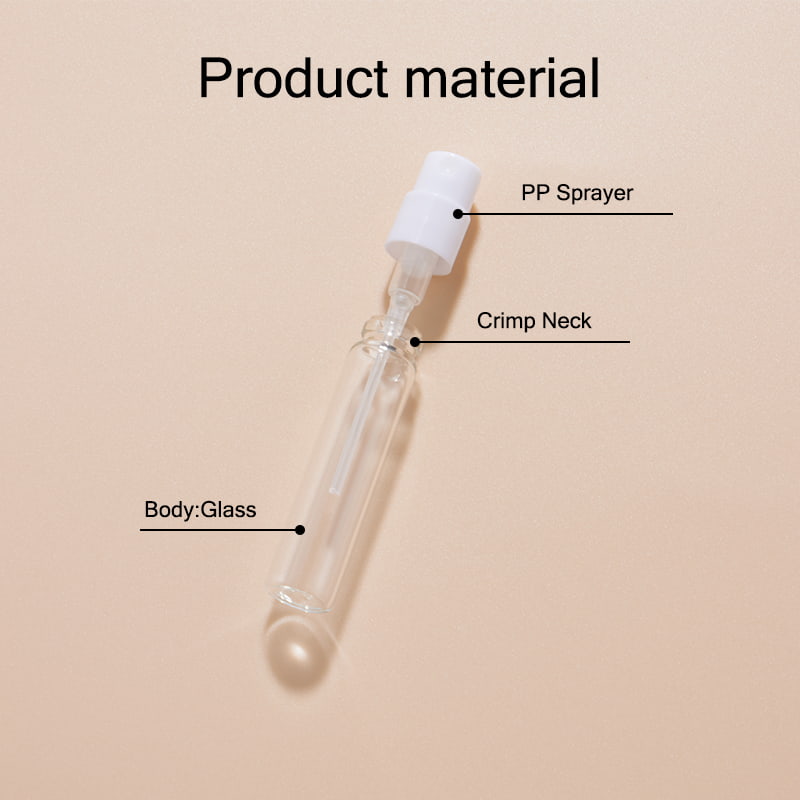
Fragrance formulas are chemically reactive, and the container holding them has to resist that reactivity for years without altering the scent. Glass is inert against alcohol and aromatic compounds, which is why nearly every serious fragrance house, from mass-market to niche, still fills its bottles in glass rather than plastic. A plastic container can leach trace compounds into a fragrance over time or absorb some of the scent into its own walls, both of which shift the smell away from what the perfumer originally built.
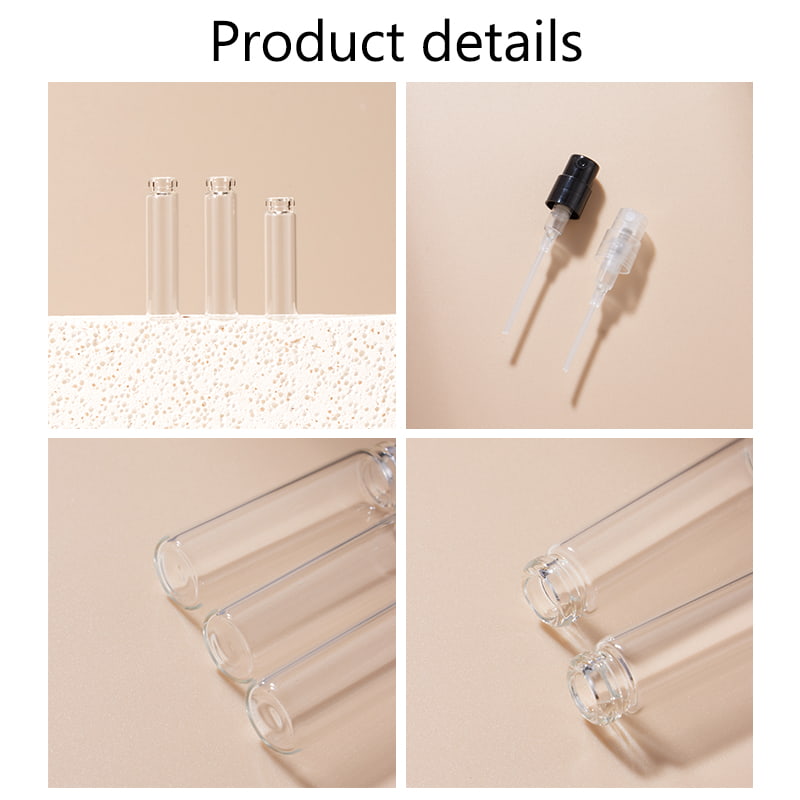
Bottle size and glass design are linked decisions, not separate ones. A small 5ml or 10ml glass perfume bottle needs thicker relative wall thickness to survive handling and shipping without chipping, since a smaller vessel has less structural mass to begin with. Larger 100ml and 200ml bottles can carry more elaborate shapes, faceted glass, or heavier weighted bases, because their proportions absorb decorative glasswork without becoming fragile or top-heavy. This is part of why premium fragrance lines often reserve their most sculptural bottle designs for the larger sizes in a range, while travel and sample formats stay simple and utilitarian.
Neck and pump compatibility across sizes
Every glass perfume bottle is built around a standard neck finish so that spray pumps, rollerballs, or dab caps from a compatible supplier fit correctly regardless of bottle volume. A mismatch between neck diameter and pump size is one of the most common production issues brands run into when scaling a fragrance line across multiple bottle sizes, since a pump built for a 50ml neck will not necessarily seal correctly on a 15ml bottle with a different opening. Buyers sourcing bottles for a private-label fragrance should confirm neck compatibility across every size in the range before committing to a production run.
Glass thickness, weight, and shipping cost interact with size
Every additional gram of glass adds to freight cost across a production run, so packaging teams tend to walk a careful line between a bottle that feels substantial in hand and one that keeps shipping weight under control. Smaller bottles are less forgiving here because the glass-to-liquid ratio is naturally higher; a 5ml bottle needs almost as much glass mass proportionally to stay durable as a 50ml bottle, which is part of why small fragrance formats often cost more per milliliter to produce even before the retail markup is applied. Larger bottles spread that fixed glass weight across more liquid, improving the cost ratio, which is one more reason 100ml and above formats tend to offer better value per milliliter at retail.
Color also plays a functional role alongside size. Clear glass shows off fragrance color and is favored for lighter, transparent liquids, while amber or frosted glass perfume bottle finishes are often chosen for formulas that are more sensitive to light degradation, regardless of the fill volume. Brands packaging the same fragrance across a size range typically keep glass tint consistent across every bottle in the line so the smallest travel size and the largest bulk bottle protect the formula in the same way.
How Bottle Shape Changes the Way a Size Looks and Feels
Two bottles holding the identical 50ml of liquid can look dramatically different in volume depending on their shape. A tall, narrow bottle reads as more substantial on a shelf than a short, wide one holding the same amount, which is why marketing teams often test several silhouettes at a fixed fill volume before settling on final glasswork. Square and rectangular bottles tend to photograph as larger than round bottles of equal capacity because flat sides create sharper light and shadow contrast, a detail that matters heavily for e-commerce listings where a thumbnail image drives the first impression.
Shape also affects how efficiently a bottle uses its labeled volume. A bottle with a heavily sculpted base or an oversized cap can end up holding noticeably less liquid than its exterior height suggests, since some of that visual bulk is glass or plastic rather than usable capacity. Buyers comparing two bottles of the same declared size across different brands sometimes notice this gap directly: one bottle looks larger on the shelf while both hold exactly the same 50ml of fragrance inside.
Fragrance Bottle Sizes Across Different Product Types
Sizing conventions shift once fragrance moves beyond the classic spray bottle. Each format below tends to follow its own typical size range, shaped by how the product is applied and how quickly it is used up.
| Format | Typical size range | Why this range fits |
|---|---|---|
| Classic spray bottle | 30ml – 100ml | Balances shelf value with realistic use-up speed |
| Rollerball / oil perfume | 3ml – 10ml | Highly concentrated, applied in small dabs |
| Body mist | 100ml – 250ml | Low concentration, used liberally over larger skin area |
| Solid perfume | 5g – 15g | Applied with a fingertip, no liquid volume to measure |
| Attar / oud oil | 3ml – 12ml | Extremely concentrated, small vials sold at high value density |
Body mist is worth calling out specifically because its size range often confuses shoppers who compare it directly to eau de toilette or eau de parfum. A 250ml body mist looks enormous next to a 50ml perfume bottle, but the lower concentration and lighter application mean the two products can last a comparable length of time in practice, despite the large gap in labeled volume.
Bottle Size and the Business Side: Cost, MOQ, and Margins
For a brand sourcing glass perfume bottle packaging rather than buying finished fragrance at retail, bottle size becomes a procurement decision with real cost implications. Glass manufacturers typically quote pricing per thousand units, and unit cost drops as order volume rises, so a brand ordering 50ml bottles at high volume can often secure a noticeably lower per-bottle price than one ordering the same size in a small trial batch. Minimum order quantities also vary by size and mold complexity: a standard round bottle in a common size like 50ml or 100ml usually carries a lower MOQ than a custom-shaped bottle in an unusual volume, since standard molds are already in production rather than built to order.
Margin planning follows a similar logic to spray count. A brand pricing a 100ml bottle at roughly double the price of a 30ml bottle of the same fragrance is not simply doubling a number; glass, pump, and cap costs do not scale linearly with fill volume, so the larger bottle typically carries a better margin percentage even at a lower price per milliliter to the shopper. This is part of why retailers frequently promote large-size bottles as the best value pick, since both the customer and the brand tend to benefit from that size selling well.
Freight and customs costs deserve equal attention when a brand plans a bottle size range for international shipping. Bottle weight, not liquid volume, often drives freight class calculations, so a heavier decorative glass perfume bottle at 50ml can sometimes cost more to ship internationally than a lighter, simpler 100ml bottle. Brands exporting across multiple markets frequently request weight specifications alongside capacity specifications from their glass supplier for exactly this reason.
Refillable Bottles and the Move Toward Smaller Repeat Purchases
Refill programs have shifted how some brands think about bottle size altogether. Rather than selling a single large bottle meant to be discarded once empty, a growing number of fragrance houses now sell a durable outer bottle once, paired with smaller 30ml to 50ml refill inserts sold on a repeat basis. This model reduces glass waste per fragrance purchase over time and changes the economics of small bottle sizes, since a 30ml refill in this system is priced and positioned very differently from a 30ml standalone travel bottle sold as an entry point.
Refillable systems also place new demands on bottle engineering that pure single-use bottles do not face. The outer shell needs a mechanism, typically a twist-lock or magnetic connector, that reliably reseals against a fresh insert dozens of times without leaking, which adds cost and design complexity that a simple sealed 50ml bottle never has to solve. Brands weighing whether to introduce a refill format for a given fragrance line generally need sales volume high enough to justify that extra engineering investment before it becomes cost-effective compared to conventional single-fill bottles.
Regional Preferences in Fragrance Bottle Sizes
Bottle size popularity is not identical everywhere. North American shoppers lean toward 100ml as a default full-size purchase, partly because domestic retail pricing structures make the larger bottle feel like the obvious value choice. European markets show stronger demand for 50ml, reflecting a shopping culture that rotates fragrances more often across seasons. Markets across the Middle East favor larger formats overall, including 200ml and refillable oud-style bottles, tied to local fragrance-layering habits that use noticeably more product per day than a typical Western routine.
| Region | Most common full size | Notable pattern |
|---|---|---|
| North America | 100ml | Strong preference for best value per ml |
| Europe | 50ml | Frequent fragrance rotation across seasons |
| Middle East | 150ml – 200ml+ | Heavier daily application, refillable formats common |
| East Asia | 30ml – 50ml | Preference for lighter application and smaller collections |
Brands and packaging buyers planning a product line for export should treat these patterns as a starting point for size selection rather than a fixed rule, since individual retailers and price points within a region can shift demand noticeably. A brand entering a new export market often starts with a smaller pilot size than its home-market bestseller, using early sales data to decide whether a larger companion size is worth adding to that region's lineup.
Common Mistakes When Choosing a Fragrance Bottle Size
A few recurring errors show up again and again among both everyday buyers and brands planning a new product line.
- Buying the largest bottle purely for the lower per-ml price, then letting most of it go unused for years
- Ignoring concentration and assuming a bigger bottle always means longer-lasting wear
- Packing a 100ml bottle in carry-on luggage and having it confiscated at airport security
- Choosing a bottle size for a new brand launch without testing neck and pump compatibility first
- Storing any size of glass perfume bottle in direct sunlight or a steamy bathroom, which accelerates scent breakdown regardless of volume
- Assuming a heavier, larger-looking bottle always holds more liquid than a simpler design of the same declared size
- Ordering a custom bottle shape at a small trial quantity without checking how MOQ and mold cost change at that size
Storing Any Fragrance Bottle Size Correctly
Storage habits matter across every size on this list, but small bottles show the effects of poor storage fastest simply because they have less liquid to buffer against heat and light exposure. Keeping any glass perfume bottle away from direct sunlight, away from bathroom humidity and temperature swings, and upright with the cap sealed tightly preserves the formula regardless of whether the bottle holds 5ml or 500ml.
A dresser drawer, closet shelf, or dedicated fragrance box out of direct light all work well. Bathrooms are the most common storage mistake because they feel like the natural home for a fragrance bottle sitting next to other grooming products, but the daily heat and steam from showering accelerates the breakdown of aromatic compounds faster than almost any other common household location. For anyone with a larger collection spread across several bottle sizes, grouping smaller travel and sample bottles together in a closed box offers extra light protection that individual small bottles do not get on an open shelf.
Frequently Asked Questions About Fragrance Bottle Sizes
What is the most common fragrance bottle size?
50ml is generally the best-selling size worldwide, offering a balance between price, shelf presence, and enough volume for months of regular daily wear without excess left unused.
How long does a 50ml fragrance bottle last?
With one to two sprays per day, a 50ml bottle typically lasts eight to twelve months. Usage frequency, spray habits, and fragrance concentration all shift that estimate in either direction.
Can I bring a 100ml perfume bottle on a plane?
Most carry-on liquid rules cap individual containers at 100ml, so a full unopened 100ml bottle is usually the largest single item allowed, though it will use most or all of the standard liquid allowance on its own. Checking the specific airline and departure country's current limits before flying is the safest approach, since rules vary.
Why are sample vials so much smaller than retail bottles?
Sample vials exist to let someone test a scent on skin over several hours without the cost or commitment of a full bottle. Their small size, usually 1ml to 2ml, keeps sampling programs affordable for brands to distribute widely.
Does bottle size affect how long the fragrance itself stays fresh?
Smaller bottles are opened and exposed to air more times relative to their volume over their lifespan, which can shorten freshness slightly faster than a large bottle used at the same pace. Storage conditions, such as heat and light exposure, generally matter more than size alone.
Why do fragrance brands almost always use a glass perfume bottle instead of plastic?
Glass does not react with alcohol or aromatic oils the way some plastics can, so it protects the scent formula from drifting away from its intended profile over months or years on a shelf.
What size fragrance bottle is best for gifting?
30ml is a common gifting size because it feels substantial without assuming the recipient will want to commit to a full-size bottle of an unfamiliar scent.
Is it cheaper to buy a larger fragrance bottle size?
Larger bottles almost always have a lower cost per milliliter, since packaging, pump, and production costs do not scale up at the same rate as fill volume. The savings only pay off if the fragrance gets used before it degrades.
Why do some fragrance lines skip 100ml and stop at 50ml?
Highly concentrated formats like parfum extrait use so little liquid per wear that most people would take several years to finish a 100ml bottle, so brands often cap that line at 30ml or 50ml to avoid selling a size that risks fading in quality before it is used up.
What is the difference between a bottle's declared size and how much it looks like it holds?
Bottle shape and cap design can make two bottles of the same declared volume look very different in size, since heavy bases, thick glass walls, and oversized caps take up visual space without adding to usable capacity. The declared milliliter figure on the box is the reliable number to compare, not the bottle's visual footprint.
How do fragrance bottle sizes differ between perfume and body mist?
Body mist is sold in much larger bottles, often 100ml to 250ml, because its lower concentration means more product is used per application. A large body mist bottle and a small perfume bottle can realistically last a similar length of time despite the size difference.
What should a brand check before ordering a custom bottle size in bulk?
Confirming neck finish and pump compatibility, checking the minimum order quantity for that specific size and shape, and reviewing bottle weight for freight planning are the three checks that prevent the most common sourcing problems when scaling a fragrance line into production.
Our Products //
Related Product

- E-mail: [email protected]
- Phone: +86-15962399191
- Add: No. 60-7, East Side of Jinzhong Road, Jinfeng Town, Zhangjiagang City, Suzhou City, Jiangsu Province
Copyright © Zhangjiagang Haojie Packaging Technology Co., Ltd. All Rights Reserved.
 China Cosmetic Packaging Manufacturers
China Cosmetic Packaging Manufacturers