

 中文简体
中文简体 Español
 عربى
عربى
2.7 oz Perfume in ml: Exact Conversion & Glass Bottle Guide
Industry News-Content
- 1 How the 2.7 oz to ml Conversion Actually Works
- 2 Common Perfume Bottle Sizes Compared
- 3 Why Glass Perfume Bottles Remain the Industry Standard
- 4 A Short History of the Glass Perfume Bottle
- 5 The Anatomy of a Glass Perfume Bottle
- 6 Types of Glass and Why Color Matters
- 7 How Long a 2.7 oz Bottle Actually Lasts
- 8 Choosing the Right Glass Perfume Bottle Size
- 9 Fragrance Concentration: What the Bottle Size Does Not Tell You
- 10 Glass Versus Plastic Versus Metal Perfume Containers
- 11 Sustainability and the Recyclability of Glass Perfume Bottles
- 12 What to Look for When Buying a Quality Glass Perfume Bottle
- 13 Common Mistakes People Make With Glass Perfume Bottles
- 14 Caring for a Glass Perfume Bottle Over Time
- 15 Frequently Asked Questions
- 15.1 Is 2.7 oz the same as 80 ml exactly?
- 15.2 Why do some fragrances list 2.7 oz while others list 2.5 oz or 3 oz for what looks like a similar bottle?
- 15.3 Does a larger glass perfume bottle mean the fragrance is stronger?
- 15.4 Can a 2.7 oz glass bottle be refilled once it is empty?
- 15.5 How should someone check the exact volume of a bottle they already own?
- 15.6 Is 2.7 oz considered a travel-friendly size?
- 15.7 Why do some 2.7 oz bottles feel heavier than others?
- 15.8 Can the glass on a 2.7 oz bottle break in checked luggage?
- 15.9 Does eau de parfum in a 2.7 oz bottle cost more than eau de toilette in the same size?
- 15.10 Is it safe to decant a 2.7 oz bottle into a smaller glass atomizer?
Quick Conversion
2.7 oz of perfume equals approximately 79.85 ml, which most brands and bottle manufacturers round to 80 ml.
This size sits in the upper-middle range of the fragrance market, larger than the popular 50 ml bottle but smaller than the common 100 ml full-size flask. A 2.7 oz glass perfume bottle typically holds enough juice for six to nine months of regular daily wear, depending on how many sprays a person uses each time they apply it.
How the 2.7 oz to ml Conversion Actually Works
Fragrance volume in the United States is almost always printed in fluid ounces, while the rest of the world reads bottles in milliliters. The math behind the conversion is fixed: one US fluid ounce equals 29.5735 milliliters. Multiply that figure by 2.7 and the result lands at 79.85 ml, a number that packaging suppliers then round to a clean, moldable size such as 80 ml or occasionally 75 ml, since glass tooling is built around round numbers rather than decimals.
This rounding habit explains why a bottle labeled "2.7 oz" on an American shelf and a bottle labeled "80 ml" on a European shelf can be the exact same glass perfume bottle, just dressed for two different markets. Brands that sell internationally often produce one mold and simply swap the printed label copy.
Formula: Ounces × 29.5735 = Milliliters
Reverse formula: Milliliters ÷ 29.5735 = Ounces
Common Perfume Bottle Sizes Compared
Fragrance houses tend to cluster around a handful of standard fill volumes because glass perfume bottle molds are expensive to produce and reused across product lines for years. The table below lines up the sizes a shopper is most likely to encounter, from sample vials to the largest flankers found in duty-free shops.
| Fluid Ounces | Milliliters | Common Product Type |
|---|---|---|
| 0.17 oz | 5 ml | Rollerball or sample vial |
| 1 oz | 30 ml | Travel-size spray |
| 1.7 oz | 50 ml | Entry-size full bottle |
| 2.7 oz | 80 ml | Mid-large full bottle |
| 3.4 oz | 100 ml | Standard full-size bottle |
| 6.7 oz | 200 ml | Value or refill bottle |
Notice that 2.7 oz does not slot neatly between the more familiar 1.7 oz and 3.4 oz sizes on a simple doubling pattern. Instead it tends to show up as a deliberate mid-tier offering, positioned by brands that want a bottle that feels substantial on a vanity without matching the price point of the largest flask.
Why Glass Perfume Bottles Remain the Industry Standard
Almost every 2.7 oz fragrance on the market ships in glass rather than plastic, and that choice is practical rather than purely visual. Perfume concentrate is a blend of alcohol, water, and aromatic compounds, several of which are chemically reactive with plastic resins over time. Glass is inert, meaning it does not leach chemicals into the liquid or absorb scent molecules the way some plastics do.
- Glass keeps the fragrance formula stable because it will not react with alcohol or essential oil compounds.
- Glass blocks more UV light than clear plastic when tinted, slowing the breakdown of top notes.
- Glass carries perceived weight and value, which is part of why 2.7 oz and larger bottles are almost never sold in anything else.
- Glass can be recycled indefinitely without losing structural quality, unlike most consumer plastics.
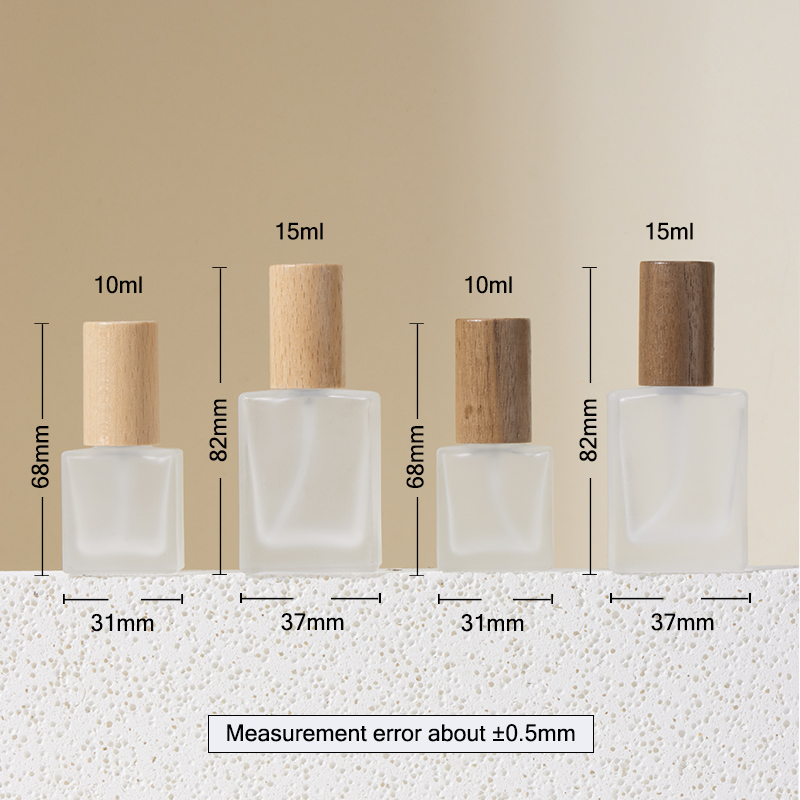
Weight also plays a quieter role in the buying decision. A 2.7 oz glass perfume bottle has real heft in the hand, somewhere around 150 to 220 grams once filled and capped, depending on wall thickness and whether the base is weighted for stability. That density is part of the sensory experience a fragrance house is selling, alongside the scent itself.
A Short History of the Glass Perfume Bottle
Glass has carried fragrance for nearly four thousand years. Early Egyptian and Mesopotamian artisans shaped small glass vessels around a core of compressed sand, producing thick-walled, often colorful containers reserved for temple oils and the households of the wealthy. Roman glassblowers later refined the craft after the invention of the blowpipe around the first century BCE, which made thin-walled, transparent glass possible for the first time and turned perfume bottles from ceremonial objects into something closer to everyday luxury goods.
The modern glass perfume bottle, with a fitted atomizer and a pressurized spray mechanism, is a much newer invention. The rubber-bulb atomizer appeared in the late 1800s, and the true fine-mist pump spray familiar today did not become standard until the mid-twentieth century. Before that, fragrance was applied from stoppered bottles using a glass dauber or simply poured. The shift to spray delivery changed bottle design permanently, since engineers needed a neck finish that could seal tightly around a metal crimp and a dip tube reaching to the bottom of the glass.
By the time a size like 2.7 oz became common on department store shelves in the twentieth century, the glass perfume bottle industry had already standardized around a small set of neck diameters and crimp finishes, which is part of why so many bottles across different brands can share the same replacement atomizer components even today.
The Anatomy of a Glass Perfume Bottle
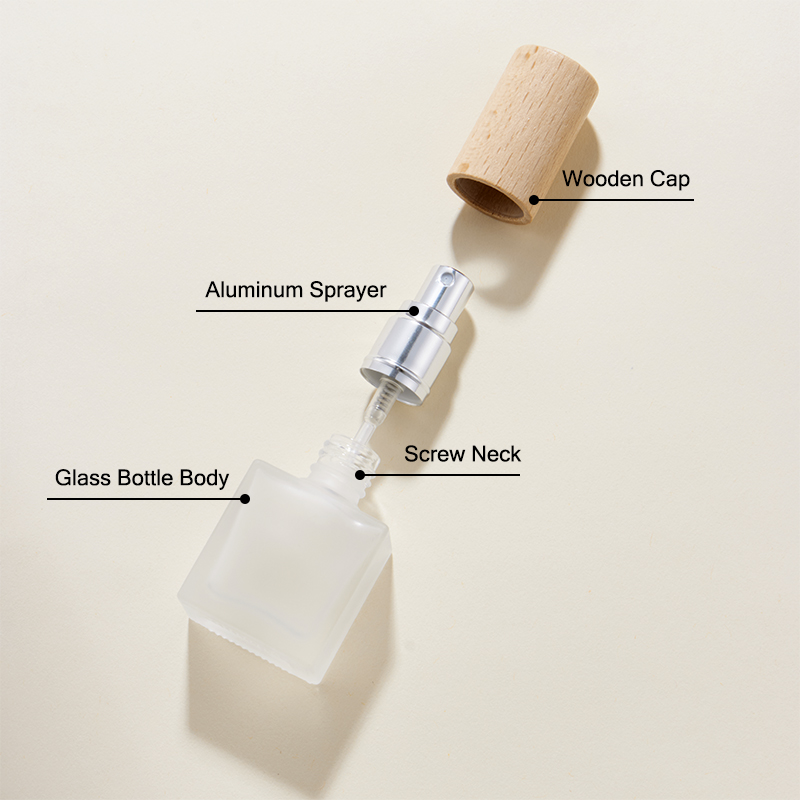
A finished 2.7 oz glass perfume bottle is made of more parts than most people realize. Each component plays a specific role in keeping the fragrance sealed, dispensed accurately, and protected from the outside air.
| Component | Material | Function |
|---|---|---|
| Glass body | Soda-lime or lead-free crystal glass | Holds the liquid and resists chemical reaction |
| Dip tube | Rigid plastic | Draws liquid up from the base of the bottle |
| Pump mechanism | Metal spring and plastic housing | Pressurizes and releases a metered dose per spray |
| Crimp collar | Aluminum | Locks the pump onto the glass neck airtight |
| Actuator and cap | Plastic, metal, or a combination | Directs the spray pattern and protects the nozzle |
The glass itself is only one of five separate components, which is why replacing a broken atomizer on a 2.7 oz bottle is possible without discarding the glass, provided the neck finish matches the diameter of the replacement pump. Perfume supply shops sell universal crimp pumps sized to fit the most common glass perfume bottle neck diameters used across the industry.
Types of Glass and Why Color Matters
Not every glass perfume bottle is made from the same formulation of glass, and the choice affects both appearance and how well the bottle protects its contents.
Soda-Lime Glass
This is the most common glass used for mass-market fragrance bottles, including most 2.7 oz offerings. It is inexpensive to produce, easy to mold into detailed shapes, and perfectly adequate for protecting fragrance as long as the bottle is not left in direct sunlight for extended periods.
Lead-Free Crystal Glass
Premium and designer fragrance lines sometimes use a denser, more refractive crystal-style glass for their flagship bottles. It carries more visual weight, catches light more dramatically on a vanity, and is often reserved for a brand's signature scent rather than every product in a lineup.
Tinted and Frosted Glass
Amber, green, blue, or frosted white glass is not just a design choice. Tinted glass filters out a portion of ultraviolet light before it reaches the liquid inside, which slows the photodegradation that changes how top notes smell over time. A fragrance sold in clear glass typically also ships inside an opaque outer box for exactly this reason, since the box does the light-blocking work the clear glass cannot.
How Long a 2.7 oz Bottle Actually Lasts
A standard atomizer delivers roughly 0.1 ml per spray, though fine-mist and heavy-mist nozzles can shift that number in either direction. Using 0.1 ml as a working average, an 80 ml bottle holds approximately 800 individual sprays.
800
Approximate total sprays in one 2.7 oz bottle
3–4
Typical sprays used per single application
6–9
Months of daily wear before the bottle empties
Someone who applies three to four sprays a day, every day, will typically empty a 2.7 oz bottle in six to nine months. Occasional wearers who reach for the bottle only a few times a week can stretch the same bottle past a year, though fragrance chemists generally recommend using an opened bottle within eighteen to twenty-four months for the best scent accuracy, since oxidation slowly changes how top and heart notes present themselves.
Choosing the Right Glass Perfume Bottle Size
Picking between a 1.7 oz, 2.7 oz, or 3.4 oz bottle usually comes down to three practical questions rather than personal taste alone.
How Often the Scent Will Be Worn
Daily wearers get better value from the 2.7 oz or 3.4 oz sizes, since the per-milliliter cost typically drops as bottle size increases. Someone testing a new fragrance or rotating through a large collection is often better served by a 1.7 oz or even a travel-size 1 oz bottle.
Storage and Travel Habits
A filled 2.7 oz glass perfume bottle weighs enough that frequent travelers often prefer to leave it at home and carry a 10 ml or 15 ml atomizer for trips, refilling from the larger bottle as needed. Airline carry-on liquid limits in most regions cap individual containers at 100 ml, which means a full 2.7 oz bottle technically qualifies but leaves no room for other liquids in the same clear bag.
Budget per Milliliter
Brands frequently price their 2.7 oz offering at a lower cost per milliliter than the smaller 1.7 oz version of the same fragrance, since packaging and labor costs do not scale directly with liquid volume. Comparing the price-per-ml across sizes before buying can reveal meaningful savings on a fragrance someone already knows they will wear consistently.
Fragrance Concentration: What the Bottle Size Does Not Tell You
Volume and strength are two completely separate specifications, and confusing them is one of the most common mistakes fragrance shoppers make. A 2.7 oz bottle of eau de toilette is not the same product as a 2.7 oz bottle of parfum from the same fragrance line, even though the glass, the label, and the milliliter count may look identical.
| Category | Aromatic Concentration | Typical Wear Time |
|---|---|---|
| Eau de cologne | 2 to 4 percent | 2 to 3 hours |
| Eau de toilette | 5 to 15 percent | 3 to 5 hours |
| Eau de parfum | 15 to 20 percent | 5 to 8 hours |
| Parfum or extrait | 20 to 30 percent | 8 or more hours |
Because parfum concentration is more potent per spray, a 2.7 oz parfum bottle often outlasts a same-size eau de toilette bottle in terms of days of wear, even though both contain an identical 80 ml of liquid. When comparing two 2.7 oz bottles by price, checking the concentration listed on the front label gives a far more accurate sense of value than the volume alone.
Glass Versus Plastic Versus Metal Perfume Containers
Glass dominates the 2.7 oz and larger segment of the market, but it is worth understanding why the alternatives exist and where each one actually makes sense.
Glass
Chemically inert, visually premium, fully recyclable, but heavier and breakable. The default choice for any full-size 2.7 oz bottle sold at retail.
Plastic
Lightweight and shatterproof, which suits travel atomizers under 30 ml, but prone to scent absorption and UV degradation over long storage periods.
Metal
Extremely durable and fully opaque against light, common in solid-balm compacts and small refillable spray canisters, but rarely used for a full 2.7 oz liquid fill.
Metal containers block light completely, which sounds ideal, but most metals cannot be easily inspected for remaining liquid level and add manufacturing cost at larger sizes. That combination is why metal stays confined mostly to small refillable atomizers and solid perfume compacts rather than replacing glass for a bottle in the 2.7 oz range.
Sustainability and the Recyclability of Glass Perfume Bottles
Glass is one of the few packaging materials that can be recycled repeatedly without any loss of quality or purity, a property known as closed-loop recycling. A glass perfume bottle melted down and reformed can become another glass container of equal quality, which is not true of most plastics, which typically degrade in quality with each recycling cycle and are more often downcycled into lower-grade products.
That said, most curbside recycling programs do not accept a fully intact glass perfume bottle because of its attached metal pump, plastic dip tube, and any remaining residue. A more sustainable end-of-life path is to remove the pump assembly, rinse the glass thoroughly, and either recycle the plain glass through a standard glass recycling stream or repurpose the bottle directly as a small vase, storage vessel, or refillable container.
Some fragrance brands have begun offering refill pouches or refill stations specifically so a customer can reuse the same 2.7 oz glass bottle multiple times rather than purchasing a brand-new bottle with every repurchase, cutting down on both glass production and shipping weight.
Common Mistakes People Make With Glass Perfume Bottles
A few habits quietly shorten the life of both the bottle and the fragrance inside it, and most are simple to avoid once someone knows to look for them.
Storing the Bottle in the Bathroom
The steam and temperature swings from daily showers accelerate oxidation far more than most people expect, making the bathroom one of the worst common storage spots despite being the most convenient.
Leaving the Bottle Uncapped
Even a few uncapped hours a day adds up, since alcohol evaporates steadily whenever the atomizer stem is exposed to open air, gradually concentrating what remains and shifting the scent balance.
Shaking the Bottle Vigorously
Aggressive shaking introduces excess air into the liquid, which can accelerate oxidation and, in bottles with a loose crimp, occasionally cause minor leaking around the pump collar.
Caring for a Glass Perfume Bottle Over Time
Fragrance quality depends as much on storage as on the bottle material itself. Heat, light, and air are the three forces that degrade perfume fastest, and a glass bottle can only do its job if it is stored with those threats in mind.
- Keep the bottle away from direct sunlight and windowsills, since UV exposure breaks down citrus and floral top notes first.
- Store perfume at a stable room temperature rather than in a steamy bathroom, where humidity and heat swings accelerate oxidation.
- Keep the cap on tightly between uses to limit air exposure and prevent evaporation through the atomizer stem.
- Store the bottle upright to keep the fragrance away from the pump mechanism seals, which can degrade with prolonged contact.
- A cool, dark drawer or a dedicated fragrance box will consistently outperform a bathroom shelf for long-term storage.
Glass itself does not expire, so a well-cared-for 2.7 oz bottle can be reused, refilled, or passed down without any loss of structural integrity, even after the original fragrance is long gone. Many collectors clean and repurpose old glass perfume bottles as decorative pieces or refillable travel atomizers for exactly this reason.
Frequently Asked Questions
Is 2.7 oz the same as 80 ml exactly?
Not precisely. The exact mathematical conversion is 79.85 ml, but bottle manufacturers round this to 80 ml because glass molds are built in clean, standardized volumes rather than decimal figures.
Why do some fragrances list 2.7 oz while others list 2.5 oz or 3 oz for what looks like a similar bottle?
Different brands work with different glass suppliers and molds, so a bottle that looks visually similar on a shelf may actually hold a slightly different fill volume. Always check the printed ml or oz figure on the base of the bottle rather than judging by shape alone.
Does a larger glass perfume bottle mean the fragrance is stronger?
No. Bottle size reflects volume only, not concentration. Strength depends on whether the fragrance is labeled eau de toilette, eau de parfum, or parfum, since those categories indicate the percentage of aromatic compounds in the formula, independent of how many milliliters the bottle holds.
Can a 2.7 oz glass bottle be refilled once it is empty?
Yes, as long as the atomizer pump still functions and the glass is clean and completely dry. Many people refill empty glass perfume bottles with a different fragrance or a decanted portion of a larger bottle, which also extends the useful life of the glass itself.
How should someone check the exact volume of a bottle they already own?
The fill volume is almost always printed on the base or the back label of the bottle, shown in both ounces and milliliters. If the label has worn off, the box the bottle originally came in will usually list the same figure.
Is 2.7 oz considered a travel-friendly size?
It falls within most carry-on liquid limits, which commonly cap individual containers at 100 ml, but its glass construction and weight make it less convenient for travel than a dedicated plastic or metal travel atomizer sized around 10 to 15 ml.
Why do some 2.7 oz bottles feel heavier than others?
Wall thickness and base weighting vary by manufacturer. A premium line may use thicker glass or a solid weighted base for a more substantial feel, while a value-priced bottle at the same 2.7 oz fill will typically use thinner glass to reduce material cost and shipping weight.
Can the glass on a 2.7 oz bottle break in checked luggage?
Yes, glass perfume bottles are vulnerable to impact, and checked luggage is handled roughly enough that breakage is a real risk. Wrapping the bottle in clothing inside a sealed bag, or placing it inside its original retail box, meaningfully reduces that risk.
Does eau de parfum in a 2.7 oz bottle cost more than eau de toilette in the same size?
Usually yes, since eau de parfum contains a higher concentration of aromatic compounds, which are the most expensive raw material in the formula. The glass bottle itself costs the same to produce regardless of which concentration is filled inside it.
Is it safe to decant a 2.7 oz bottle into a smaller glass atomizer?
Yes, decanting from a full-size glass perfume bottle into a smaller refillable glass or metal atomizer is a common and safe practice, provided the smaller container is clean, dry, and made from a material that will not react with the fragrance, such as glass or coated metal rather than uncoated plastic.
Our Products //
Related Product

- E-mail: [email protected]
- Phone: +86-15962399191
- Add: No. 60-7, East Side of Jinzhong Road, Jinfeng Town, Zhangjiagang City, Suzhou City, Jiangsu Province
Copyright © Zhangjiagang Haojie Packaging Technology Co., Ltd. All Rights Reserved.
 China Cosmetic Packaging Manufacturers
China Cosmetic Packaging Manufacturers