

 中文简体
中文简体 Español
 عربى
عربى
What Is the Best Material for a Perfume Bottle?
Industry News-Content
- 1 The Short Answer: Glass Is the Best Material for a Perfume Bottle
- 2 Why Material Choice Matters More Than Most People Realize
- 3 Glass Perfume Bottles: Why They Outperform Every Other Material
- 4 Types of Glass Used in Perfume Bottles and How They Compare
- 5 How Alternative Materials Stack Up Against Glass
- 6 Key Features to Look for in a High-Quality Glass Perfume Bottle
- 7 Glass Perfume Bottles in Luxury vs. Mass-Market Fragrance
- 8 Sustainability and Glass Perfume Bottles
- 9 Practical Tips for Storing and Caring for Glass Perfume Bottles
- 10 When You Might Consider Something Other Than Glass
The Short Answer: Glass Is the Best Material for a Perfume Bottle
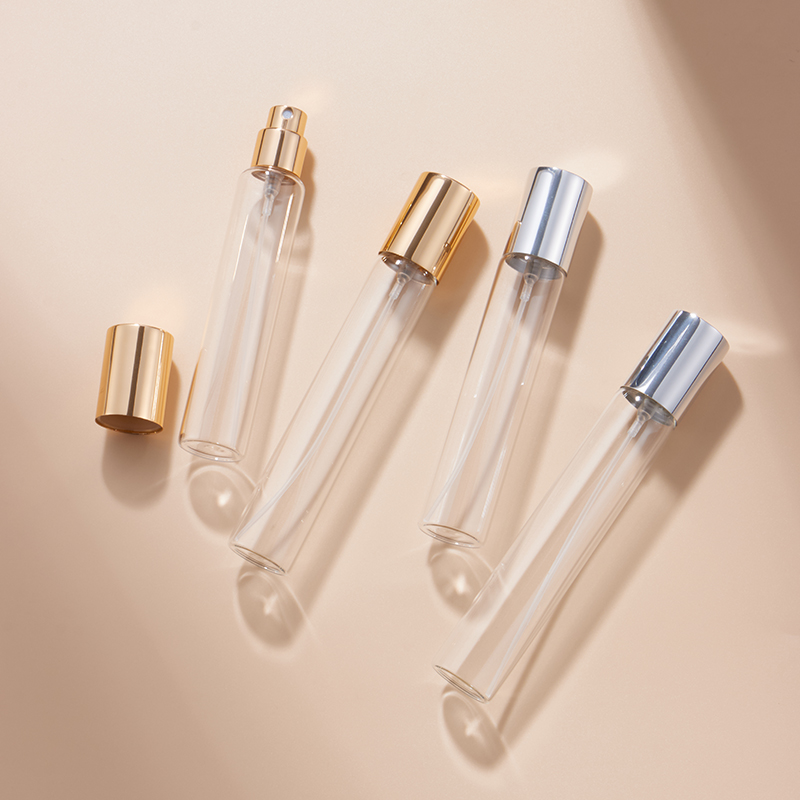
If you are looking for the most reliable, chemically safe, and aesthetically superior material for storing fragrance, glass is the clear winner — and has been for centuries. A glass perfume bottle does not react with the chemical compounds inside a fragrance, does not leach foreign molecules into the liquid, and does not allow oxygen or UV light to degrade the scent when manufactured with the right specifications. No other widely used material comes close to matching all of these properties simultaneously.
That said, not all glass is equal, and the specific type of glass, wall thickness, coating, and closure system all play significant roles in how well a bottle preserves a fragrance over time. This article breaks down exactly why glass outperforms alternatives, what kinds of glass perform best, and what to look for when evaluating glass perfume bottles for personal use or product development.
Why Material Choice Matters More Than Most People Realize
Fragrance formulations are complex chemical systems. A typical eau de parfum contains hundreds of aroma molecules dissolved in ethanol at concentrations between 15% and 20%, along with fixatives, solvents, and occasionally water. These components are reactive — they can oxidize when exposed to air, degrade under UV light, and chemically interact with certain container materials over time.
A poor container material does not just affect aesthetics. It can actively alter the scent profile. Some plastics, for example, are permeable to volatile organic compounds — meaning fragrance molecules can slowly migrate through the walls of the bottle, causing evaporation and scent distortion even when the cap is on. Other materials introduce trace contaminants that change the top notes or overall balance of the fragrance within weeks of storage.
The container material also determines how a fragrance interacts with light and temperature fluctuations — two of the most common causes of premature scent degradation. Choosing the right bottle is not a cosmetic decision. It directly affects how long a fragrance stays true to its original composition.
Glass Perfume Bottles: Why They Outperform Every Other Material
Glass has been used to store perfume for over 3,000 years — from ancient Egyptian kohl containers to the intricately cut crystal flacons of 19th-century Europe. That longevity is not accidental. Glass offers a combination of properties that no synthetic material has been able to fully replicate in the context of fragrance storage.
Chemical Inertness
Glass is one of the most chemically inert materials available for consumer packaging. Standard soda-lime glass and borosilicate glass do not react with alcohol, aromatic compounds, or the fixatives used in modern perfumery. The silica-based matrix of glass creates a stable surface that resists interaction with virtually all fragrance ingredients. This means the scent you smell on day one is the same scent preserved months or years later, assuming proper storage conditions are met.
Zero Permeability
Unlike plastics, glass has zero gas permeability. Volatile fragrance molecules cannot pass through glass walls, and atmospheric oxygen cannot penetrate through the bottle body. This is critical for long-term scent preservation. Studies on fragrance packaging have shown that fragrances stored in standard PET plastic bottles can lose measurable amounts of top-note volatiles within 6 to 12 months, while the same fragrance in a glass bottle with a proper seal retains its profile for significantly longer — often 3 to 5 years or more.
No Leaching or Contamination
Many plastics contain plasticizers, stabilizers, and other additives that can leach into liquid contents over time, especially when those contents are alcohol-based. Ethanol is a solvent — it actively draws out compounds from surrounding materials. Glass contains no additives that can migrate into a fragrance, making it the safest option from a chemical contamination standpoint.
Optical Properties and UV Behavior
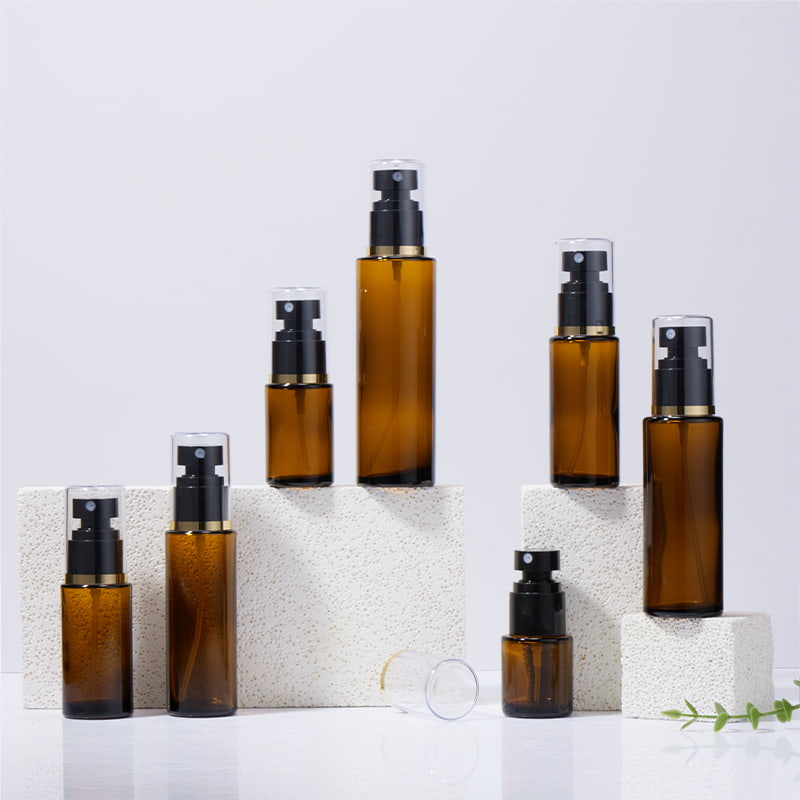
Standard clear glass transmits UV light, which can degrade certain fragrance compounds — particularly citrus top notes and some floral aldehydes. However, glass can be tinted, frosted, or coated to block UV radiation without any compromise to its other properties. Amber glass, for instance, blocks approximately 99% of UV light below 450nm, providing the same protection as pharmaceutical packaging. This versatility makes glass suitable for every type of fragrance formulation, including those with light-sensitive ingredients.
Types of Glass Used in Perfume Bottles and How They Compare
Not all glass perfume bottles are made from the same glass composition. The type of glass used affects durability, optical clarity, weight, manufacturing precision, and cost. Here is a breakdown of the main types used in the fragrance industry:
| Glass Type | Key Properties | Common Use | Relative Cost |
|---|---|---|---|
| Soda-Lime Glass | Good clarity, moderate durability, widely available | Mass-market perfume bottles | Low |
| Borosilicate Glass | High thermal resistance, excellent chemical inertness | Specialty and niche fragrances | Medium–High |
| Crystal Glass (Lead-Free) | High refractive index, exceptional brilliance and clarity | Luxury and designer bottles | High |
| Frosted / Acid-Etched Glass | Diffuses light, provides UV partial protection | Mid-range and boutique fragrances | Medium |
| Amber / Colored Glass | Strong UV blocking (up to 99% below 450nm) | Light-sensitive formulations | Low–Medium |
Soda-Lime Glass
This is the most widely produced glass in the world, accounting for roughly 90% of all glass manufactured globally. It is made primarily from silica (SiO₂), sodium oxide (Na₂O), and calcium oxide (CaO). Soda-lime glass is perfectly suitable for fragrance storage — it is chemically inert, smooth, and easy to shape into complex bottle forms. The vast majority of commercial perfume bottles sold at retail, including those from major designer houses, use high-quality soda-lime glass. Its affordability at scale makes it the default choice for mass production without any meaningful sacrifice in fragrance preservation performance.
Borosilicate Glass
Borosilicate glass replaces some of the sodium oxide in soda-lime glass with boron trioxide (B₂O₃), which dramatically increases its resistance to thermal shock and chemical attack. It is the same glass used in laboratory equipment and high-end cookware. For perfume bottles, borosilicate offers superior inertness and durability, though it is more expensive to produce and harder to mold into ornate shapes than soda-lime glass. It is more commonly seen in artisan and niche fragrance packaging.
Lead-Free Crystal Glass
Traditional lead crystal glass contained lead oxide (PbO) to achieve its characteristic brilliance and weight, but modern regulations and health concerns have driven the industry toward lead-free alternatives using barium oxide or zinc oxide instead. Lead-free crystal glass still offers a refractive index significantly higher than standard glass, giving bottles that coveted sparkle and visual depth associated with luxury perfumery. Brands like Baccarat and Lalique have built entire identities around the visual properties of high-end crystal perfume flacons. The material itself performs identically to standard glass in terms of fragrance preservation — the difference is purely aesthetic and tactile.
How Alternative Materials Stack Up Against Glass
While glass dominates the perfume bottle market for good reason, it is worth understanding exactly where alternative materials fall short — and in what niche applications they might make sense.
Plastic (PET, HDPE, Acrylic)
Plastic perfume bottles are primarily used in travel-size products and lower-cost fragrance lines. The problems are well-documented. PET (polyethylene terephthalate) is permeable to oxygen and volatile organic compounds, meaning fragrance slowly escapes through the walls over time. Ethanol — the primary carrier solvent in most fragrances — can interact with plasticizers in PET and HDPE, potentially introducing trace chemical contaminants. Acrylic (PMMA) is more stable and offers better optical clarity than standard plastics, but it remains inferior to glass in both chemical inertness and permeability. Plastic bottles are also more susceptible to deformation under temperature changes, which can compromise the seal integrity of pumps and spray mechanisms.
The primary advantage of plastic is weight and cost — a 50ml plastic bottle weighs roughly 15–25 grams compared to 80–150 grams for an equivalent glass bottle. For airline travel or sport applications, this weight difference matters. But for any context where fragrance longevity and quality are priorities, plastic is a compromise.
Metal (Aluminum, Stainless Steel)
Metal containers are occasionally used for solid perfumes, oil-based fragrances, or as outer decorative shells over glass inserts. Aluminum, when properly anodized or lined, is actually quite stable with alcohol-based fragrances. Some niche and artisan fragrance brands use brushed aluminum or stainless steel bottles as a design statement, often with an inner glass or food-grade polymer lining to prevent direct metal-fragrance contact. Unlined metal should never be used directly with alcohol-based fragrances — the interaction between ethanol and metal oxides can introduce metallic off-notes that permanently damage the scent profile. Metal is also completely opaque, removing any visual interaction with the fragrance liquid — something that many consumers find part of the appeal of glass bottles.
Ceramic
Ceramic perfume bottles have a long historical tradition — particularly in Chinese, Japanese, and Middle Eastern perfumery. Glazed ceramic is chemically stable and does not react with fragrance ingredients. However, ceramic is heavier than glass, more difficult to produce at scale with consistent precision, and completely opaque. The inability to see the fragrance level inside a ceramic bottle is a practical drawback for everyday use, though it can be an advantage for light-sensitive formulations. Ceramic bottles are more commonly used for decorative or collectible applications than for everyday functional fragrance storage.
Wood
Wooden containers are occasionally used for solid perfumes or attar oils, typically with a glass or metal inner liner. Raw unlined wood is porous and reactive — it would absorb fragrance directly and introduce woody off-notes into the scent. Like ceramic, wood in perfumery is almost always a decorative outer shell rather than a functional primary container. It is not a viable alternative to glass perfume bottles for liquid fragrance storage.
Key Features to Look for in a High-Quality Glass Perfume Bottle
Choosing a glass perfume bottle — whether for personal use or product development — involves more than just picking the material. The specific construction details determine how well the bottle actually performs in practice. Here are the most important factors to evaluate:
Wall Thickness and Weight Distribution
Thicker glass walls provide better protection against breakage and offer better thermal insulation, which helps buffer the fragrance against rapid temperature changes. A well-made glass perfume bottle typically has wall thickness between 3mm and 6mm for the body, with reinforced bases and corners. Heavy base construction also improves stability — a bottle that tips easily is more likely to be damaged. In luxury fragrances, the weight of the bottle is often deliberately engineered to communicate quality: a 100ml luxury bottle might weigh 200–300 grams total, with over half that weight coming from the glass alone.
Closure System and Neck Finish
The neck finish — the rim and threading of the bottle opening — determines how well the pump, spray, or stopper seals the bottle. A poor neck finish with inconsistent tolerances leads to pump wobble, air gaps, and evaporation. High-quality glass perfume bottles have precisely machined neck finishes that meet standardized FEA (Fragrance European Association) sizing standards — most commonly FEA 15 or FEA 18 — ensuring compatibility with precision pump mechanisms. The tightness of this seal is arguably as important as the glass itself for long-term fragrance preservation.
Surface Treatments and Coatings
Many high-end glass perfume bottles receive additional surface treatments that enhance both aesthetics and functionality:
- Acid etching or sandblasting creates a frosted matte surface that diffuses light and provides partial UV protection
- UV-blocking coatings can be applied to clear glass to filter light without altering the bottle's visual transparency
- Metallic or lacquer coatings add visual character and can provide additional light shielding
- Hot stamping and screen printing apply branding directly to the glass surface without using adhesive labels that can peel over time
None of these surface treatments affect the interior properties of the glass — they are applied externally and do not come into contact with the fragrance.
Stopper vs. Spray Pump: Which Is Better for Glass Perfume Bottles?
Traditional perfume flacons often use a ground glass stopper — a precision-fitted plug of glass shaped to seal the bottle opening. Ground glass stoppers are chemically inert (no rubber or plastic components in contact with the fragrance), visually elegant, and extremely long-lasting. However, they require careful handling and are not well-suited to daily quick application.
Modern spray pumps introduce non-glass components into the sealing system — metal springs, plastic pump mechanisms, and rubber gaskets — any of which can theoretically interact with fragrance ingredients over time. High-quality pump mechanisms use materials specifically rated for alcohol and fragrance compatibility, but the ground glass stopper remains the gold standard for absolute chemical purity.
For everyday use, a precision spray pump is highly practical. For a collector-grade or archival fragrance, a ground glass stopper is the superior choice.
Glass Perfume Bottles in Luxury vs. Mass-Market Fragrance
The relationship between glass quality and product positioning is deeply embedded in the fragrance industry. While both luxury and mass-market brands use glass as the primary bottle material, the specifications — and the investment in glass design — differ substantially.
How Luxury Brands Use Glass to Communicate Value
For luxury fragrance houses, the glass bottle is as much a product as the fragrance inside it. Chanel No. 5's minimalist rectangular flacon, introduced in 1921, was a deliberate departure from the ornate bottles of the era — and its spare clarity became iconic. Thierry Mugler's Angel bottle, shaped like a five-pointed star, required the development of entirely new glass-molding techniques when it launched in 1992. Lalique has been producing collectible glass perfume bottles since the early 20th century, with individual flacons sometimes selling for thousands of dollars at auction.
At the luxury level, the glass bottle typically represents 30% to 50% of the total production cost of the fragrance — sometimes more for limited editions. Custom molds, precision cutting, hand-finishing, and multiple surface treatments all add cost. The bottle communicates permanence and worthiness of display — qualities that disposable or plastic containers cannot convey.
Mass-Market Glass: Still a Quality Choice
Mass-market fragrance bottles use the same soda-lime glass composition as more expensive options, but with simpler shapes, thinner walls, and standardized molds that reduce per-unit costs. From a pure fragrance preservation standpoint, a mass-market glass bottle performs very similarly to a luxury one — the glass itself is doing the same job. The differences are in aesthetics, weight, tactile experience, and the precision of detailing, not in the fundamental material properties.
Sustainability and Glass Perfume Bottles
Glass is one of the most recyclable materials in use today. It can be recycled indefinitely without any degradation in quality — unlike most plastics, which degrade with each recycling cycle. A glass perfume bottle melted down and reformed retains all the properties of virgin glass. The EU glass industry reports a recycling rate of approximately 76% for glass packaging across member states, with some countries exceeding 90%.
The fragrance industry has increasingly recognized this as a sustainability advantage. Several major brands — including Guerlain, Maison Margiela, and Hermès — have introduced refillable glass perfume bottle programs that allow customers to return to boutiques and refill their original flacon with fresh fragrance. This model reduces the environmental footprint of the outer packaging by a factor of 5 to 10 over the bottle's lifetime.
The main sustainability concern with glass is its weight — heavier packaging increases transport emissions compared to plastic. However, when lifecycle analysis includes recyclability and the absence of microplastic contamination, glass typically comes out ahead of plastic in most comprehensive environmental assessments for fragrance packaging.
Practical Tips for Storing and Caring for Glass Perfume Bottles
Even the best glass perfume bottle will not preserve fragrance optimally if stored incorrectly. The bottle protects against contamination and evaporation through the walls — but external environmental factors still matter significantly.
- Keep bottles away from direct sunlight. Even if the glass provides some UV protection, prolonged direct sun exposure accelerates the degradation of light-sensitive top notes. Store bottles in a drawer, cabinet, or box if possible.
- Avoid bathroom storage. Bathrooms are among the worst environments for fragrance — humidity fluctuations, temperature spikes from showers, and steam can all accelerate scent degradation. A bedroom dresser or wardrobe shelf is far preferable.
- Maintain consistent temperature. Fragrance degrades faster when repeatedly cycled between warm and cool temperatures. A stable room-temperature environment (around 60–70°F / 15–21°C) is ideal.
- Do not shake the bottle. Agitation introduces air into the fragrance and accelerates oxidation. Handle glass perfume bottles gently and upright.
- Replace caps and pumps immediately after use. Every second the bottle is open, alcohol evaporates and oxygen enters. The seal is only effective when engaged.
- Clean glass bottles gently. Use a soft dry cloth for the exterior. Avoid chemical cleaners on frosted or coated glass surfaces, as some solvents can strip treatments.
When You Might Consider Something Other Than Glass
There are genuine use cases where glass is not the optimal choice — though they are narrow:
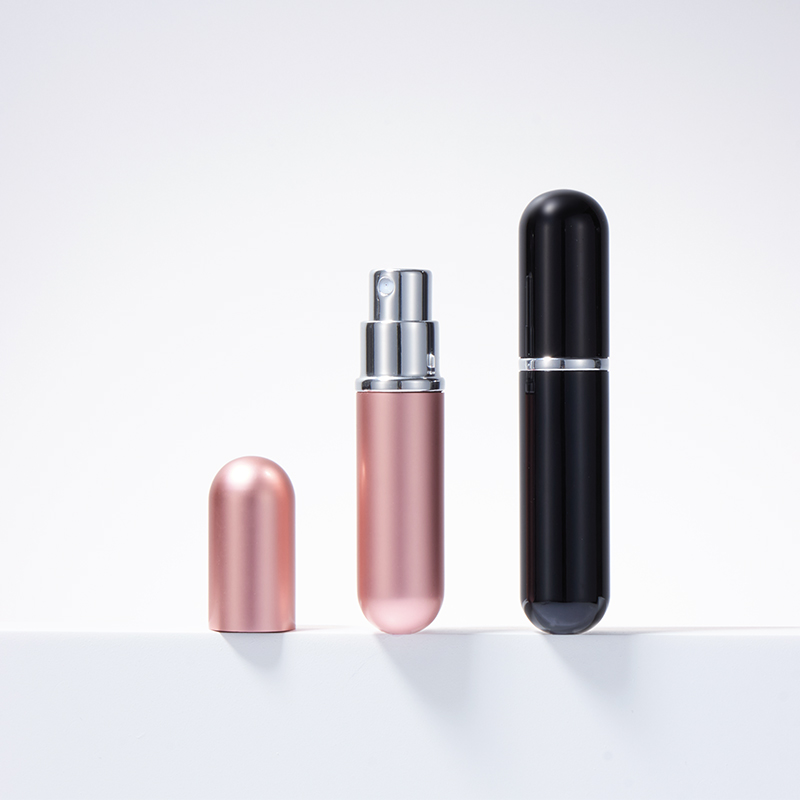
- Travel: A 50ml glass bottle weighing 100+ grams versus a 15-gram plastic travel bottle is a real consideration for frequent travelers packing light. Decanting into a high-quality plastic atomizer (preferably PETG or PP rather than PET) for short trips is a reasonable compromise.
- Gym or outdoor use: For fragrances used in active settings where dropping a glass bottle is a realistic risk, a robust plastic or metal atomizer reduces breakage risk. Some brands offer polished aluminum atomizers with interior glass liners as a middle-ground solution.
- Children's products: Fragrance products targeted at children sometimes use plastic for obvious safety reasons.
In every other common scenario — home use, gifting, collecting, display, and long-term storage — glass remains the best material for a perfume bottle without meaningful competition from alternatives.
Our Products //
Related Product

- E-mail: [email protected]
- Phone: +86-15962399191
- Add: No. 60-7, East Side of Jinzhong Road, Jinfeng Town, Zhangjiagang City, Suzhou City, Jiangsu Province
Copyright © Zhangjiagang Haojie Packaging Technology Co., Ltd. All Rights Reserved.
 China Cosmetic Packaging Manufacturers
China Cosmetic Packaging Manufacturers