

 中文简体
中文简体 Español
 عربى
عربى
Top Sustainable Packaging Trends for Natural Skincare Products in 2026
Industry News-Content
- 1 Why Natural Skincare Brands Cannot Ignore Packaging Sustainability in 2026
- 2 Material Innovation: What Is Actually Changing on the Shelf in 2026
- 3 Refillable Packaging Moves from Niche to Standard
- 4 Pump and Dispenser Redesign: The Detail That Decides Recyclability
- 5 Airless Dispensers Protect Formula and Reduce Preservative Needs
- 6 Labeling and Surface Finishes Move Toward Low-Impact
- 7 Supply Chain Transparency and Sourcing Geography
- 8 Cost Realities in 2026: What Premium Is Worth Paying
- 9 How to Evaluate a Packaging Supplier for Sustainability in 2026
- 10 FAQ: Sustainable Packaging for Natural Skincare in 2026
- 10.1 What is the most sustainable packaging material for natural skincare in 2026?
- 10.2 Are all-plastic pump heads actually recyclable?
- 10.3 How do I know if a refillable system will be accepted by consumers?
- 10.4 What is the difference between recyclable and biodegradable packaging?
- 10.5 Can sustainable packaging protect oxygen-sensitive active ingredients?
- 10.6 Do I need different neck finishes on my bottles to accept sustainable pumps?
Six months before the 2026 season began, a natural skincare procurement manager in Southern Europe received a new requirement from a major retail chain: every bottle, pump, and cap in her category had to be verifiably recyclable, refillable, or made with a minimum percentage of recycled content. Products that could not meet the standard were delisted at the next assortment review.
That is the reality of the natural skincare packaging market in 2026. Sustainable packaging is no longer a differentiator. It is a baseline procurement condition. Brands that act early gain listing approvals, premium positioning, and lower redesign costs. Brands that wait face rushed conversions and distribution losses under deadline pressure.
The trends below are the ones packaging buyers and product developers actually act on in 2026, based on current material science, dispenser engineering, and retail requirements.
Why Natural Skincare Brands Cannot Ignore Packaging Sustainability in 2026
Consumer research in 2025 and 2026 consistently places packaging among the top three sustainability concerns in beauty and personal care. According to Euromonitor International's 2025 Voice of the Consumer survey, 68% of global beauty shoppers said they consider the environmental impact of packaging when choosing a product. A separate 2025 survey by McKinsey & Company found that 61% of skincare buyers in the United States actively check whether a package is recyclable before purchasing. (Sources: Euromonitor International, 2025; McKinsey & Company, 2025)
Natural skincare feels this pressure more acutely than conventional beauty because of the coherence gap. A formula with botanical ingredients and minimal preservatives loses credibility when it sits in a virgin plastic bottle wrapped in multiple layers of printed film. Consumers of natural skincare tend to be more educated about materials, more willing to pay a sustainability premium, and more vocal when a claim feels hollow.
- Retail gatekeeping: Major pharmacy chains and e-commerce platforms updated packaging criteria in 2025-2026, covering recyclability, recycled content, and excessive packaging.
- Refill expectation: Refill options are now expected for serums, toners, and mists, not just body wash and shampoo.
- End-of-life clarity: Labels must tell consumers what to do with the package, not just what the brand hopes happens.
- Cost of delay: Redesigning after a supplier audit is two to three times more expensive than designing with sustainability targets from the start.
Material Innovation: What Is Actually Changing on the Shelf in 2026
Material selection remains the foundation of sustainable packaging. In 2026, the shift is away from single-material eco-gestures toward systems that survive real-world collection and recycling. Industry data from Grand View Research values the global sustainable packaging market at roughly $320 billion in 2025, with annual growth projected above 7% through 2030. (Source: Grand View Research, 2025) The material choices with the most traction in natural skincare are lightweight glass, recycled plastics, bio-based resins, and aluminum.
Glass: Still the Gold Standard for Premium Natural Skincare
Glass is infinitely recyclable without quality loss. The 2026 trend is lightweight glass: bottle weights have dropped 15-25% compared with 2019 equivalents while maintaining standard drop-test performance. Lightweighting lowers transport carbon and keeps the premium feel consumers associate with natural formulations. Natural skincare uses lightweight glass for serums, facial oils, and perfume. For brands concerned about breakage in transit, glass with a thicker base or a protective secondary sleeve remains a practical option.
PCR Plastics: Recycled Content Becomes the New Default
Post-consumer recycled PET, PE, and PP are available in 2026 with better color consistency and lower gel counts than five years ago. Many natural skincare brands now set a minimum of 50% PCR content in plastic bottles, with some flagship lines at 100%. The remaining constraint is the dispenser: PCR resin grades can be used in caps and collars, but the internal spring channel and sealing surfaces of pumps still depend on virgin resin unless the pump is custom engineered for PCR compatibility.
Bio-based Plastics: Useful but Not a Universal Substitute
PLA and bio-PE appear in caps, single-dose sachets, and secondary packaging. However, many natural formulations contain oils and essential oils that can cause stress cracking in PLA. Heat resistance is also limited. In 2026, bio-plastics are therefore found mainly in outer caps and shipping materials rather than primary liquid-contact containers.
Aluminum: The Second Infinite Loop
Aluminum is infinitely recyclable and gives a premium metallic finish. It is used for perfume atomizers, pump collars, caps, and decorative sleeves. Anodized or electrophoretic finishes improve durability, and the natural oxide layer resists corrosion from oils and alcohol. Aluminum's scrap value at recycling centers is higher than plastic, which gives it a practical advantage in collection systems.
| Material | Recyclability | Barrier Performance | Typical Components | 2026 Cost Position |
|---|---|---|---|---|
| Lightweight glass | Infinite, high value | Excellent oxygen and UV barrier with tint | Serum bottles, droppers, perfume bottles | Moderate, energy sensitive |
| PCR PET and PE | High where collection exists | Good moisture barrier, sensitive to UV | Cleanser bottles, toner bottles, caps | Competitive, resin supply varies |
| Bio-based PLA | Compostable in industrial facilities | Weak against oils and heat | Outer caps, sachets, secondary packaging | Premium vs. virgin plastic |
| Aluminum | Infinite, high scrap value | Excellent barrier, fully opaque | Atomizers, caps, pump collars | Volatile, linked to energy prices |
| Mono-material PP | High in PP recycling stream | Good for creams and lotions | Lotion pumps, cream jars, closures | Stable and cost-competitive |
The choice between these materials depends on the formula, the distribution channel, and the recycling infrastructure in the target market. There is no single "most sustainable" material in 2026; there is only the most appropriate system for each product.
Refillable Packaging Moves from Niche to Standard
Refill systems have crossed into the mainstream for natural skincare. In 2025, several European skincare brands converted their hero serum and moisturizer lines to refillable glass bottles sold with a refill pouch or cartridge. The 2026 trend pushes the refill point further: in-store bulk dispensers for lotions and toners, with customers returning the same bottle for a top-up at a lower price.
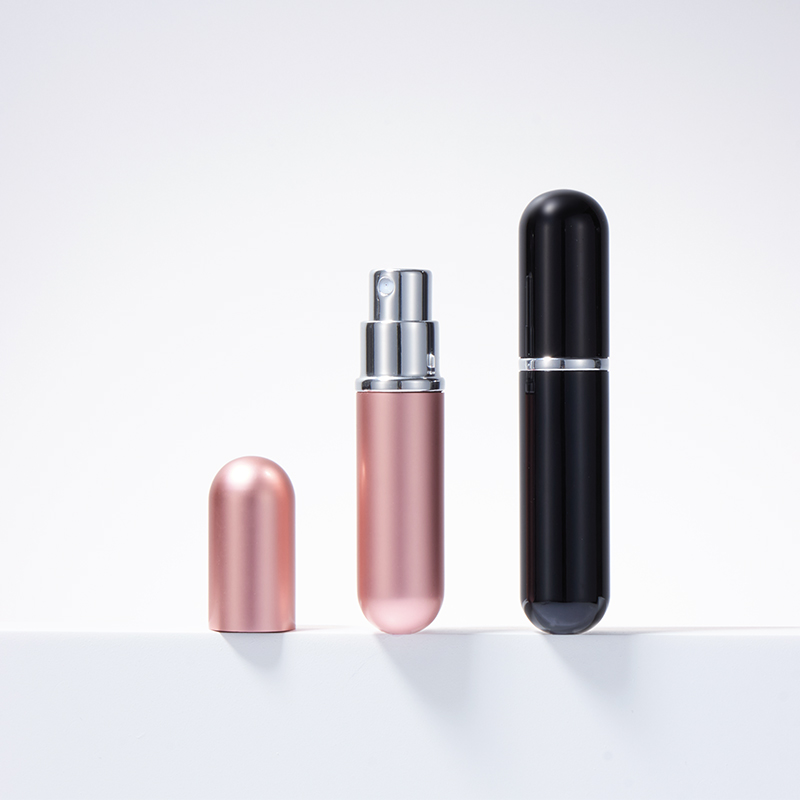
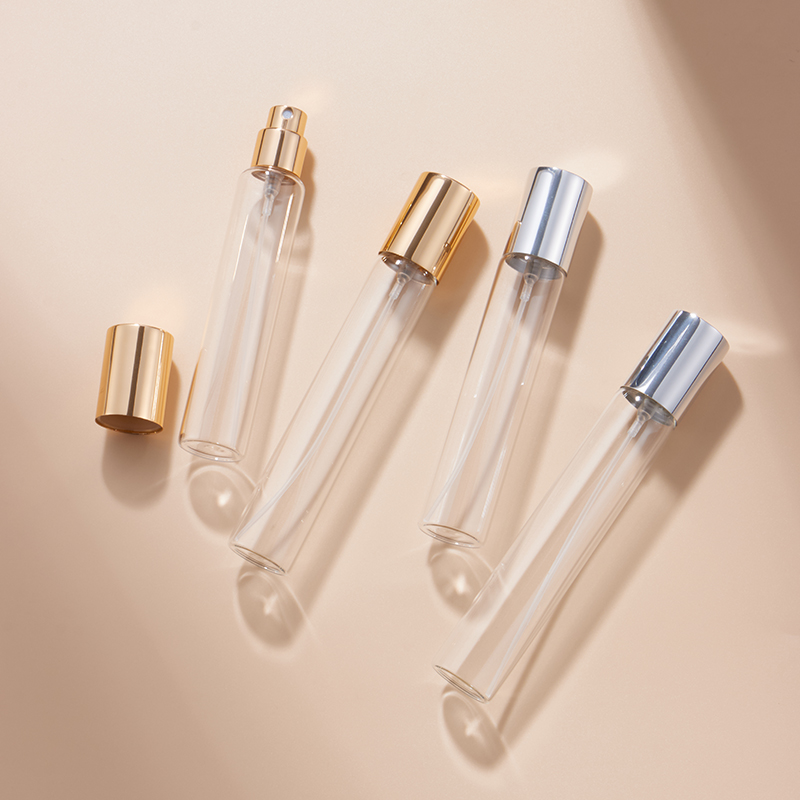
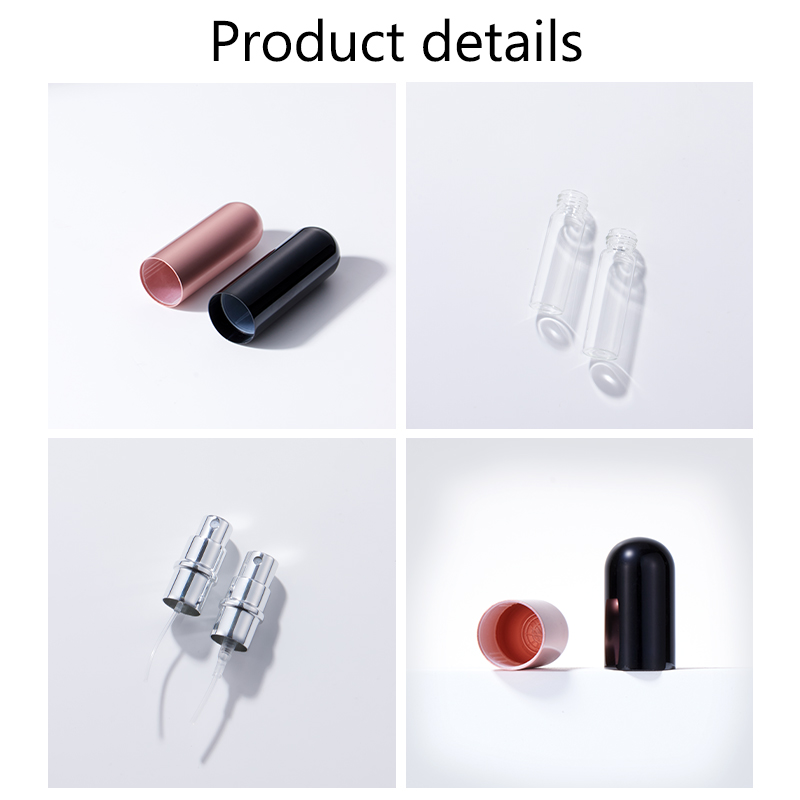 5ml Refillable Aluminum Perfume Atomizer with Glass Inner BottleCompact double-layer atomizer with aluminum shell and glass inner bottle, ideal for travel-sized perfume refills. Its screw neck supports easy refilling and fits standard neck finishes, making it a durable, portable choice for fragrance users.View Product →
From a packaging engineering perspective, refillable systems depend on three elements: a durable primary bottle, a dispenser that survives repeated use, and a standardized neck finish so the refill unit clicks into place across multiple packaging suppliers. Neck finishes such as 12-410, 15-410, and 18-415 have become de facto standards for small skincare formats. Brands that specify standard finishes avoid being locked into a single supplier and make it easier for consumers to reuse bottles across product generations. Refillable aluminum atomizers, for example, allow perfume and facial mist users to carry a durable, refillable vessel that fits into a handbag and can be topped up from a larger home bottle.
- Refill pouches with one-way valves for lotions and creams
- Drop-in cartridges for airless dispensers
- In-store bulk refill stations for toners and body care
- Returnable glass programs for premium serums and facial oils
Pump and Dispenser Redesign: The Detail That Decides Recyclability
The pump is the most underrated part of sustainable packaging. A glass bottle is fully recyclable, but if the pump attached to it contains a metal spring and several different plastic types, consumers cannot separate the components easily, and many recycling facilities reject the entire unit. In 2026, the focus is on mono-material pump construction. All-plastic pumps with polypropylene springs now achieve more than 10,000 actuations in factory endurance testing, which is sufficient for the usable life of most 30-50 ml skincare products.
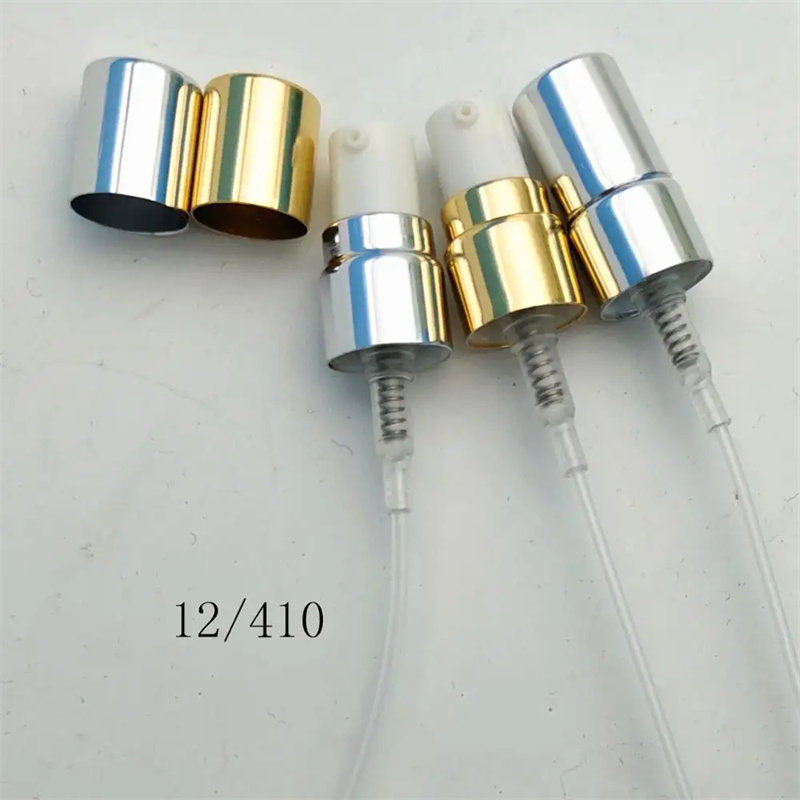 12/410 Aluminum Lotion Cream Pump for Small Glass BottlesThis aluminum pump head with a precision dispensing system suits 5ml and 10ml glass bottles, offering durability and corrosion resistance. Its 12/410 finish aligns with standard neck sizes, and the all-metal construction addresses recyclability concerns.View Product →
Neck sizes such as 18-410 and 20-410 dominate cream and lotion packaging, while 24-410 and 28-410 cover larger formats. When the pump body, piston, spring, and locking ring are all made from the same polymer family, the entire unit can enter the recycling stream after a simple rinse. This is a real change because earlier pump generations required disassembly with tools. Brands in 2026 should ask suppliers for the polymer composition of every pump component before specifying a dispenser. This connects directly to the technical question of whether plastic pump heads are recyclable, which our engineering guide answers with material-by-material detail.
For sprays and perfumes, aluminum fine mist sprayers remain the standard because the aluminum shell is infinitely recyclable and delivers the fine, consistent spray that consumers expect. Aluminum crimp pumps also have lower component counts and higher scrap value at recycling centers than multi-material plastic equivalents.
Airless Dispensers Protect Formula and Reduce Preservative Needs
Airless packaging has become a default specification for clean natural skincare formulations that avoid synthetic preservatives. Oxygen-sensitive actives such as vitamin C, bakuchiol, and fermented extracts degrade quickly in open jars and dropper bottles. An airless bottle uses a vacuum piston to dispense product without letting air back in, extending shelf life without additional preservatives.
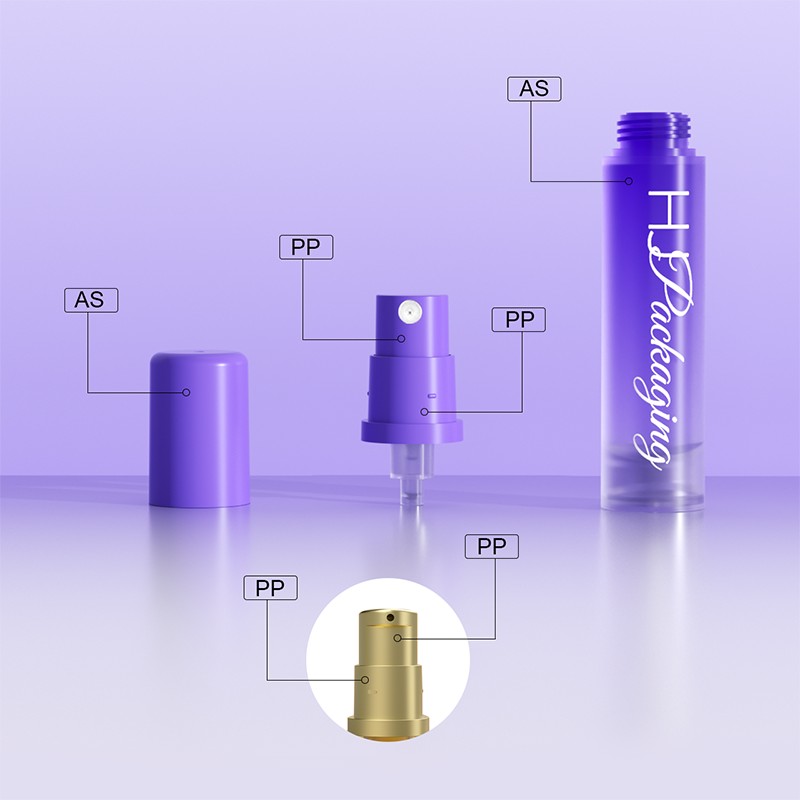 18mm 5ml-15ml Airless Bottle with Toner Spray or Lotion PumpSlim airless bottles in 5ml, 10ml, 12ml, and 15ml sizes with AS and PP materials, featuring a screw-on design for refills. The vacuum piston prevents oxidation, making these travel or trial packs ideal for serums, toners, and clean formulations.View Product →
In 2026, airless formats are trending smaller and more recyclable. The 5 ml, 10 ml, 15 ml, and 30 ml capacities dominate the travel and trial-size segment for serums and face oils. A common configuration pairs an 18 mm airless bottle with a fine mist spray or lotion pump, allowing the same platform to serve both toner and emulsion products across a brand's portfolio.
Airless bottles have one sustainability disadvantage: they combine a rigid outer bottle, an inner piston or pouch, and a dispenser head, which means three material systems. Suppliers are responding with mono-material airless designs and with bottle bodies molded from PCR polypropylene. Buyers should request the polymer identification of every layer when evaluating airless options and verify that the piston can be separated during recycling.
Labeling and Surface Finishes Move Toward Low-Impact
Surface decoration is the silent carbon emitter. Foil stamping, shrink sleeves, and multi-layer labels complicate recycling and add material weight. In 2026, natural skincare brands are moving toward these low-impact decoration methods:
- Direct printing on glass with low-migration UV inks
- Labels with water-soluble or easily removable adhesives
- No-label bottles where the design is embossed or sandblasted into the glass surface
- Water-based coatings instead of solvent-based varnishes
- Minimum e-commerce packaging by reducing corrugated boxes and eliminating individual plastic bags
These changes also cut cost. Replacing a full shrink sleeve with a small paper label can reduce packaging material weight by 8-12% and improve the recyclability classification of the whole unit without changing the bottle mould.
Supply Chain Transparency and Sourcing Geography
In 2026, carbon footprint is measured, not assumed. Retail buyers increasingly ask for the production location of packaging components and the distance traveled between factory and filling line. A pump manufactured at a facility with a documented export network and consistent lead times can reduce both carbon and inventory risk compared with sourcing from a distant, single-line supplier.
Brands with filling operations in Asia, Europe, and the Americas are choosing packaging suppliers that hold capability across multiple product families, from glass perfume bottles to lotion pumps and airless containers, and can ship partial loads without long scheduling gaps. This reduces buffer inventory requirements and makes it easier to test new bottles, pumps, and caps before committing to large production runs. A supplier with an established trade network across Europe, the Americas, the Middle East, and Southeast Asia can also flag regional recycling preferences, such as the higher acceptance of aluminum in European sorting facilities.
Cost Realities in 2026: What Premium Is Worth Paying
Sustainable packaging still costs more than conventional packaging, but the gap has narrowed significantly. Here are the typical price relationships for 2026 procurement, based on packaging supplier price lists and buyer surveys at recent industry trade shows:
- Mono-material PP pump: approximately 5-15% higher than a conventional metal-spring pump at the same minimum order quantity.
- PCR plastic bottle: 10-25% premium when PCR content is above 50%, depending on resin availability and color requirements.
- Lightweight glass with screw cap: comparable to standard glass; transport savings may offset higher mould costs.
- Refillable set: initial set cost is 20-40% higher, but per-use packaging cost drops by about half from the second refill onward.
Volume matters. The percentages above assume annual volumes of 50,000 to 200,000 units. Below 10,000 units, mould costs and custom color matching dominate, and sustainable print runs become less economical. Brands approaching launch should negotiate with suppliers on standard neck finishes and stock colors to avoid paying one-off development costs.
How to Evaluate a Packaging Supplier for Sustainability in 2026
The supplier evaluation process is different from five years ago. Instead of asking for glossy brochures, buyers should ask specific technical questions and verify them against product samples:
- Request the polymer type and grade for every pump component: body, piston, spring, and locking ring.
- Confirm the bottle can accept at least two different dispenser types without new tooling.
- Ask for dimensional tolerance data on neck finishes to verify compatibility across different suppliers.
- Request drop-test results for the proposed material combination with your specific formulation.
- Check whether the decoration can be separated from the bottle during recycling.
- Verify that refillable components and standardized finishes are available for the same platform.
Understanding the internal structure of a cosmetic pump, including the spring, the sealing ball, and the gasket, is the fastest way for a procurement team to separate genuine mono-material designs from conventional pumps that simply carry a green label. Suppliers who can document material composition, standard finish compatibility, and factory testing data are the ones that will safely carry a natural skincare brand through the next two retail cycles.
FAQ: Sustainable Packaging for Natural Skincare in 2026
What is the most sustainable packaging material for natural skincare in 2026?
Lightweight glass is the most sustainable primary material for serums, facial oils, and perfumes because it is infinitely recyclable with no quality loss and provides excellent barrier protection. For pumps, mono-material polypropylene designs are the most recyclable option. For creams, PP jars and airless bottles with high PCR content are practical mainstream choices.
Are all-plastic pump heads actually recyclable?
All-plastic pump heads with PP springs are recyclable in polypropylene waste streams in markets that sort rigid plastics. Conventional pumps with metal springs need to be disassembled before recycling, and in practice most end up in landfill. Buyers should check the polymer markings on the pump body and cap and confirm with their local recycling facility.
How do I know if a refillable system will be accepted by consumers?
Consumers accept refill systems when the refill price is visibly lower, the refill unit is easy to insert without spilling, and the primary bottle feels durable enough to keep. Successful products in 2026 price refills 15-30% below the full-product price and provide clear on-pack instructions for the refill step.
What is the difference between recyclable and biodegradable packaging?
Recyclable packaging is collected, sorted, and reprocessed into new materials. Biodegradable packaging breaks down in specific conditions, such as industrial composting. In natural skincare, recyclable materials such as glass, aluminum, and PP are more practical than biodegradable plastics because the collection infrastructure for compostable cosmetic packaging remains limited in most regions.
Can sustainable packaging protect oxygen-sensitive active ingredients?
Yes, if the format is chosen correctly. Airless dispensers eliminate oxygen intake during dispensing, and opaque or tinted glass protects against light. Combining lightweight glass with an airless pump gives the premium feel and the long shelf life that retinol, vitamin C, and ferment-based natural formulas require.
Do I need different neck finishes on my bottles to accept sustainable pumps?
No. Standard neck finishes such as 12-410, 15-410, 18-410, and 24-410 allow one bottle size to accept multiple pump types from different suppliers. Specifying standard finishes keeps the packaging flexible, avoids custom tooling costs, and makes it easier to switch to a more recyclable pump when one becomes available.
The packaging decisions a natural skincare brand makes in 2026 will remain on the shelf until at least 2028. Choosing standardized neck finishes, mono-material pumps, and recyclable primary materials now avoids a forced redesign when a retailer updates its sustainability criteria next year.
The suppliers that ask the right questions, document their material composition, and offer refillable, airless, and mono-material formats are the ones that will grow with the natural skincare category over the next three years. Start the conversation with packaging drawings and material data sheets, not with marketing claims.
Our Products //
Related Product


- E-mail: [email protected]
- Phone: +86-15962399191
- Add: No. 60-7, East Side of Jinzhong Road, Jinfeng Town, Zhangjiagang City, Suzhou City, Jiangsu Province
Copyright © Zhangjiagang Haojie Packaging Technology Co., Ltd. All Rights Reserved.
 China Cosmetic Packaging Manufacturers
China Cosmetic Packaging Manufacturers